
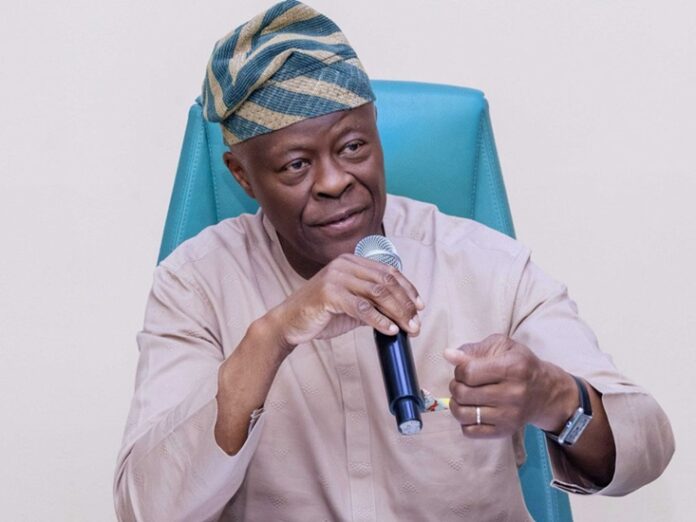
October 27, (THEWILL) — Nigeria’s Minister of Finance and Coordinating Minister of the Economy, Wale Edun, says the country has overcome its most difficult economic phase and is now on a firm path to sustainable growth and prosperity.
In a reflection titled “Nigeria Turns Towards Prosperity”, shared by the Presidency, Edun expressed optimism about Nigeria’s economic journey, noting that while challenges remain, “the most difficult phase of our economic journey is behind us.”
He recalled that when President Bola Tinubu assumed office in 2023, the economy was at the brink of fiscal collapse, burdened by slowing growth, surging inflation, and distortive policies such as fuel subsidies and multiple exchange rate regimes. According to him, the President’s clear mandate was to restore fiscal discipline, dismantle market distortions, and create a business environment that rewards productivity and attracts private investment.

Edun said that two years into the reforms, the results are becoming evident. The economy grew by 4.23% in the second quarter of 2025, while inflation, though still high, declined steadily to 18.02% after six consecutive months of moderation. He added that the exchange rate had stabilised, with the gap between official and parallel markets narrowing to just 1%, down from a peak of nearly 70%. Foreign reserves, he noted, have risen above $43 billion, the highest level since 2019.
“These achievements are more than just numbers; they form the foundation for building inclusive growth that benefits every Nigerian”, Edun said.
The Minister, however, acknowledged that millions of Nigerians still judge progress by the cost of food and essential goods. Food inflation, he admitted, has been the heaviest burden on households since the removal of fuel subsidies and currency reforms. But he assured that targeted interventions were beginning to ease the pressure, citing a drop in the average price of a 50kg bag of rice from N120,000 last year to around N80,000.
According to him, the government is implementing programmes to encourage agricultural production by ensuring smallholder farmers have enough incentives to return to their farms. In addition, more than 8.1 million households have received direct cash support to cushion the impact of economic reforms and help meet basic needs, with plans to expand the programme to 15 million households once ongoing identity verification issues are resolved.
Edun admitted that debt servicing remains a major concern, consuming a large portion of national revenue. Nigeria’s fiscal revenue-to-GDP ratio, currently around 10%, is still one of the lowest in Africa, limiting resources for critical sectors such as health, education, and infrastructure. To address this, he said, President Tinubu signed the new Nigeria Tax Act on June 26, 2025, which will take effect in January 2026. The law aims to broaden the tax base, simplify compliance, reduce leakages, and introduce a more progressive regime that shields low-income earners while adjusting rates for higher earners.
He further explained that the reforms, alongside the Revenue Optimisation and Assurance Programme, would strengthen public finances, create fiscal space, and support greater investment in people and infrastructure.
On sectoral performance, Edun noted that government efforts are now focused on translating stability into tangible growth across key sectors. He said oil and gas production has rebounded to 1.68 million barrels per day, including condensates, due to improved security and better policy implementation. Similarly, agriculture, manufacturing, technology, and the creative sectors are witnessing renewed investment and expansion, with deliberate incentives to spur job creation and innovation.
He highlighted the importance of infrastructure as the backbone of long-term growth, noting that public-private partnerships are being used to attract investment into major projects such as the Ajaokuta–Kaduna–Kano gas pipeline and Project Bridge, a 90,000-kilometre fibre expansion initiative designed to boost industrialisation and nationwide connectivity.
Edun said renewed investor confidence — both domestic and international — is one of the clearest indicators that Nigeria is on the right path.
“Investors, multilateral institutions, and citizens are beginning to believe in the nation’s prospects again”, he said, stressing that sustaining that confidence requires consistent policy, fiscal discipline, and continued progress in reducing inflation.
Looking ahead, the minister reaffirmed the government’s medium-term goal of achieving 7% economic growth by 2027 or 2028. Achieving this, he noted, will require the combined effort of the government, private sector, and citizens.
“If we work together, we will not only meet this target but surpass it. The task ahead is to deepen resilience, broaden opportunity, and ensure that reforms translate into real improvements in daily life — better schools, affordable food, reliable power, accessible healthcare, and jobs for our youth”, Edun said.
With optimism, Edun said Nigeria’s next decade will be defined by shared prosperity and renewed hope, marking the beginning of a new era of inclusive economic growth for the nation.

Felix Ifijeh is a journalist with years of professional reporting experience. Known for his keen news sense, compelling storytelling and commitment to accurate, impactful reporting, he has built a reputation for turning leads into clear, engaging, and well-structured reports that resonate with readers. His work reflects deep newsroom experience and a commitment to accurate, impactful journalism.
