March 21, (THEWILL) – The signs are clear and convey no ambiguity. The worries cannot be subdued. There is no grit of guesswork underlying the facts that Nigeria’s economy is bleeding from every side. It is moving on the fast lane to embrace a season of atrophy with outcomes that are inevitably frightening.
All the conventional economic agents – individuals, households and companies – are warming up for the cloud of uncertainty that would befall Nigeria in the shortest time – through the remaining three quarters of 2022. The government is also struggling to stay afloat amid actions and inactions that seem to see Nigerians as people with inelastic capacity to bear pains.
While this script was being put together, the Director-General of Debt Management Office, Mrs Patience Oniha, was on the television with the countenance of subdued worry and confusion. She came to announce that Nigeria’s debt stock had hit almost N40 trillion. She appeared confident in her conviction that the nation is moving on the right way. She displayed the body language of President Muhammadu Buhari-led government that “there is no cause for alarm”.

Oniha said, “Nigeria’s total public debt as at December 31, 2021, was N39.56tn or $95.78bn. The amount represents the total external and domestic debts of the Federal Government of Nigeria, 36 state governments and the federal capital territory.
“The comparable figure for December 31, 2020, was N32.92tn or $86.39bn. The public debt stock for December 31, 2021, includes new borrowings by the FGN and the sub-nationals.
“For the FGN, it would be recalled that the 2021 appropriation and supplementary acts, included total new borrowings (from domestic and external sources) of N5.49tn to part-finance the deficit.
“Borrowings for this purpose and disbursements by the multilateral and bilateral creditors account for a significant portion of the increase in the debt stock. Increases were also recorded in the debt stock of the states and the FCT.”
Apparently, in response to a question from a Journalist, the DMO boss confidently reminded the audience that our children and children’s children “will enjoy the benefits of the loans”, including infrastructure being constructed with the facilities. To her, Nigeria’s debt-to-GDP ratio at 36.88 percent from 23.41 percent in 2016, is nothing to worry about. She maintained the static position of the government that the nation’s financial woes hinge on “revenue” not debt. “You should assist the government by suggesting areas that can boost revenue; revenue is our challenge”, she maintained.
Like her colleagues in government, no mention was made of cutting wasteful expenditure and plucking avenues of revenue leakages. Private partnership in infrastructure construction is still an idea yet to be put into practice. Their priority is for the government to expand the tax loop. Government should drag Nigeria’s 200 million people into the tax net, and deepen the fiscal hose into their system to suck more taxes. Revenue is the solution; not the high percentage of debt servicing that sees Nigeria spend about 80 percent of its revenue on debt servicing.
Early in the year, Agusto and Co, a foremost credit rating agency in Nigeria, had projected that the country’s debt-to-revenue ratio will cross the 80 percent mark in 2022 following the build-up to the general election in 2023. In their projections for 2022, the agency stated that in 2022, the major themes that will dominate Nigeria’s economic landscape will be politics.
In its Article IV released on February 7, 2022, the International Monetary Fund (IMF) said the Federal Government could spend as much as 92.6 per cent of its revenue on debt servicing this year. This is against the 76 percent recorded in 2021. This suggests that Nigeria spent over N700 of every N1000 it earned as revenue in 2021, leaving about N24 for other commitments.
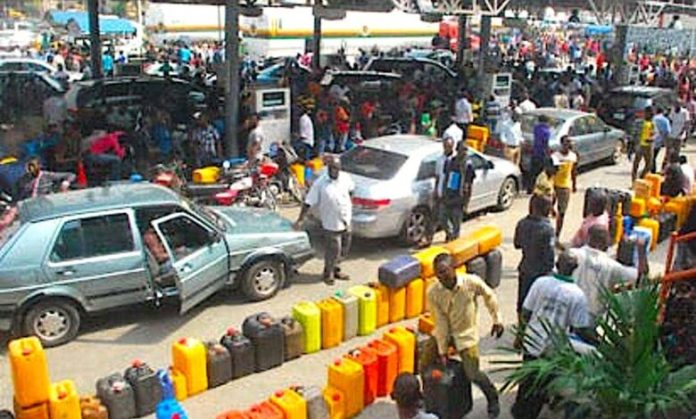
With attention focused on expanding the tax base, the matter gets more compounded. Cost of diesel and aviation fuel has shot up to about N700 per litre. Premium motor spirit, popularly called petrol, has been in short supply since February when the NNPC and its contractors imported substandard fuel that caused severe damage to peoples with engine knocks. The rising cost of transportation reflected a high inflation rate of 15.7 percent recorded in February 2022, from 15.6 percent in January. The Manufacturers Association of Nigeria have sent a distress call seeking Federal Government’s intervention on diesel, the price of which has soared to N720 per litre.
“It is getting extremely difficult to produce and I don’t know how we are going to cope because 70 per cent of industries are running on diesel, there is no light. It is a difficult thing ensuring production at this time, as diesel has gone up to N720 and N730 per litre. We are having 30 percent of what it used to be, whereas the disposable income of people is not increasing and the costs of products are going up.
“Even in my factory now, we are only running one shift instead of three shifts of eight hours each. Other businesses are also running limited hours on diesel as they cannot afford to use generators all day,” Chairman of the Manufacturers Association of Nigeria (MAN), Lanre Popoola, lamented.
The economic consequence is obvious: high cost of production, low capacity, low consumption, loss of jobs, loss of tax revenue, closure of factories and other biting outcomes. How the government plans to continue to expand the tax window in the midst of dwindling economic fortunes amounts to an attempt at squaring a circle. Income and tax revenue do not grow under a lean economic environment. This may lead to squeezing life out of the people that are already exhausted.
The rising cost of petrol importation brings an additional burden to the economy. Nigeria saw its petrol import bill hit an all-time high of N3.96 trillion in 2021. The amount spent on the importation of petrol in 2021 jumped from N2.01 trillion according to data from the NBS. The cost of importing petrol last year is more than 40 times larger than the entire 2021 budget of N94.4 billion meant to pay for free universal basic education. Furthermore, analysis of the trend showed that Nigeria’s petrol subsidy could surpass budgeted N3.36 trillion oil revenue.
Nigeria’s oil production is also falling below the 2.2 million barrel per day mark it used to record.
The government has confirmed that it has terminated electricity subsidy and that fuel subsidy will follow. This will compound the living misery of Nigerian households and businesses as the cost of living gets out of reach. The NBS reports showed that the cost of food has been rising astronomically across the states in recent years due to high transportation cost and insecurity. The current war between Russia and Ukraine, the world’s largest producers and exporters of wheat has sent shivers down the spine of Nigerian business owners.
Aliko Dangote, chairman and chief executive of Dangote Group, while speaking at the 4th annual food processing and nutrition leadership forum in Lagos recently stated that the limited access to fertilizers as a result of the Russia-Ukraine crisis would translate to food scarcity which would in turn translate to increased inflationary pressure.
“Not only wheat or maize will be affected but a lot of components because, as we speak, potash and urea supply are held largely by Russia and Ukraine. There will be scarcity of food because people will not be able to access fertilizers going forward. But we may not see the effect of snow but in the next two or three months, it will be reflected in inflationary pressures,” Dangote said.
About ten months after the Central Bank of Nigeria (CBN) hinted that it would stop foreign exchange sales to deposit money banks (DMBs) amid steep dwindling forex inflow, the banks have stepped up measures to ration foreign currency sales to its customers using their Naira debit cards for overseas withdrawals.
At a press conference addressed by the CBN Governor, Godwin Emefiele, the apex bank revealed that the Bankers Committee had introduced the RT200 FX programme to enhance repatriation of non-oil export proceeds to boost liquidity in the market. The ‘RT200’ FX which stands for the ‘Race to US$200 billion in Forex Repatriation’ constitutes a blueprint that will enable Nigeria to attain the sky-high goal of US$200 billion repatriation, exclusively from non-oil exports over the next 3 to 5 years.
Emefiele, who used the medium to announce the planned stoppage of foreign exchange sales to the banks said the move was the encourage the banks to generate their own foreign exchange and free the nation’s fledging reserves for critical and high priority forex transactions.
This reflects prevailing economic realities that border on Nigeria’s revenue crisis as oil proceeds dwindle, putting pressure on the nation’s external reserves. The reserves fell further by $175 million in February to $39.9 billion, despite the upturn in the price of crude oil, the country’s main source of foreign exchange.
The banks are cutting the dollar spending limits on local currency cards to free more resources to fund imports after the apex bank had signaled it would stop foreign-exchange sales to them.
Analysts say that banks tend to limit the amount that Nigerian customers can transact with their naira cards overseas whenever there is increased risk of dollar shortages domestically.
The International Monetary Fund estimates that the central bank has a backlog of $1.7 billion in unmet demand to investors
On the academic front, the Academic Staff Union of Universities (ASUU) has resolved to continue its nationwide strike for another two months – up till May, 2022. The union said it has resolved to extend the strike for another eight weeks to give the government more time to address all the issues in concrete terms so that students could resume as soon as possible. This reinforces the uncertainty that reins in our educational system.
With the 2023 general election around the corner, government at all levels will literally abandon governance to pursue politics. There will be huge spending of public funds on unproductive areas, salaries may not be paid, productivity will fall and the low standard of living will worsen. The forthcoming months will witness Nigeria’s season of atrophy which must go full cycle before any solution could be found.

Sam Diala is a Bloomberg Certified Financial Journalist with over a decade of experience in reporting Business and Economy. He is Business Editor at THEWILL Newspaper, and believes that work, not wishes, creates wealth.