
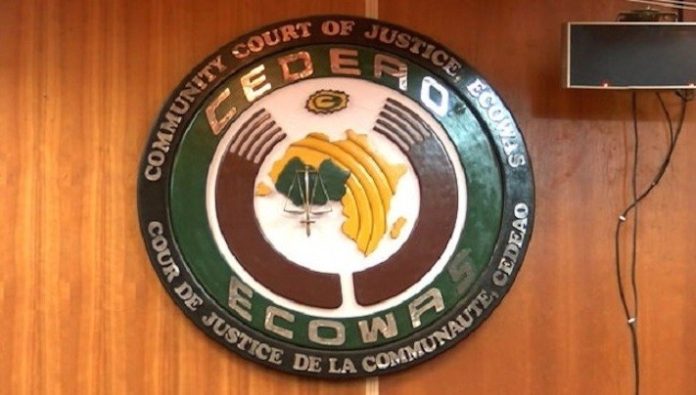
December 15, (THEWILL) — Leaders of the Economic Community of West African States (ECOWAS) have resolved to present a proactive and forceful united front to end the resurgence of military coups, violent extremism and other forms of insecurity threatening the region.
The resolution was reached on Sunday in Abuja at the 68th Ordinary Session of the Authority of Heads of State and Government of ECOWAS, hosted by Nigeria.
Speaking at the summit, leaders acknowledged that West Africa is confronting a complex mix of challenges, including unconstitutional changes of government, transnational organised crime, arms proliferation, cyber insecurity, climate shocks, food insecurity and irregular migration, stressing that these threats do not respect national borders.

Nigeria’s President, Bola Tinubu, represented by Vice President Kashim Shettima, said the region must respond collectively to the growing instability, warning that internal divisions among member states pose a greater danger than external pressures. He emphasised that while disagreements are natural, they must not erode shared values or the region’s common destiny. According to him, ECOWAS unity must be foundational rather than transactional, with fraternity and trust, not force, defining the future of the community.
His counterpart in Sierra Leone and current ECOWAS chairman, President Julius Maada Bio, described the session as a defining moment for the regional bloc. He thanked President Tinubu and the Federal Government of Nigeria for hosting the summit and commended Nigeria’s leadership role in safeguarding constitutional order, particularly in the Republic of Benin.
President Bio disclosed that from January 2026, ECOWAS will implement measures to significantly reduce the cost of air travel across West Africa, including the abolition of certain air transport taxes, as part of efforts to deepen regional integration.
Highlighting the importance of solidarity, President of the ECOWAS Commission, Dr Omar Alieu Touray, cited the bloc’s swift response to instability in Guinea-Bissau and the attempted coup in Benin Republic as evidence of a renewed collective resolve.
The most striking demonstration of this united front, leaders noted, was the rapid intervention to halt the attempted coup in Benin on December 7, 2025, when Nigerian fighter jets and ground troops were deployed within hours to support loyalist forces after soldiers seized the national broadcaster in Cotonou.
Meanwhile, the African Union Commission, represented by the AU Commissioner for Political Affairs, Peace and Security, Ambassador Bankole Adeoye, reiterated that coups and unconstitutional changes of government remain unacceptable to the African Union, describing the ECOWAS session as an opportunity to deepen coordination in promoting democracy and stability.
In a major development at the summit, Africa’s richest man, Aliko Dangote, was announced as the new Chairman of the ECOWAS Business Council, a move aimed at strengthening the private sector–government collaboration to drive regional economic development.
Leaders at the session agreed that only sustained unity, trust and collective action can restore stability and confidence in West Africa, as ECOWAS shifts from reactive sanctions to more pre-emptive military and diplomatic engagement in defence of democracy and regional security.
Felix Ifijeh is a journalist with years of professional reporting experience. Known for his keen news sense, compelling storytelling and commitment to accurate, impactful reporting, he has built a reputation for turning leads into clear, engaging, and well-structured reports that resonate with readers. His work reflects deep newsroom experience and a commitment to accurate, impactful journalism.
