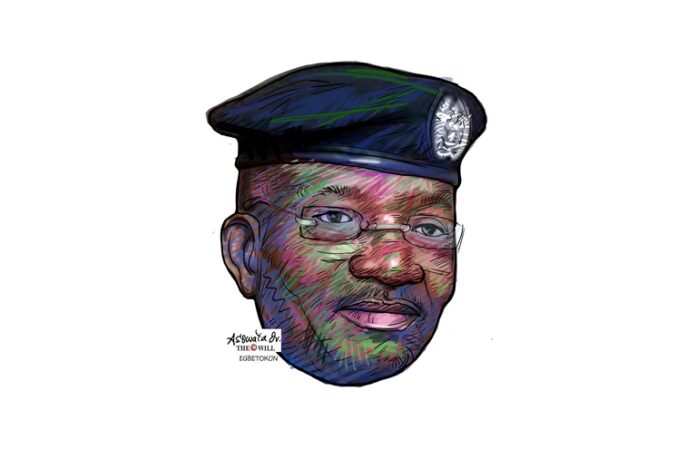
February 03, (THEWILL) – Hours after the Federal Government dismissed claims that the continued stay in office by the Inspector General of Police (IGP) Kayode Egbetokun, was illegal and unlawful, a flurry of reactions has followed, fuelling a controversy.
The government had made the clarification following the controversy surrounding the tenure of IGP Egbetokun, having attained the retirement age of 60 on September 4, 2024.
THE WILL recalls that Omoyele Sowore, the Convener of #RevolutionNow Movement and publisher of Sahara Reporters, recently described Egbetokun as an “illegal IGP”.

While the Police had filed a 16-count charge against Sowore over his remarks about the IGP, the Attorney General of the Federation and Minister of Justice, Lateef Fagebmi said that Egbetokun, whose appointment took effect from October 31, 2023, would remain in office until October 31, 2027, when his four-year tenure will elapse.
Fagbemi explained that before his retirement age, the Police Act was amended to allow the occupant of the office to remain and complete the original four-year term granted under Section 7 (6) of the Act, even though he has attained the age of 60 years.
The Senate had in July 2023 passed the Police Act Amendment Bill, 2024, to guarantee a four-year tenure of office for an IGP.
“For the avoidance of doubt, Egbetokun’s continuous stay in office is in line with the provisions of the Police Act amended in 2024 which allow the occupant of the office to enjoy a term of four years effective from the date of his appointment as IGP, in this case, 31st day of October 2023″, Fagbemi said, adding that the advisory was necessary for the guidance of the general public.
Similarly, defending the IGP, the force headquarters said the appointment is legal and duly confirmed by the Police Council.
Olumuyiwa Adejobi said, “IGP Egbetokun’s appointment is firmly grounded in law, specifically PART III, Section 7 (6) of the Police Act, 2020 (as amended).
“This provision explicitly states that “The person appointed to the office of the Inspector-General of Police shall hold office for four years.”
“Moreover, his appointment was duly ratified by the Police Council, and he has received the requisite confirmation letter from the Presidency, validating his tenure from October 31, 2023, to October 31, 2027, in line with the provisions of Section 8A of the executive bill passed which amended the Police Act, clearly stating that:
“Any person appointed to the office of Inspector-General of Police shall remain in office until the end of term stipulated in the letter of appointment in line with the provisions of section 7(6) of this Act.
‘The amendment aims to provide stability and continuity in the leadership of the Nigeria Police Force, enabling the IGP to implement long-term plans and policies without fear of abrupt termination. This change is expected to enhance the effectiveness and efficiency of the police force in maintaining law and order in the country.”
However, the Police Service Commission, PSC, took an action that opened another dimension to the brewing controversy. On Friday, January 31, 2025, it ordered the immediate retirement of all senior police officers who have either exceeded 35 years in service or are above the age of 60.
The PSC’s Head of Press and Public Relations, Ikechukwu Ani, noted that the commission reviewed its earlier stance from the 24th plenary meeting in September 2017, which allowed force entrants to use their date of enlistment instead of their initial appointment date.
However, Ani said the PSC has now reversed this decision, citing its inconsistency with Public Service Rule No. 020908 (i & ii), which mandates retirement upon reaching 35 years in service or the age of 60.
Ani said, “The Police Service Commission rose from its first extraordinary meeting with the approval for the immediate retirement of senior police officers who have spent more than 35 years in service and those above 60 years of age.
“The commission at its 24th plenary meeting of 27th and 28th September 2017 had approved that the force entrants should have their date of appointment in the force against the date of their enlistment.
“The commission has passionately revisited their decision and has concluded that the said decision in its intent and purpose contradicted the principle of the merger of service in the public service and it violates of Public Service Rule No 020908 ( i & ii), which provides for retirement on attainment of 35 years in service or 60 years of age.”
Ani added that the directive has been formally communicated to the Inspector General of Police for immediate implementation.
He added that the Commission Chairman, DIG Hashimu Argungu, retd, presided over the extraordinary meeting and had Justice Adamu Paul Galumje, retired Justice of the Supreme Court and Hon Commissioner representing the Judiciary; DIG Taiwo Lakanu rtd, fdc, Honourable Commissioner representing the Police and Chief Onyemuchi Nnamani, Secretary to the Commission, in attendance.
“The commission’s decision has been conveyed to the Inspector General of Police for implementation.”
In his reaction to the development, the Executive Director of Rule of Law and Accountability Advocacy Centre, RULAAC, Mr Okechukwu Nwanguma said Egbetokun’s tenure extension controversy raises important questions about legitimacy and the rule of law.
In a note made available to THEWILL, he said that while the Attorney General may argue that the extension is legal, the legitimacy of the process is what’s really at stake.
“The rushed amendment to the Police Act, which was initiated by President Tinubu, whom Egbetokun served under as chief security officer in Lagos State, has sparked widespread criticism.
“The public outcry is not just about the legality of the extension, but also about the perceived favoritism and undermining of the intended retirement provisions. Moreover, the extension has created deep-seated ill feelings within the Nigeria Police Force (NPF), particularly among senior ranks who feel their career progression has been compromised.
“Egbetokun should indeed be concerned about the legitimacy of his tenure extension, as it has the potential to erode trust in the institution and undermine the rule of law. The controversy surrounding his extension has highlighted the need for transparency, accountability, and adherence to established protocols in governance. Ultimately, the legitimacy of Egbetokun’s tenure extension will depend on the perceived fairness, transparency, and adherence to the law.”
Also, 61 other CSOs at the weekend expressed concern over tenure extension for Egbetokun by the government, warning that it would deeply impact public trust and stability in the police force.
They contend that President Bola Tinubu was yet to assent to the bill by the National Assembly on the matter and expressed worry that the letter for his extension emanated from the office of the Secretary to the Government of the Federation.
“The letter signed by the Secretary to the Government of the Federation purportedly extending the tenure of the IGP, have raised questions about its legitimacy and intent. While the SGF plays a role in the administration of government appointments and may facilitate the process. The actual appointment of the IGP rests with the President of Nigeria. The President, based on consultation with and advice from the Police Council, formally appoints the IGP, usually with the approval of the National Assembly.”
They said that without presidential approval, any move to extend the IGPs tenure could be viewed as legally dubious,” adding that the IGP has reached retirement age according to the extant public service rules and the Police Act 2020 and should be replaced.
The CSOs are Rule of Law and Accountability Advocacy Centre (RULAAC), Human and Environmental Development Agenda (HEDA Resource Centre), Resource Centre for Human Rights and Civic Education (CHRICED), Centre for Information Technology and Development (CITAD), African Centre for Media & Information Literacy (AFRICMIL), Civil Society Legislative Advocacy Centre (CISLAC), BudgIT Foundation, Corporate Accountability and Public Participation Africa (CAPPA), State of the Union (SOTU) and Transition Monitoring Group (TMG).
Others are Centre Democracy and Development (CDD), Say NO Campaign –Nigeria, Socio-Economic Rights and Accountability Project (SERAP), Good Governance Team (GGT), Global Rights, African Centre for Leadership, Strategy & Development (Centre LSD), Amnesty International Nigeria, Borno Coalition for Democracy and Progress (BOCODEP), Connected Development (CODE), CLEEN Foundation and Women Advocate Research and Documentation Centre (WARD-C), among others.

Felix Ifijeh is a journalist with years of professional reporting experience. Known for his keen news sense, compelling storytelling and commitment to accurate, impactful reporting, he has built a reputation for turning leads into clear, engaging, and well-structured reports that resonate with readers. His work reflects deep newsroom experience and a commitment to accurate, impactful journalism.