
-
Mustafa Chike-Obi says Eko Atlantic could eventually contribute more to Nigeria’s economy than the Dangote Refinery.
-
He argues the new city has greater long-term potential to create jobs and attract businesses.
-
Development economist Dr Ken Ife insists the refinery addressed a more urgent national need.
-
The exchange has reopened conversations about how Nigeria supports transformational private investments.
July 31, (THEWILL) — For many Nigerians, the Dangote Refinery is the country’s most important private investment in decades.
Mustafa Chike-Obi sees another project that could one day leave an even bigger economic footprint.
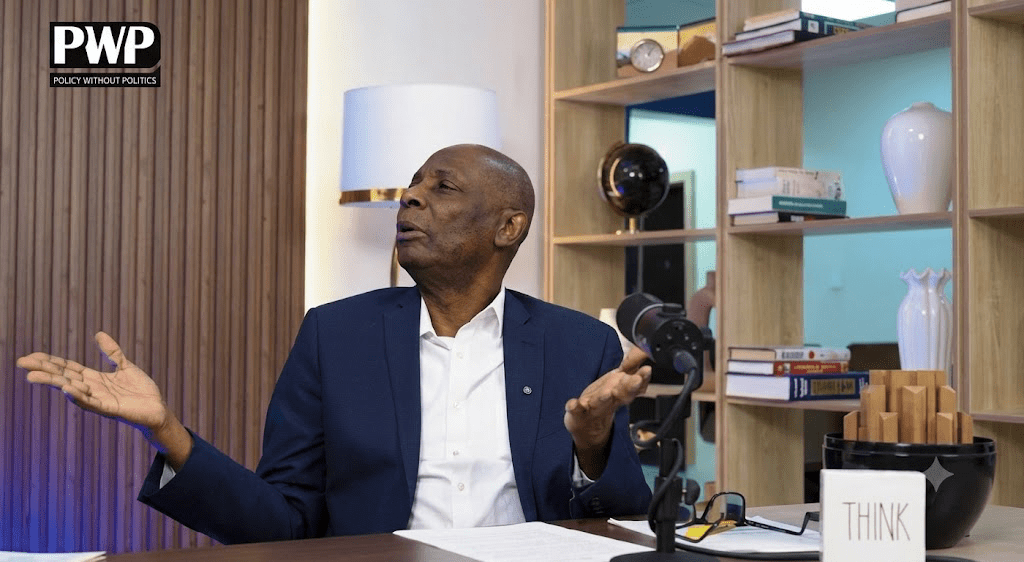
Speaking in an interview with development economist Dr Ken Ife, the former Managing Director of the Asset Management Corporation of Nigeria (AMCON) and former Chairman of Fidelity Bank said Eko Atlantic could eventually create more jobs and contribute more to Nigeria’s Gross Domestic Product than the 650,000-barrel-per-day Dangote Refinery.

“I think by the time Eko Atlantic is a well-developed city, its impact on the Nigerian economy and GDP will, in my opinion, dwarf that of the refinery”, Chike-Obi said.
His argument goes beyond comparing two landmark projects. It is about the kind of investments that continue creating value long after construction ends.
“Eko Atlantic, its stated purpose, and this was reclaimed land with a seawall, was to prevent erosion in Victoria Island and Ikoyi”, he said. “People are saying it may not have done that, but that is a superficial knee-jerk reaction.”
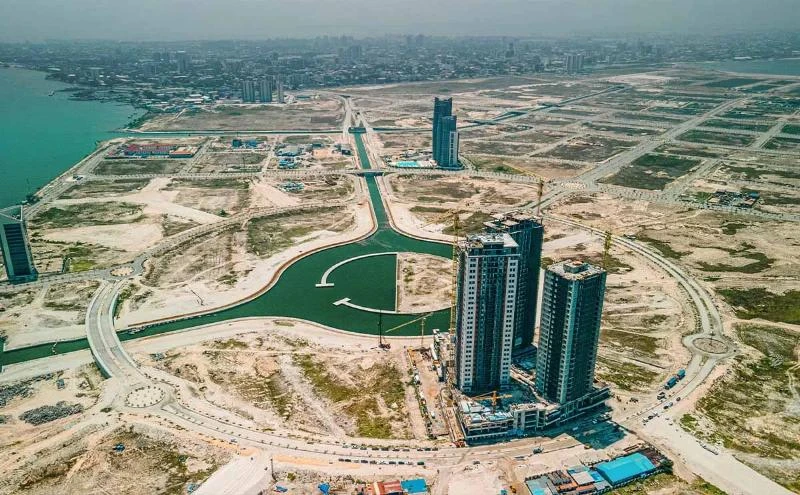
The city, built on roughly 10 square kilometres of reclaimed land along the Atlantic coastline, was designed not only to expand Lagos but also to serve as a coastal defence against ocean surges that have threatened Victoria Island for decades. Developers say it is expected to accommodate about 250,000 residents and attract another 150,000 commuters every day when fully developed.
For Chike-Obi, the real value lies in everything that follows.
“It will, 10 years from now, employ more people in one year than a refinery can employ in 10 years. So the employment potential of Eko Atlantic is much bigger than a refinery.”
He pointed to signs that major institutions are already betting on that future.
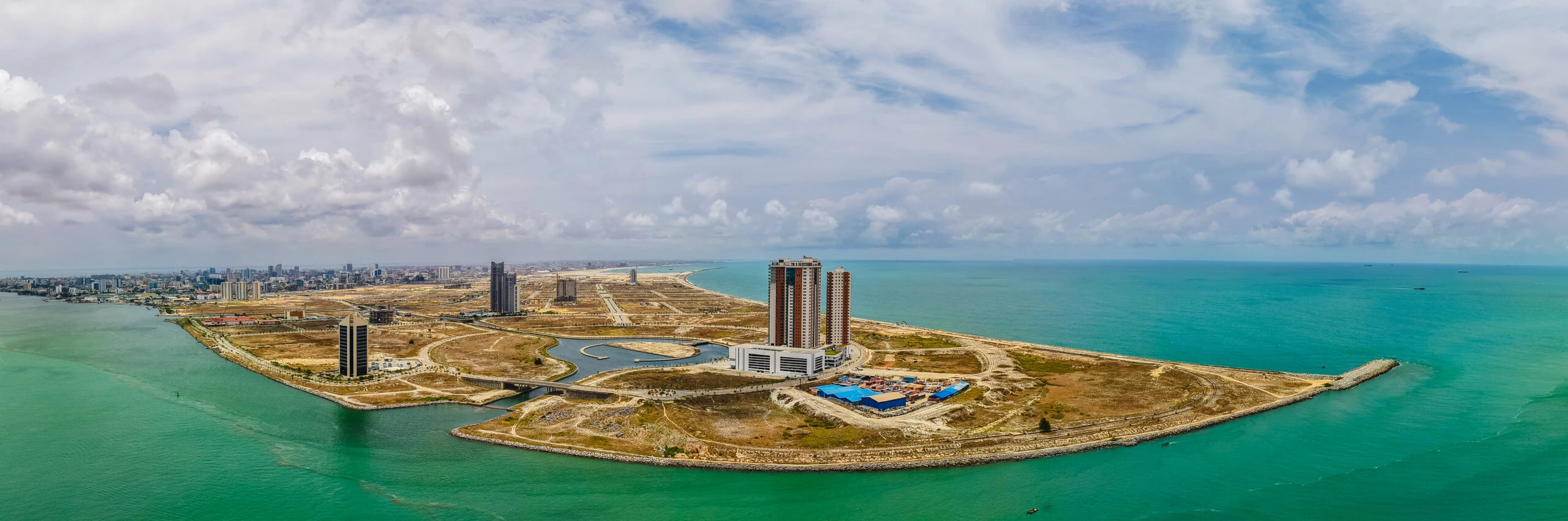
“America is building, I think, its biggest foreign embassy in Eko Atlantic. FirstBank is there. There are a number of restaurants and hotels. I think MTN is going there.”
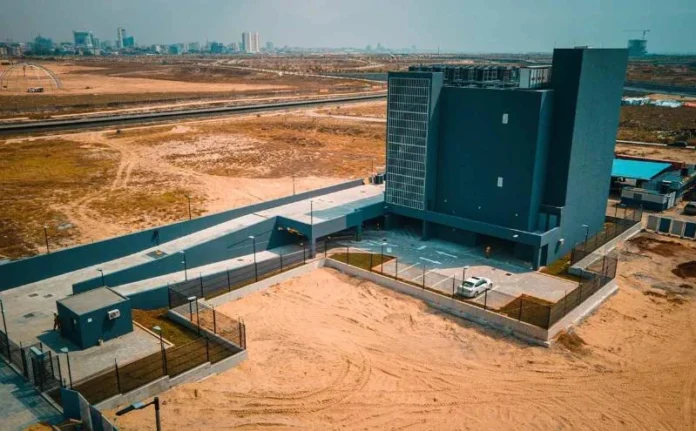
Publicly available project information supports parts of that outlook. The United States is constructing a new consulate complex within Eko Atlantic, while several commercial developments, office towers, residential projects and hospitality investments are already under way.
The city is being developed as a mixed-use financial and business district intended to attract international companies alongside local investors.
A Clash of Two Economic Visions
Dr Ken Ife, however, challenged the comparison.
He argued that the Dangote Refinery addressed a pressing national problem by helping Nigeria reduce its dependence on imported petroleum products, while Eko Atlantic represents a longer-term development project whose benefits will take more time to unfold.
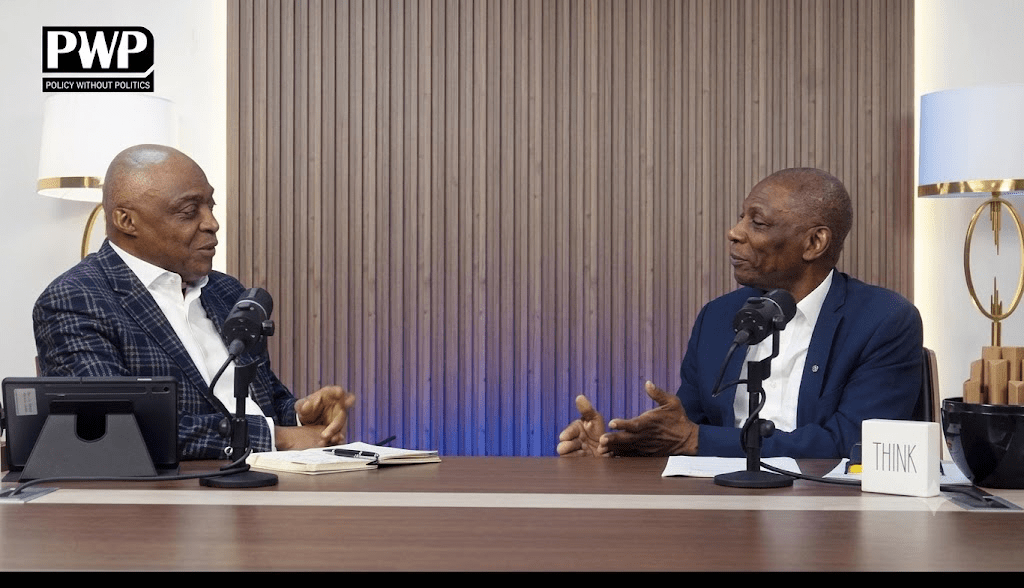
“There may not have been an emergency,” Ife said, “but there was a need to clearly bridge that gap.”
Chike-Obi disagreed.
“Well, I don’t think there was an urgency to build a refinery,” he replied. “You say so because you had a horrible policy of fuel subsidy with constraints applied.”
He argued that fuel queues largely disappeared after the removal of petrol subsidy before the refinery began supplying the domestic market.
“From the time fuel subsidy was removed to when the refinery started, there were no fuel queues. So the urgency you’re talking about, I saw no urgency with the refinery.”
When Ife insisted there was still a supply gap to close, Chike-Obi responded bluntly.
“But there was no gap. The gap was subsidy.”
The conversation then shifted from economics to public policy.
Chike-Obi questioned what he described as the difference in government posture towards both projects.
“But now let’s ask, what is government policy towards Eko Atlantic? How does it differ from government policy towards the refinery?”
He argued that the government should avoid creating the impression that it favours one strategic investment over another.
“Government should be even-handed. Government should not be seen as picking winners and losers. These are two great projects. One appears to be having more government support than the other.”
He added that Eko Atlantic has largely progressed without seeking the kind of policy backing often associated with industrial projects.
“Eko Atlantic is not asking for government support in terms of import bans and all that stuff. They’re both free trade zones. But it seems to me from a distance, Eko Atlantic is far less dependent on the good graces of the Federal Government and the Lagos State Government than the refinery seems to be.”
Chike-Obi also called on more private institutions to strengthen their presence in the city.
“I know Femi Otedola encouraged FirstBank to move there as a means of supporting the project. I know that. So that’s a good thing. I think other large institutions should follow suit.”
The Dangote Refinery and Eko Atlantic were built to solve different problems.
One is reshaping Nigeria’s energy landscape by refining crude oil locally and reducing dependence on imported fuel. The other is attempting to create a new commercial district designed to attract investment, businesses and talent for generations.
Chike-Obi believes history may judge the second project more generously than many people do today.
His prediction may take years to test, but it has already started a conversation that reaches far beyond Lagos. It asks how Nigeria measures the success of its biggest investments and what kind of projects leave the deepest mark on an economy.

