
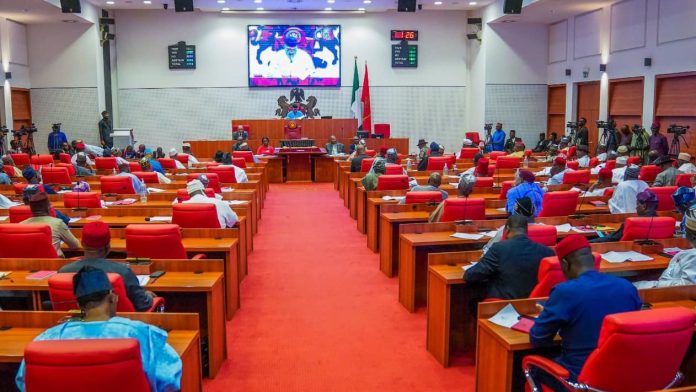
February 04, (THEWILL) — The Senate, on Wednesday, rejected a proposal to make the electronic transmission of election results mandatory, instead retaining discretion of the Independent National Electoral Commission (INEC) over how results are transmitted, as it passed the Electoral Act 2022 (Repeal and Re-enactment) Amendment Bill 2026.
During detailed clause-by-clause consideration, the upper chamber voted down an amendment to Clause 60, Subsection 3, which sought to compel presiding officers to electronically transmit results from each polling unit to the INEC Result Viewing (IREV) portal in real time, after completing, signing, and stamping Form EC8A, countersigned by party agents or candidates.
Instead, the Senate retained the existing wording of the Electoral Act, allowing presiding officers to transfer results “in a manner as prescribed by the Commission”, giving INEC flexibility in determining how results are transmitted.

Lawmakers also deliberated on penalties related to the buying and selling of Permanent Voter Cards (PVCs). A proposed 10-year jail term under Clause 22 was rejected, with the Senate opting to retain a two-year imprisonment term while increasing the fine from ₦2 million to ₦5 million.
Other amendments focused on electoral timelines. Clause 28, on notice of election, was reduced from 360 days to 180 days prior to election day. Similarly, Clause 29 now requires political parties to submit lists of candidates and affidavits to INEC 90 days before the election, down from the previous 180 days.
Clause 44, concerning ballot paper format, was retained. Under this provision, INEC must invite political parties, 20 days before an election, to inspect samples of relevant electoral materials to verify that party identities are accurately represented. Parties have two days to respond in writing.
The Senate also replaced smart card readers with the Bimodal Voter Accreditation System (BVAS) under Clause 47. However, after debate, lawmakers rejected electronically generated voter identification, maintaining the Permanent Voter Card as the sole voter ID at polling units.
Finally, Clause 142 on the effect of non-compliance, which allowed parties alleging electoral irregularities to rely solely on documentary evidence without oral testimony, was struck out. Lawmakers argued the provision could complicate judicial proceedings in election petitions.
The amended Electoral Act Bill will now be harmonised with the House of Representatives’ version before being sent to the President for assent.

Felix Ifijeh is a journalist with years of professional reporting experience. Known for his keen news sense, compelling storytelling and commitment to accurate, impactful reporting, he has built a reputation for turning leads into clear, engaging, and well-structured reports that resonate with readers. His work reflects deep newsroom experience and a commitment to accurate, impactful journalism.
