
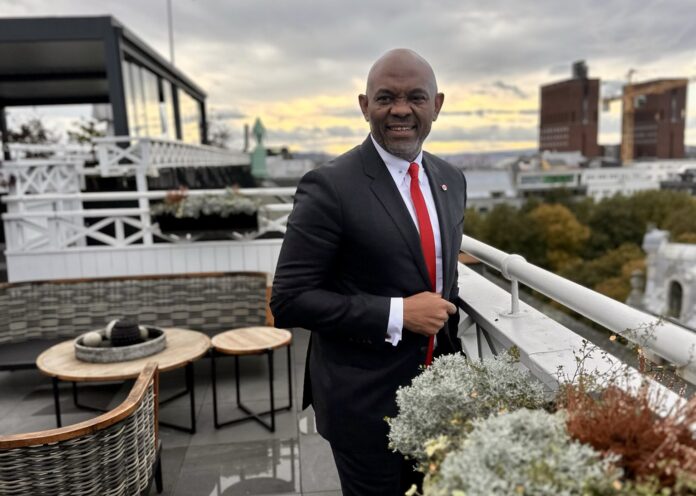
October 14, (THEWILL) — Nigeria’s foremost banker and philanthropist, Tony Elumelu, has said Africa’s sustainable development will only come from investment and shared prosperity, not dependency on foreign aid.
Elumelu, who chairs Heirs Holdings and the United Bank for Africa (UBA), stated this at the recent Africa-Europe Summit, reiterating a message central to his economic philosophy: Africa needs partners, not charity.
His remarks come at a time when several African economies face mounting fiscal pressure, rising debt, and weak private-sector participation, conditions that highlight the urgency of shifting toward self-sustaining growth models.

From Aid Dependence to Investment Partnerships
Elumelu’s position is anchored in his belief that Africa’s economic renaissance depends on entrepreneurship, capital formation, and private-sector leadership.
Through the Tony Elumelu Foundation (TEF), he has disbursed over $85 million in seed capital to more than 18,000 young entrepreneurs across all 54 African countries, while providing digital training to an additional 1.5 million people.
Elumelu said, “This is the model Africa needs — one that multiplies opportunity, builds resilience, and empowers people to create value.
“True empowerment is when people have the tools to build their own prosperity.”
He explained that a shift from charity to partnership means African nations and their foreign allies must embrace mutual accountability, replacing short-term aid interventions with long-term investments that generate jobs, innovation, and industrial growth.
Why the Old Model No Longer Works
Traditional aid frameworks, though often well-intentioned, have trapped economies in cycles of dependence. Many donor-funded projects focus on short-term relief rather than long-term productivity and rarely encourage local ownership.
Elumelu argues that Africapitalism, the philosophy that private investment can deliver both profit and social impact, aligns better with Africa’s development aspirations.
By prioritising business development, energy access, and digital infrastructure, the continent can lift millions out of poverty while reducing vulnerability to external shocks.
World Bank data show that private investment accounts for less than 20% of GDP in many sub-Saharan economies, compared with 35–40% in emerging Asian markets.
Reversing that gap, analysts say, requires the kind of “partner economics” Elumelu advocates, where Africa’s growth is powered internally but supported externally through equity, not aid.
Practical Benefits of Partnership-Driven Growth
If African countries adopt this approach, several tangible outcomes could follow:
Job Creation and SME Growth – Access to catalytic funding for micro, small, and medium enterprises will expand employment and local production.
Capital Market Deepening – Cross-border investments will boost liquidity and attract more long-term investors.
Infrastructure Development – Partnerships in power, transport, and broadband will reduce costs and strengthen regional value chains.
Economic Resilience – A stronger private sector will shield African economies from global commodity price swings and donor volatility.
Policy Shifts Needed
Elumelu said for this transformation to happen, African governments must evolve from gatekeepers to enablers of enterprise. This includes:
Creating predictable policies that attract long-term investors.
Reforming tax and regulatory systems to improve SME access to credit and equity markets.
Strengthening institutions that uphold the rule of law and investor protection.
Investing in human capital through vocational training and digital literacy programmes.
“These steps are essential if Africa hopes to capture the dividends of partnership-led growth,” he said.
Building for the Common Good
Elumelu’s message, which resonates beyond philanthropy, aligns with the growing consensus that Africa’s next growth phase must be investment-driven, not aid-sustained.
In Nigeria, where MSMEs contribute about 48% of GDP and employ over 80% of the workforce, Elumelu said access to finance remains the biggest barrier to progress. Collaborative financial ecosystems involving banks, development finance institutions, and private investors, he noted, could transform that challenge into national opportunity.
“The common good is best served when Africans take ownership of their growth narrative, replacing handouts with hard investments, and dependency with dignity,” Elumelu said.
He concluded, “Partnership is the true path to freedom. When we invest in Africa, we invest in our collective future.”

Ogochukwu Onwaeze
