One of the most powerful individuals in the U.S. for almost half a century was not even the POTUS or the Chief Justice of the Supreme Court. He was several rungs lower than the CJ. All the same he wielded more authority and power than his superiors in the Department of Justice. On a whim, he could order the arrest and detention of just about any person – Hollywood film stars and directors, writers and civil rights campaigners and even student demonstrators and sundry radicals.
That man was John Edgar Hoover!
His power derived not from any victory at the polls like most American politicians but from the immense influence he wielded as the director of the Federal Bureau of Investigation, an organisation charged with internal security of the US. From 1924 when he became director, Hoover modernised what started as a ramshackle internal security outfit. By the time he left in 1972, the FBI had become synonymous with Edgar Hoover: Hoover was FBI and FBI was Hoover.

As a result, the director used the organisation he helmed to hound innocent Americans, ordered wiretaps of prominent citizens and ordinary Americans. In short, Hoover abused his office serially and threw his weight around like he was some kind of demi-god.
Nigerians are beginning to feel the same way about the current Director General of the Department of State Services (DSS), Alhaji Yusuf Magaji Bichii.
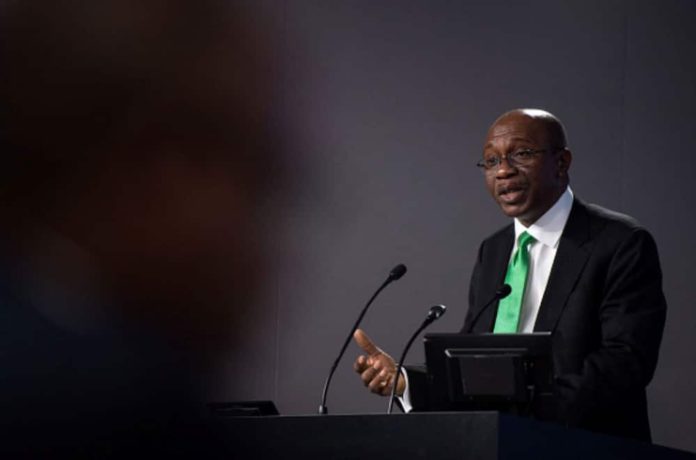
Only last week, Nigerians woke up to the shocking news of the security operatives seeking a court order to arrest and detain the Central Bank of Nigeria (CBN) Governor, Godwin Emefiele, over what they charged as terrorism financing. The implication is that if an individual anywhere in the world is accused of financing terrorists, he is also one. The person himself may not strap bombs around his waist, point a Kalashnikov at cringing victims or even drive an explosive-packed vehicle into pedestrians. But a financier, in the DSS’s reckoning, can be labelled as a terrorist since his financial muscle makes the purchase of the arsenal possible.
It was with such a mindset the DSS sought approval from the court to arrest and detain the CBN governor. They failed, thanks to a gimlet-eyed and impartial judiciary.
Ever since, analysts have pored over the DSS versus Emefiele face-off, most of them making a case for the CBN governor and also damning the security outfit for their overzealousness and sheer audacity. More importantly, it was the trial judge himself who deflated the DSS’s case from the onset.
According to reports, the presiding judge, Justice JT Tsoho, saw loopholes in the DSS’s application. Weighty as the accusation seemed against the sitting governor of the CBN, Tsoho ruled that the “DSS did not provide any concrete evidence to substantiate its claims that Emefiele was involved in terrorism financing, and economic crimes,” insisting that “he (judge) should have been taken into confidence if there was any evidence to back the allegations.”
Of course, there was nothing like that from the DSS. Equally important, was the sloppiness of an organisation that should be very thorough. Whether out of premature excitement that they were going to net a big fish or out of pure ineptitude, the judge wondered “why the name of the respondent was given simply as ‘Godwin Emefiele’ without a material disclosure that he is the same person as the CBN governor, a highly ranking public official who occupies an extremely sensitive position.”
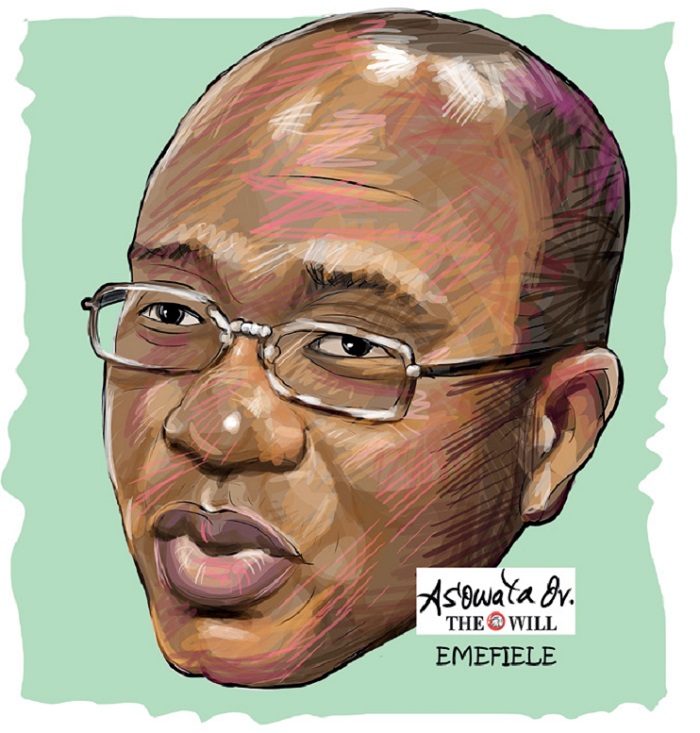
The inference is that without the CBN governor’s appropriate designation, the Godwin Emefiele the DSS sought to arrest and detain could have been any person. After all, there are some other Nigerians by that name. The DSS’s application, according to the discerning judge, could have been any one of them. It was confusing to the judge.
Even more confounding to him was the fact the application from the security operatives was without a presidential approval. In other words, to arrest such a high-ranking public servant should bear a presidential seal of approval. There was none!
According to one source, “the court said such an application should have been accompanied by presidential approval because of the grave implications for the Nigerian economy if the CBN governor is arrested and detained.”
Apparently, the economic consequences of such an arrest and detention of Emefiele didn’t mean much to the almighty DSS. They wanted their man, period. And they were determined to get him. In the end, justice prevailed.
Writing in the Punch of Thursday December 22, 2022, for instance, Abimbola Adelakun, one of the country’s most read and incisive columnists, put the DSS/ Emefiele face-off in a better perspective.
Headlined “The DSS needs intelligent officers,” Adelakun started by giving the security operatives a thumbs-down. “If you thought that the characteristic display of sloppiness, laxity, and an outright lack of acumen by the Department of State Services can no longer embarrass you, then you should read the submission of the judge that refused to grant their prayer to arrest and detain the Central Bank of Nigeria Governor over alleged terrorism financing.”
Continuing, she noted that “such those allegations against a high-ranking government official like a CBN governor would be considered weighty and treated with all seriousness. In a nation where political and economic activities are properly understood as the determinants of people’s destinies, moving against a CBN governor is not a thoughtless affair. The allegations against such a figure must have irrefutable proof, and the nation’s leaders must be put on notice to make succession plans.”
As is now very well known, and as detailed in her column, “the court declined to grant the DSS application. Why? The DSS did not supply any “concrete evidence” substantiating their accusations. The more baffling aspect of the flippancy of the DSS is that their application could not even acknowledge the status and designation of the ‘Godwin Emefiele’ they wanted arrested. “They probably forgot that detail, or they were so carried away by the aggrandising power they were about to display that they failed to diligently read the document they submitted to the court. This might seem like a simple oversight, but their failure to observe such a vital detail calls the whole quality of their investigation and professional judgment to question. As the judge rightly noted, the DSS could have been accusing any random person who shares that name.”
More disturbing to Nigerians as Adelakun pointedly observed is “How does an organisation whose activities border on operations that require intelligence always manage to act so unintelligently? Yes, for an organisation like the DSS, intelligence means surveillance and gathering knowledge about activities that might threaten the nation’s security. But intelligence is not mere data, it is also dispositional. An organisation like the DSS would be considered truly intelligent if they combined their spying activities with the ability to think about things—reflexivity, logicality, reasonableness, and the ability to solve problems.”
As the latest fiasco demonstrates, not forgetting the surprise raid on a judge’s house months before, the DSS now smacks of the Directorate of Military Intelligence of yore, of hounding, arbitrary arrest and detention of Nigerians during the military dictatorships in the Abacha era.
More worrisome to Adelakun in her column and, by extension, the rest of us, is the security outfit’s reckless abuse of power, of practically taking the law into their hands.
“We should be worried,” she cautions, “about the lack of seriousness on the part of the DSS. A potent weapon in the hands of the unintelligent is frightening because they will put it to brutal use. Take the instance of DSS’ invasion of the house of supposed freedom fighter Sunday Adeyemo (or Sunday Igboho). The raid was illegal, and they even stormed his house with babalawos! Apparently, the DSS took the nonsense that Adeyemo could shape-shift into a cat seriously. They went as far as ‘arresting’ some cats believing one could be Adeyemo. They also arrested some babalawos they believed supplied him with supernatural powers, illegally detained them, and even taunted one of them to magically vanish before their eyes. Are you any surprised that these clowns carried such magical thinking into judicial processes? The superstition underlying their abjuration of logical reality when they believed a man could truly transmogrify followed them to the court where they also thought they could get things done in the real world even if reasonable processes were eliminated.”
This time in the DSS’s confrontation with the CBN governor, there were no juju men or even any form of voodoo involved. What was needed was empirical evidence that the CBN governor had flouted the law, that he was a security threat to the country. There was none. Is it any surprise they bungled their case right from the get-go? Is it any surprise the all-knowing judge saw through their ruse and let them know it?
Without any “concrete evidence” against the CBN governor as a financier of terrorism, the DSS seems to have lost one big one they hoped would have been an easy win.