
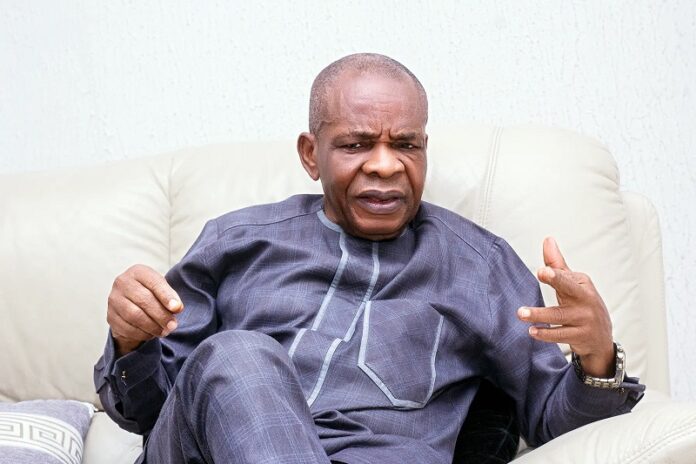
November 24, (THEWILL) — Former Minister of Lands, Housing & Urban Development, Chief Nduese Essien, has warned that Nigeria is “dangerously close to normalising terrorism”, describing the past week as one of the darkest in the country’s recent security history.
In a strongly worded statement issued in Uyo at the weekend, the elder statesman said the surge in killings and mass abductions across several states reflects “a catastrophic breakdown of national security” and exposes a failure of leadership at the highest levels of government.
Essien cited a succession of violent attacks recorded within days: the kidnapping and execution of Brigadier General Musa Uba and three soldiers in Borno; the abduction of 64 residents in Tsafe, Zamfara; and the kidnapping of 25 female students and a school principal in Kebbi, during which a vice principal was murdered.

He also referenced the killing of three worshippers and kidnapping of 38 others in Kwara, the murder of a police officer in Geidam, Yobe State, the murder of eight Civilian Joint Task Force members in Gwoza, Borno, and the abduction of 15 persons—including nursing mothers and newborns—in Sokoto.
According to him, these incidents occurred barely days after more than 300 students were kidnapped from a Catholic school in Niger State, painting a grim picture of communities where “schools, farms and places of worship have become danger zones.”
Essien accused the administration of President Bola Tinubu of failing to provide the “strong and focused leadership” needed to confront expanding terror networks, arguing that insecurity has worsened despite the President’s earlier criticisms of previous governments.
He questioned the competence of some defence-sector appointments, warning that placing individuals without deep security expertise in strategic positions weakens national efforts against increasingly sophisticated criminal and terrorist groups.
The former minister added that lingering, though unverified, allegations of sympathies for terror elements within government circles have fuelled public anxiety and further eroded trust in state institutions.
Linking the escalating violence to structural socio-economic issues, Essien pointed to rapid population growth in vulnerable regions, rising numbers of out-of-school children, pervasive poverty and what he described as “a cancerous level of corruption” undermining public finance.
He argued that these conditions provide fertile ground for the recruitment of young people into armed groups, while financial leakages and the failure to implement investigative report findings continue to weaken the national security architecture.
Essien also warned against the politicisation of security and the alleged intimidation of dissenting voices, cautioning that the erosion of civic freedoms could push Nigeria toward authoritarianism.
Declaring that the country stands at a critical crossroads, he called for decisive action from the President, accountability from the National Security Adviser and Defence Ministers, and measurable results from the service chiefs.
The elder statesman urged traditional rulers, religious leaders, civil society organisations and the media to rally in defence of the nation, insisting that Nigerians must “stand together, defend our country, and refuse to remain silent while it bleeds.”

