
June 25 (THEWILL) — Europe is grappling with one of its most severe early-summer heatwaves on record, with temperatures exceeding 40 degrees Celsius in several countries, red weather alerts issued across large parts of the continent, and reports indicating that at least 250 people have died as a result of the extreme conditions.
The unprecedented heatwave has engulfed much of Western and Central Europe, shattering temperature records, disrupting transportation networks, forcing school closures, and prompting governments to activate emergency response measures amid growing concerns over the human and economic toll of extreme weather events.
France, Spain, Italy, Belgium, the United Kingdom, the Netherlands, and several Eastern European countries have all reported record-breaking temperatures in recent days.

Authorities across the region have warned residents to remain indoors during peak heat hours, stay hydrated, and check on vulnerable populations, particularly the elderly, children, and those with pre-existing health conditions.
According to media reports, the heatwave has been linked to at least 250 deaths across Europe, including fatalities attributed to heatstroke, cardiac complications, and drowning incidents as people sought relief from the scorching temperatures.
Spain has recorded more than 100 deaths, while France, Italy, and Belgium have also reported heat-related fatalities.
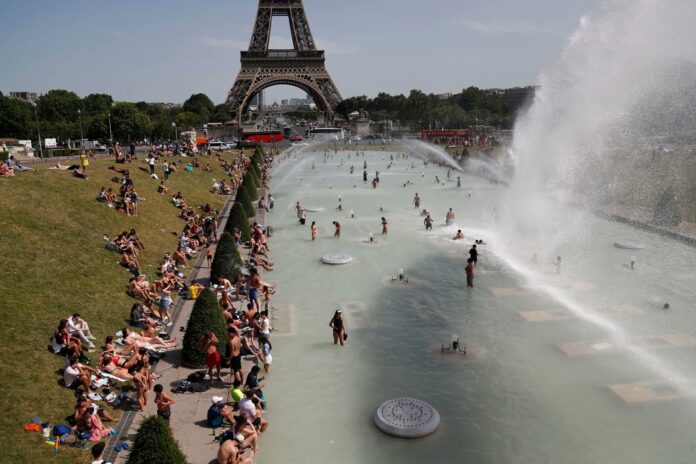
France has emerged as one of the worst-hit countries, registering its hottest day on record this week, with temperatures surpassing 40°C in several cities, including Nantes.
More than 90 per cent of the French population has been exposed to extreme heat conditions, prompting authorities to place dozens of administrative regions under the highest-level red alert.
French authorities have also reported dozens of drowning deaths over the past week as residents flocked to rivers, lakes and beaches to escape the intense heat.
Public landmarks, including the Eiffel Tower and the Louvre Museum, have been forced to adjust operations, while schools and public services have experienced widespread disruption.
In neighbouring Spain, meteorological agencies have recorded some of the highest average June temperatures since records began in 1950.
Parts of the country have endured temperatures approaching 44°C, with health authorities issuing repeated warnings about the risks of heat exhaustion and dehydration.
Italy’s Health Ministry has issued red alerts for major cities including Rome, Milan, Florence, and Turin, warning that the extreme temperatures pose risks not only to vulnerable groups but also to healthy adults.
Some regional governments have restricted outdoor work during the hottest periods of the day to protect construction workers, delivery personnel, and agricultural labourers.
The heatwave has also reached the United Kingdom, where the country recorded its hottest June day since records began. Temperatures exceeded previous benchmarks set during the infamous 1976 heatwave, prompting school closures and travel disruptions across parts of England and Wales.
Across Europe, rail services have been disrupted by overheating tracks and power systems, while energy networks have come under pressure from surging demand for cooling. In France alone, tens of thousands of households experienced power outages linked to the extreme weather.
Meteorologists attribute the heatwave to a persistent high-pressure system, often described as a “heat dome” or “Omega block”, which has trapped hot air over much of the continent. The phenomenon has been intensified by hot air masses moving northward from the Sahara Desert.
The World Health Organization has warned that Europe is warming at roughly twice the global average rate, making the continent increasingly vulnerable to prolonged and intense heatwaves.
Health experts have urged governments to strengthen climate-resilient infrastructure and public health systems as extreme weather events become more frequent and severe.
Scientists say the latest crisis underscores the growing impact of climate change across Europe, where record-breaking temperatures, droughts, wildfires, and other weather-related disasters have become increasingly common in recent years.
With forecasts indicating that the heatwave could continue spreading eastward in the coming days, authorities remain on high alert as millions of Europeans brace for further extreme conditions.

Felix Ifijeh is a journalist with years of professional reporting experience. Known for his keen news sense, compelling storytelling and commitment to accurate, impactful reporting, he has built a reputation for turning leads into clear, engaging, and well-structured reports that resonate with readers. His work reflects deep newsroom experience and a commitment to accurate, impactful journalism.
