
June 29 (THEWILL) — The Federal Executive Council (FEC) has approved financing packages worth approximately $2.96 billion, €200 million, and ₦215 billion to support critical sectors of the Nigerian economy, including transportation, agriculture, power, infrastructure, and Micro, Small, and Medium-sized Enterprises (MSMEs), in a move aimed at accelerating economic growth under the Renewed Hope Agenda.
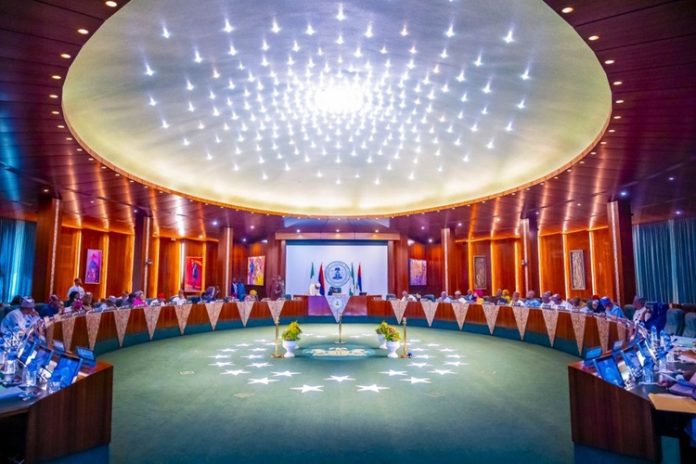
The approvals were announced on Monday by the Minister of Finance and Coordinating Minister of the Economy, Taiwo Oyedele, while briefing State House Correspondents after the FEC meeting presided over by President Bola Tinubu at the Presidential Villa, Abuja.
Oyedele disclosed that the Council considered 14 memoranda presented by the Ministry of Finance and grouped the approvals into five strategic intervention areas designed to deepen infrastructure development, lower transportation costs, boost agricultural productivity, expand access to energy, and improve financing for small businesses.

“For Council, we made very strategic decisions, which I have decided to categorise under five headings,” he said.
As part of efforts to reduce transportation costs and encourage cleaner energy, FEC approved ₦215 billion to complete investments under the Presidential Compressed Natural Gas (CNG) Initiative.
According to Oyedele, the funds will support the procurement of CNG buses, electric vehicles, CNG-powered tricycles, and the establishment of vehicle conversion centres across the country.
“The first one is to do with transportation, how to bring the cost of transportation down,” he said, noting that the approval would enable the government to complete the remaining investments under the initiative.
The CNG programme is one of the Federal Government’s flagship interventions introduced to cushion the impact of fuel subsidy removal by providing Nigerians with cheaper and cleaner transportation alternatives.
To strengthen food security and agricultural industrialisation, the Council also approved financing arrangements worth $900 million for agricultural development projects.
The package will finance rural technical and vocational training, the development of Special Agro-Industrial Processing Zones (SAPZs), and agricultural value chain programmes aimed at increasing productivity, value addition, and rural employment.
“Altogether, we have different financing arrangements coming to a total of 900 million U.S. dollars,” Oyedele stated.
The minister said the investments are expected to improve agricultural processing capacity, enhance farmers’ incomes, and strengthen Nigeria’s food production systems.
In the power sector, FEC approved a $160 million financing facility to support rural solar energy development in Niger State.
Oyedele explained that the financing comprises $150 million from the Islamic Development Bank and $10 million in counterpart funding from the Niger State Government.
“This is a 160 million U.S. dollar facility for Niger State solar development projects,” he said.
The project is expected to expand access to electricity in underserved communities through renewable energy infrastructure while supporting Nigeria’s transition to cleaner energy sources.
Council also approved a $1.2 billion financing facility for Section Two of the Sokoto–Badagry Super Highway, one of the Federal Government’s flagship infrastructure projects.
The highway traverses 11 states and is expected to improve regional connectivity, facilitate trade, reduce transportation costs, and stimulate economic activities across the northern and southern parts of the country.
According to Oyedele, the investment is intended to strengthen logistics networks and unlock economic opportunities along the transport corridor.
To improve access to affordable financing for businesses, particularly MSMEs, the Council approved €200 million and $500 million in financing through the Development Bank of Nigeria (DBN).
Oyedele stressed that the intervention would enable the DBN to expand lending to small businesses, which remain a major source of employment and economic growth.
“We always have to think about how to support that sector because supporting them is supporting ourselves and our country,” he said.
He added that the financing would provide affordable credit to entrepreneurs, helping businesses expand operations, create jobs, and contribute more significantly to national economic development.
The minister said the approvals underscore the Tinubu administration’s commitment to using strategic investments and innovative financing mechanisms to address infrastructure deficits, improve productivity, and stimulate inclusive economic growth across key sectors of the Nigerian economy.

Felix Ifijeh is a journalist with years of professional reporting experience. Known for his keen news sense, compelling storytelling and commitment to accurate, impactful reporting, he has built a reputation for turning leads into clear, engaging, and well-structured reports that resonate with readers. His work reflects deep newsroom experience and a commitment to accurate, impactful journalism.
