April 09, (THEWILL) — The Federal Government has reaffirmed its commitment to strengthening Nigeria’s security architecture by backing the deployment of space-based intelligence and charging the Defence Space Administration (DSA) to intensify efforts at enhancing military operations across the country.
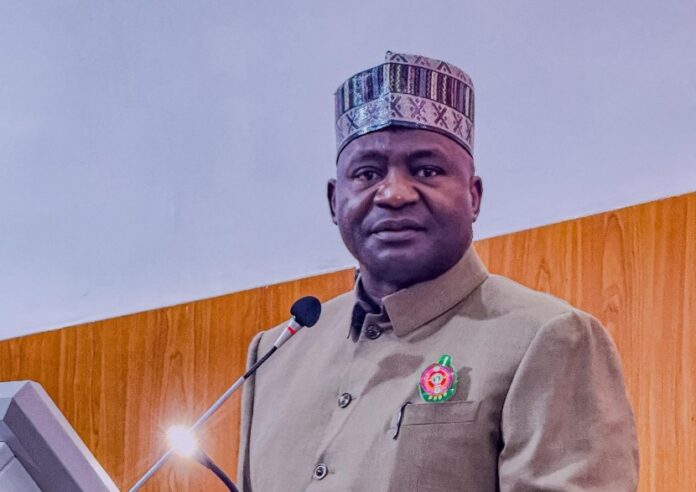
The Permanent Secretary, Ministry of Defence, Richard Pheelangwah, gave the directive during a familiarisation visit to the headquarters of the Defence Space Administration in Abuja, where he underscored the critical role of advanced technology in modern warfare and national security management.
In a statement signed on Thursday by Queenet Iheoma-Hart, on behalf of the Director, Press and Public Relations, Ministry of Defence, Pheelangwah described the DSA as a key enabler of operational effectiveness for the Armed Forces, noting that its provision of geo-spatial intelligence, satellite imagery, and real-time data has significantly improved the planning and execution of military operations.

“The Defence Space Administration remains a critical enabler of operational effectiveness for our Armed Forces, providing geo-spatial intelligence, satellite imagery and real-time data required for the planning and execution of military operations”, he said, adding that the agency’s contributions have enhanced surveillance, reconnaissance, and situational awareness across various theatres.
“These capabilities have improved surveillance, reconnaissance and situational awareness, leading to more coordinated and precise operations”, Pheelangwah stated.
He stressed that the evolving nature of warfare demands the integration of advanced technologies.
“The evolving nature of modern warfare demands the integration of advanced technologies, and the Defence Space Administration remains central to Nigeria’s efforts at addressing contemporary security challenges”, he said.
The Permanent Secretary further urged the agency to consolidate its achievements while strengthening collaboration with other security and intelligence organisations.
“We urge the agency to consolidate on its achievements and deepen collaboration with other security and intelligence organisations to further enhance operational outcomes”, he added.
Pheelangwah also assured the agency of the Ministry’s continued support in addressing key challenges.
“The Ministry will continue to support the Defence Space Administration, particularly in the areas of funding, infrastructure and capacity development”, he assured.
Earlier, the Chief of Defence Space Administration, Phillip Ilodibia, said the agency has remained focused on delivering actionable intelligence to support military operations nationwide.
“The Defence Space Administration has remained focused on delivering actionable intelligence to support military operations”, Ilodibia said.
He noted that the agency’s capabilities in geo-spatial intelligence, data fusion, and cyber operations have continued to play a vital role in countering security threats.
“Our capabilities in geo-spatial intelligence, data fusion and cyber operations have continued to play a vital role in countering security threats and supporting mission successes”, he added.
Ilodibia, however, highlighted key challenges affecting the agency’s operations.
“We are faced with challenges such as inadequate accommodation and funding constraints, and we seek greater inclusion in national security decision-making processes”, he said.
The visit featured a tour of key operational facilities within the agency, including the Geo-spatial Intelligence Centre, Cyber Centre, and Data Fusion Laboratory, which serve as critical hubs for intelligence gathering, analysis, and operational support.

Felix Ifijeh is a journalist with years of professional reporting experience. Known for his keen news sense, compelling storytelling and commitment to accurate, impactful reporting, he has built a reputation for turning leads into clear, engaging, and well-structured reports that resonate with readers. His work reflects deep newsroom experience and a commitment to accurate, impactful journalism.