
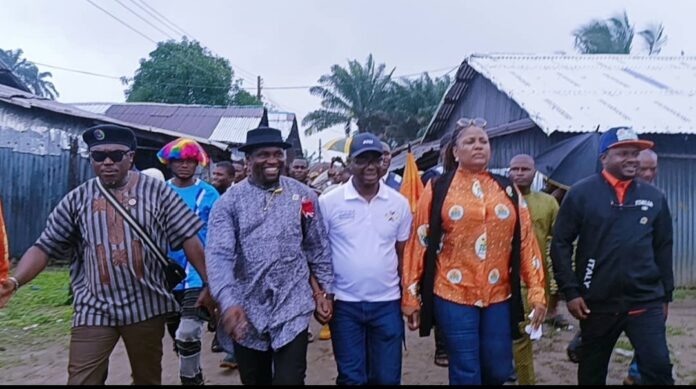
July 13, (THEWILL) — When the Federal Ministry of Humanitarian Affairs and Poverty Reduction joined forces with International Alert Nigeria to undertake a field assessment in Eastern Obolo, Akwa Ibom State, the objective extended beyond an official visit. It was a deliberate effort to replace policy assumptions with first-hand realities.
It brought government, development partners, traditional institutions, communities and the private sector to confront one of the Niger Delta’s most enduring paradoxes, an oil-producing community where environmental decline has steadily fuelled deepening poverty.
The partnership, anchored on multi-stakeholder engagement and community dialogue, brought the Minister of Humanitarian Affairs and Poverty Reduction, Dr Bernard Doro, to villages where decades of oil exploration have transformed thriving fishing settlements into communities struggling with unemployment, unsafe drinking water, inadequate healthcare and failing livelihoods.

By working alongside International Alert Nigeria, an organisation recognised for promoting peacebuilding, community resilience and inclusive development, the ministry signalled a shift towards evidence-based humanitarian interventions shaped by direct engagement with affected communities.
For generations, the sea was the marketplace of Eastern Obolo. Every dawn, fishermen pushed their wooden boats into the Atlantic, returning with catches that fed families, sent children to school and sustained one of Akwa Ibom State’s most productive coastal communities. Women smoked fish by the shoreline, traders crowded local markets and the waterways provided both livelihood and identity.
Today, much of that story has changed. Across Eastern Obolo, the sea still stretches to the horizon, but it no longer guarantees survival. Years of oil exploration, pollution, environmental degradation and shrinking fish stocks have steadily weakened the local economy, leaving behind widespread poverty in a region that contributes significantly to Nigeria’s oil wealth.
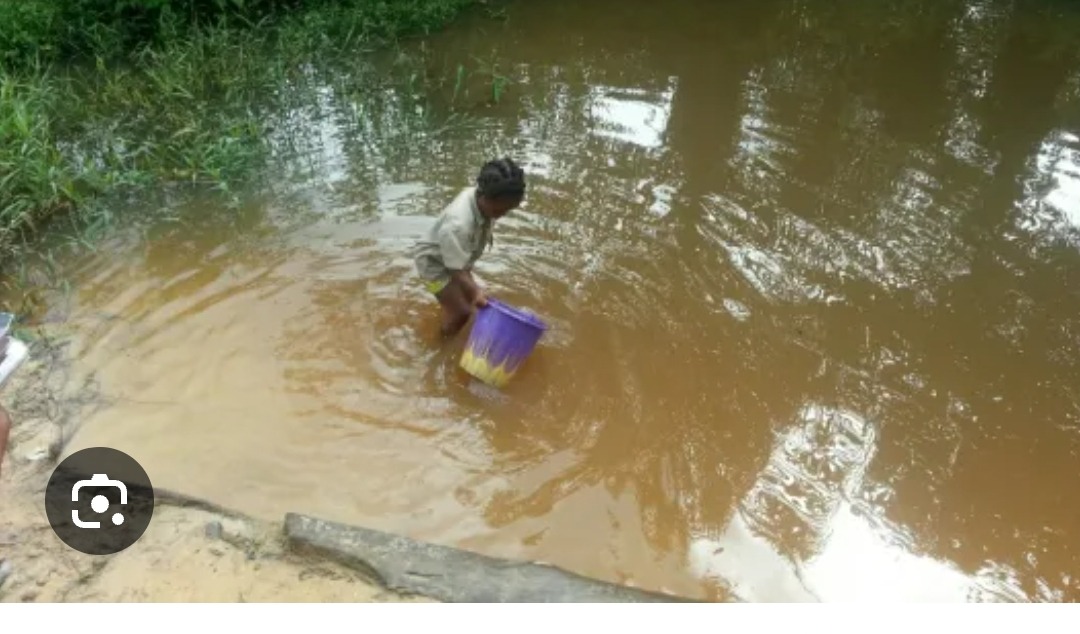
The irony has been chronicled repeatedly in media reports over the years. Investigations into the Niger Delta have consistently highlighted how oil spills, gas flaring, shoreline erosion and environmental degradation continue to undermine traditional occupations and deepen deprivation. Eastern Obolo has featured prominently in those reports, not for the wealth extracted from beneath its waters, but for communities battling poor infrastructure, inadequate schools, limited healthcare, unsafe sources of drinking water and rising youth unemployment.
Behind those reports are ordinary families. Mothers still trek long distances in search of potable water. Young people leave home in search of opportunities that seldom exist. Fishermen who once measured success by overflowing nets now return with catches too small to sustain their households.
These were the realities that greeted Dr Doro during the assessment visit. Rather than relying on official reports in Abuja, the minister chose to walk through communities, visit homes and speak directly with residents.
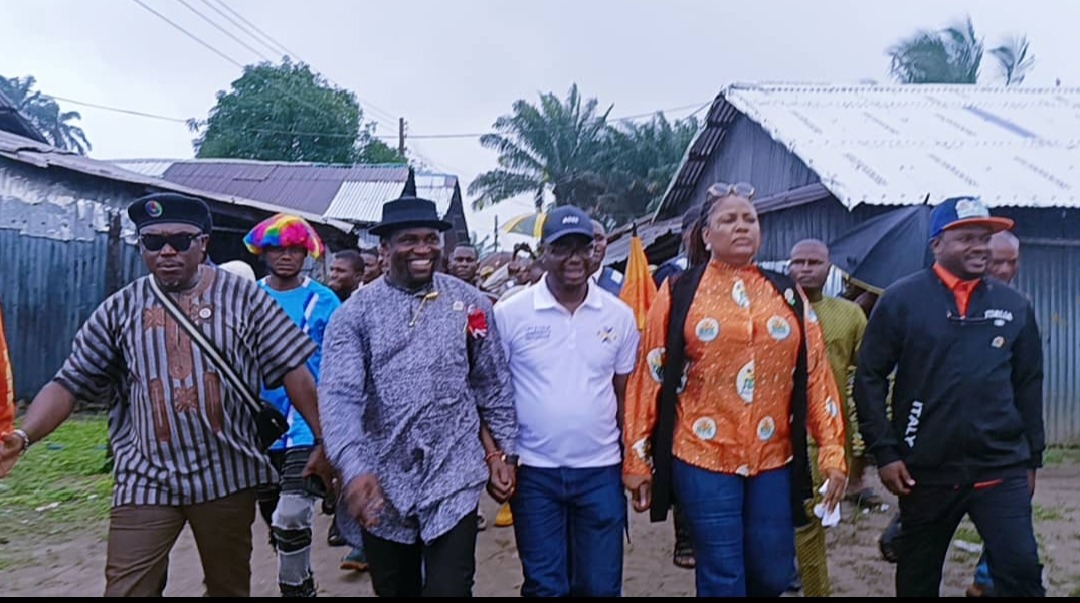
“I did not read a report. I walked. I saw homes. I looked into the eyes of mothers, fathers and children in Eastern Obolo”, he said.
His observations reinforced the need to move beyond emergency relief.
“What I saw should move all of us”, the minister said, arguing that temporary palliatives cannot solve structural poverty.
Using the analogy of repairing a leaking roof instead of repeatedly mopping the floor, he called for sustained investments in quality education, healthcare, clean water, skills development and livelihoods capable of restoring dignity to residents.
The visit also demonstrated the value of the partnership between the Federal Ministry of Humanitarian Affairs and Poverty Reduction and International Alert Nigeria. Beyond the community tour, both organisations convened discussions involving traditional rulers, women, youth groups, local leaders and private sector operators to identify practical pathways for inclusive development.
As part of the engagement, the delegation visited Sterling Group/Sumeda Energy, where discussions centred on expanding private sector contributions to host communities beyond statutory corporate social responsibility obligations. Company representatives outlined ongoing investments in education, healthcare, infrastructure and local employment, while government officials challenged operators to make long-term investments that address the root causes of poverty.
For International Alert Nigeria, the exercise reflected its long-standing approach to peacebuilding through dialogue, inclusion and collaborative action.
Country Director, Dr Kingsley Udo, stressed that sustainable development can only be achieved when governments, host communities and private sector actors jointly design solutions that reflect local realities. He noted that development interventions become more effective when communities are active participants rather than passive beneficiaries.
That philosophy resonated throughout the visit, where conversations focused not only on humanitarian needs but also on rebuilding trust, strengthening resilience and creating opportunities capable of reducing poverty and preventing future conflict.
For Eastern Obolo’s Paramount Ruler, His Royal Majesty Uboon Harry J. Etetor IX, the visit offered an opportunity to explain how environmental degradation has fundamentally altered the community’s fortunes.
He recalled that poverty was virtually unknown when fishing sustained most households. According to him, the expansion of oil exploration disrupted the waters that had supported generations of fishermen, destroying the community’s traditional economic base.
Today, he said, many families struggle to feed themselves, educate their children or access clean water and healthcare despite living in one of Nigeria’s oil-producing communities.
The monarch also lamented what he described as inadequate political representation at both the state and federal levels, expressing hope that the minister’s visit would translate into concrete interventions rather than another symbolic engagement.
Women and youth leaders shared similar experiences, describing years of frustration, unemployment and declining opportunities in communities that continue to bear the environmental consequences of oil production.
Akwa Ibom State Commissioner for Humanitarian Affairs, Princess Emem Ibanga, said the Federal Government’s intervention would complement Governor Umo Eno’s ARISE Agenda, particularly programmes focused on social protection, skills acquisition, food security and economic empowerment.
She also urged corporate organisations operating in host communities to align their investments with local development priorities, arguing that lasting business success depends on the prosperity of surrounding communities.
Whether the partnership between the Federal Ministry of Humanitarian Affairs and Poverty Reduction and International Alert Nigeria ultimately delivers lasting change will be measured not by official communiqués but by the lives of the people it seeks to improve.
For one day, however, Eastern Obolo’s story shifted from crude oil production to the people living beside it, children waiting to return to school, mothers searching for clean water, fishermen hoping their waters can sustain them again, and a community asking that the wealth beneath its soil finally translate into opportunity above it.
For Eastern Obolo, the new partnership represents more than another government visit. It offers a chance to place one of Nigeria’s overlooked humanitarian and environmental crises at the centre of national attention and, perhaps, the beginning of a more coordinated response.

