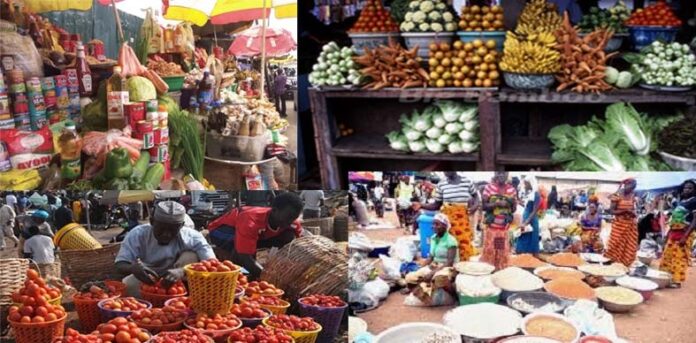
November 04, (THEWILL) — The Agricultural Transformation Agenda Support Programme Phase-One (ATASP-1) has disclosed plans by the Federal Government to mop up excess food currently flooding Nigerian markets, in a move to stabilise prices and protect farmers from heavy losses,
ATASP-1, a flagship agricultural development initiative funded by the African Development Bank (AfDB) and implemented by the Federal Government, is at the forefront of driving productivity and strengthening value chains across priority crop zones nationwide.
Speaking in Enugu on Tuesday, Dr Romanus Egba, the Zonal Programme Coordinator for ATASP-1 in the Adani-Omor Zone, allayed fears of widespread post-harvest losses despite the sharp decline in food prices observed in recent weeks.

According to him, the government has activated its strategic food reserve system and is already purchasing large quantities of food directly from farmers for storage and future distribution when demand rises.
Egba explained that the move is designed to ensure price stability, maintain national food security buffers, and prevent farmers from abandoning agricultural production due to financial strain caused by market volatility. He attributed the ongoing price crash to a surge in agricultural production following the 2023 food crisis, noting that many Nigerians ventured into farming in 2024, drastically increasing supply across major commodities.
“After the food crisis of 2023, many individuals, cooperatives, and large-scale investors went into farming. That massive participation increased food supply significantly this year, unlike previous cycles”, Egba said, adding that the Federal Government’s decision to open the nation’s borders to imported food items also intensified competition in the market, further pushing down prices.
“The combined effect is that farmers are now struggling to recover their cost of production, and many are distressed by the price situation”, he noted, calling for sustained market intervention to protect local producers.
On concerns that insecurity could threaten food output in parts of Enugu State, Egba stated that significant progress has been made to secure farmlands and rebuild confidence among rural farmers. He highlighted the successful rehabilitation of the Ada Rice Irrigation System in Adani under ATASP-1, a key project designed to support dry-season rice cultivation and boost annual yields.
However, he acknowledged that production could not commence immediately after completion due to security concerns in the area last year.
According to him, security operations, led by Navy personnel and backed by local vigilante groups, have since restored safety in the irrigation zone, enabling farmers to return and resume full agricultural activities.
Egba praised the synergy between security forces and ATASP-1, emphasising that the collaboration was instrumental in completing ongoing agricultural projects and safeguarding investment in the region. He reiterated that the programme will continue supporting farmers with infrastructure, capacity-building, and technical assistance, stressing that sustainable food availability depends on a secure and stable agricultural environment.
Commending the initiative, a government official in the Ministry of Agriculture and Food Security told THEWILL that the plan to buy and store excess produce, could help balance the market, protect livelihoods, and ensure food stability as the nation prepares for future demand cycles.

Felix Ifijeh is a journalist with years of professional reporting experience. Known for his keen news sense, compelling storytelling and commitment to accurate, impactful reporting, he has built a reputation for turning leads into clear, engaging, and well-structured reports that resonate with readers. His work reflects deep newsroom experience and a commitment to accurate, impactful journalism.