March 22, (THEWILL) — The Federal Government has announced plans to scrap the Junior Secondary School (JSS) Common Entrance Examination and replace it with a continuous assessment system to improve access to education and track pupils’ academic progress nationwide.
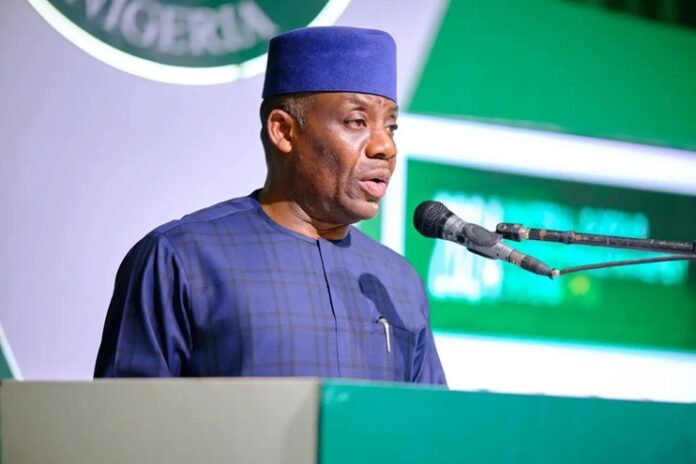
The Minister of Education, Tunji Alausa, disclosed the proposed reform during an interactive session with journalists in Lagos on Saturday, saying the move is designed to address longstanding gaps in the transition from primary to junior secondary education.
He explained that the new system will rely on continuous assessment (CA), capturing pupils’ academic performance from Primary One and ensuring that their records follow them throughout their schooling, including when they transfer between schools.

“It will be replaced by Continuous Assessment. The CA will reflect the performance of the pupil from primary one, and even if a pupil is transferring from one school to another, he will take it along to his new school”, Alausa said.
The minister said the reform is backed by data showing a significant drop in enrolment between primary and junior secondary levels. While over 23 million pupils are enrolled in public primary schools across the country, only slightly above 3 million transition to junior secondary schools.
“We have over 50,000 public primary schools in the country with over 23 million pupils. However, from statistics available to us, only a little over 3 million among those pupils move to the junior secondary school level in our public schools. Then the question is, why are about 20 million not enrolled in our public secondary schools?” he queried.
Alausa noted that the gap cannot be fully absorbed by private schools, attributing the disparity largely to limited access to secondary education. He stressed the need for increased investment in school infrastructure, revealing that discussions have been held with the Nigerian Governors’ Forum to encourage state governments to build more schools.
“It is obvious that we cannot say our private schools accommodate all of them. The issue is simply a lack of access, and we are working on that. There is a need to build more schools… State governments need to build more schools to accommodate more pupils and students”, he said.
To complement the reform, the minister announced plans to introduce a Learner Identification Number for every pupil from the primary level. The unique ID, he said, will enable authorities to track students’ progress and identify those who drop out of school.
“To also follow up on our pupils and students, we are introducing the Learner Identification Number right from the primary school level for our children. It will be unique to each child, and they will have the number no matter where they started schooling or later transferred to. If somebody is expected to be in JSS class one and he is not there, we will be able to know the reason why he is not continuing his education,” he explained.
Alausa further disclosed that efforts are underway to revive the school feeding programme to boost enrolment and retention in public schools, with consideration being given to transferring its oversight to the Ministry of Education.
The proposed reforms, if implemented, are expected to significantly reshape Nigeria’s basic education system by removing entry barriers and strengthening mechanisms for tracking pupils across the country.

Felix Ifijeh is a journalist with years of professional reporting experience. Known for his keen news sense, compelling storytelling and commitment to accurate, impactful reporting, he has built a reputation for turning leads into clear, engaging, and well-structured reports that resonate with readers. His work reflects deep newsroom experience and a commitment to accurate, impactful journalism.