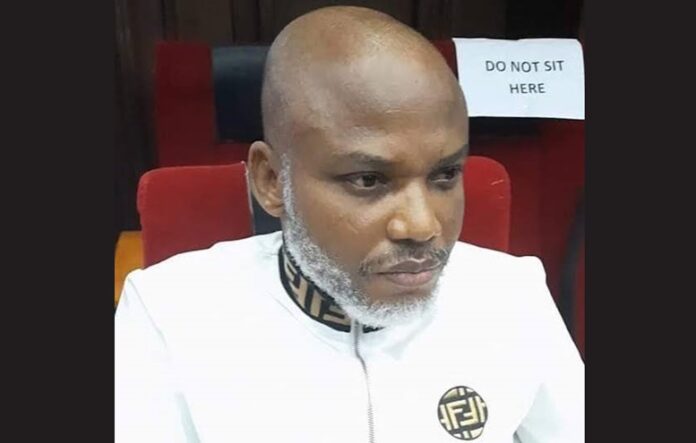
February 18, (THEWILL) — A traditional ruler from the South-East has appealed to President Bola Tinubu to either grant freedom to the leader of the Indigenous People of Biafra, Nnamdi Kanu, or return him to Kenya where he was arrested.
The monarch warned that his continued incarceration is fuelling agitation and discontent among youths in the region.
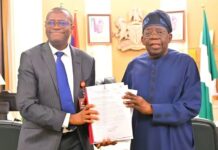
The monarch, Eze Ogbunechendo of Ezema Olo Kingdom, Dr. Lawrence Agubuzu, made the appeal on Tuesday during the 2026 National Traditional and Religious Leaders Summit on Health held at the State House Conference Centre in Abuja.

He stated that the prolonged detention of Kanu, who is serving a life sentence over terrorism-related charges, was undermining national unity efforts and deepening grievances in the South-East.
Addressing the President, the monarch expressed dissatisfaction over what he described as mixed signals on national cohesion. He noted that he was particularly troubled by remarks earlier made at the summit by the Ooni of Ife regarding unity.
He questioned the sincerity of such calls, alleging that the Yoruba monarch was making arrangements to confer a high traditional title on Yoruba Nation agitator, Sunday Igboho, whom he described as a counterpart to Kanu in the South-West.
“Please, do something about this. We cannot make progress in this country if we don’t tell ourselves the truth,” the Enugu-based monarch told the President, urging decisive action on the case of the IPOB leader.
However, the Presidency has rejected any comparison between Kanu and Igboho.
In a statement issued on Tuesday, the Special Adviser to the President on Public Communication and Orientation, Sunday Dare, faulted insinuations equating the two agitators, insisting that their actions and the implications for national security were fundamentally different.
Dare said Kanu, through the Indigenous People of Biafra, engaged in insurrection and armed confrontation against the Nigerian state, leading to widespread violence, loss of lives, and economic paralysis across South-East states.
He cited the enforcement of “sit-at-home” orders through threats and violence, attacks on security agencies, destruction of public infrastructure, and the formation of armed groups such as the Eastern Security Network.
According to the statement, reports linked more than 700 deaths to clashes and killings associated with the enforcement of the directives, adding that the rhetoric often incited violence, including against residents of the South-East who defied the orders.
In contrast, Dare said the activism of Sunday Igboho was largely centred on defending South-West communities against alleged killings, kidnappings, and farm destruction by criminal elements, particularly suspected herders.
He noted that those actions were framed around self-defence and peaceful agitation rather than armed confrontation with the state.
“There is no basis for comparison between the two,” Dare said, stressing that it was important to place the issues in proper perspective to ensure clarity and informed public discourse.
Felix Ifijeh is a journalist with years of professional reporting experience. Known for his keen news sense, compelling storytelling and commitment to accurate, impactful reporting, he has built a reputation for turning leads into clear, engaging, and well-structured reports that resonate with readers. His work reflects deep newsroom experience and a commitment to accurate, impactful journalism.