Stakeholders and industry experts have raised the alarm over the $800 million World Bank facility secured by the Federal Government to cushion the effects of fuel subsidy removal.
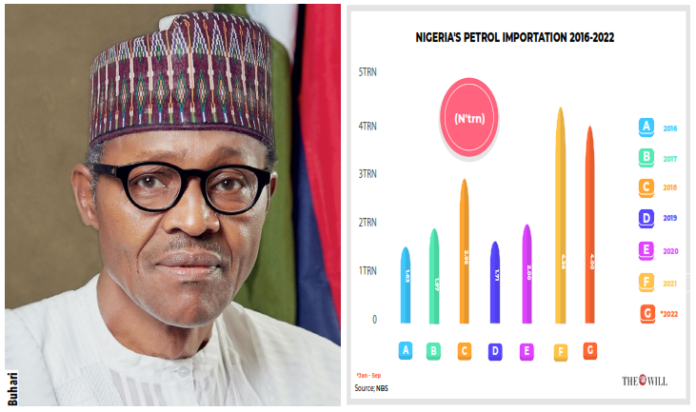
The Nigerian National Petroleum Corporation Limited (NNPCL) disclosed in January that it spent 4.39 trillion Naira ($9.7 billion) on petrol subsidy in 2022, a cost it blamed for dwindling public finances. The Federal Government budgeted N3.36 trillion ($7.5 billion) to spend on petrol subsidy until mid-2023 when the subsidy is planned to be scrapped.
The Minister of Finance, Budget and National Planning, Zainab Ahmed, said recently that the $800 million was the first tranche of the palliatives to be disbursed through cash transfers to about 50 million Nigerians, who belong to the most vulnerable category of the society.

The World Bank palliative package has drawn flak from experts who argued that the loan would worsen the country’s economic woes already saddled with a huge debt profile, and that the implementation efficacy is doubtful.
The experts argued that the share of the subsidy palliative for those it is meant for is infinitesimal and would offer a minimal, momentary benefit compared to the huge pains the subsidy removal will impose on the citizens.
There is also growing concern over the criteria used in selecting 50 million out of 133 million people who are multidimensionally poor, as the National Bureau of Statistics (NBS) published in February 2023.
“To ease the pain of the removal of fuel subsidy, they intend to distribute the $800 million to 50 million Nigerians. What criteria were used in selecting the 50 million out of the 133 million people who are multidimensionally poor?
“That leaves us with a balance of 83 million people. What happens to those? Which database are they using to distribute the funds? And, if they diligently distribute every dime of the $800 million at the exchange rate of N750 to the dollar, each recipient will receive just $16/N12,000 each!”, Umar Yakubu of the Centre for Fiscal Transparency and Integrity Watch wrote in an article titled, “Adding $800 million to Nigeria’s sovereign debt crisis?”
With the current Consumer Price Index by the NBS on food inflation at 24.32 percent, experts wonder what N12,000 can bring to anyone and for how long. Furthermore, the inflation impact would erode the purchasing power of N12,000 and wipe off at least 20 percent of the value.
“That brings the amount to about N9,600 to alleviate the poverty of one who lives on less than $2 per day!”, Umar Yakubu said, adding that the money should be lent to Aliko Dangote to speed up the completion of his refinery.”
The Director/CEO, Centre for the Promotion of Private Enterprise (CPPE), Dr Muda Yusuf, a well-known proponent of fuel subsidy removal, described the World Bank palliative facility as strange and contrary to wisdom.
“I believe that any conversation on subsidy removal and palliatives should be left for the incoming administration. We have had subsidy related palliatives in the past and none involved borrowing. The practice had been that palliatives were funded from the savings from subsidy removal, which makes the current proposition rather strange,” Yusuf told THEWILL in a note.
The immediate past Director, Lagos Chamber of Commerce and Industry (LCCI) suggested that the government should explore fiscal and monetary policy options to incentivise investment on sectors that could mitigate the pains of subsidy removal, instead of going into borrowing. These include investors in refineries, pipelines, petrochemicals, marketing, fertiliser plants and auto plants and the power sector.
Enumerating the benefits of fuel subsidy removal, Yusuf said the measure would unlock large investment opportunities in the oil and gas sector with numerous benefits. He argued that the intended benefits would be eroded by the borrowed facility to fund the palliative.
He said, “The subsidy removal will eliminate the distortions and stimulate investment. We would see more private investments in petroleum refineries, petrochemicals and fertiliser plants.
“Post-subsidy regime would also unlock investments in pipelines, storage facilities, transportation and retail outlets. We would see the export of refined petroleum products, petrochemicals and fertiliser as private capital comes into the space. Quality jobs will be created.”
An economist and CEO, BIC Consulting, Dr Boniface Chizea, expressed concern about the financial injury that the $800 million World Bank facility will inflict on the economy. He told THEWILL in a chat that the outgoing Buhari-led administration should have left the incoming government to determine the way to go about the fuel subsidy removal since the major presidential candidate had subsidy removal in their manifestoes. He said the subsidy removal palliative would add to the nation’s huge debt burden.
The Nigeria Union of Petroleum and Natural Gas Workers (NUPENG) has vowed not to support the fuel subsidy removal without first fixing the refineries.
In a statement signed by NUPENG’s President, Prince Williams Akporeha and the General Secretary, Afolabi Olawale, the group lamented the Federal Government’s failure to meet the condition set by the Nigeria Labour Congress (NLC), which is to ensure there is a functioning refinery in the country before the removal of the subsidy.
According to NUPENG, the government had said there will be three working refineries before the removal of fuel subsidy, but that has not been done. It expressed concern that the cost of fuel will skyrocket without functional refineries.
The $800 million facility is to be repaid between 2027 and 2051 which will impose additional debt burden. According to Debt Management Office (DMO), Nigeria’s debt profile as at December 31, 2022, is N46.25 trillion and N23.70 trillion borrowed by the Federal Government from the Central Bank of Nigeria (CBN) through ways and means, bringing the total debt to N70 trillion.
Nigeria’s current total public debt of N70 trillion Naira, if shared among the current estimated population of 220.2 million people (based on Worldometer elaboration of the latest United Nations data), places a debt burden of N317,850 on each citizen, according to data compiled by THEWILL. The 774 local government areas of the country will also be liable to N90.5 billion each as their share of the total public debt.

Sam Diala is a Bloomberg Certified Financial Journalist with over a decade of experience in reporting Business and Economy. He is Business Editor at THEWILL Newspaper, and believes that work, not wishes, creates wealth.