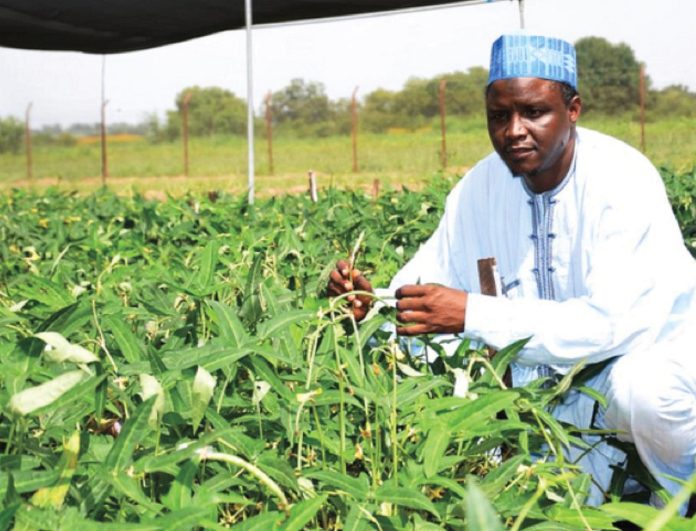
April 05, (THEWILL) – A delegation from Ghana is currently in Nigeria to understudy the nation’s success story in the commercialisation of the Pod Borer Resistant (PBR), cowpea (Bt) Cotton as well as regulatory infrastructure and policies in the biotechnology in the country.
Speaking during the courtesy visit to the Federal Ministry of Science, Technology and Innovation on Tuesday in Abuja, Dr Onyekachi Francis Nwankwo, the African Agricultural Technology Foundation (AATF) Representative for West Africa, acknowledged the giant strides and milestones recorded in the country’s quest to achieve food security through the deployment of biotechnology.
Nwankwo explained the delegation was in Nigeria to understudy biotechnology, biosafety infrastructure and policies as well as the commercialisation of biotech products in the country.

The Ghanaian delegation is made up of regulators, parliamentarians, policy-makers, researchers, development experts and the media.
Nwankwo said: “Nigeria has advanced in terms of policies of biotechnology, regulation of biotechnology as well as commercialisation process.
“Looking at these achievements in Nigeria, the Federal Ministry of Science, Technology and Innovation through the National Agricultural Biotechnology Development Agency(NABDA), played a very critical role and we are happy.
“Now with the news of what is going on with the farmers of cowpea which has spread nationally and internationally and we can see a delegation from Ghana.
“Ghana has been part of the cowpea project when we started it. Nigeria has become very fast.
“The Ghanaians are here to look at what Nigeria has done in developing their policies and regulatory infrastructure.
“By the time the team from Ghana interacts with Nigeria’s policymakers, regulators, politicians and private sector, then they will be able to understand and go back confidently to tell Ghanaian citizens of what is going on in Nigeria.”
As the facilitator of the visit to Nigeria, Nwankwo disclosed that the work of AATF was to promote agricultural innovation as well as build public-private partnerships in developing agricultural technology deployed to farmers.
He said AATF has some ongoing projects in Nigeria such as an agro-processing project being implemented by the National Council for Agricultural Mechanisation, adding that the project has been commercialised as private sector operators have taken it up.
Nwankwo stated that Bt.cotton has been released in Nigeria, which is already commercialised together with Bt.cowpea; adding that the agricultural products are already in the hands of farmers
He further added that Tela maize has been approved, which is an insect protected maize, as well as stem borer in maize, noting that the maize has received approval for environmental release, as it is currently going through national performance trial.
Also speaking, the leader of the Delegation and Chairman, Parliamentary Select Committee on Ministry of Environment, Science, Technology and Innovation (MESTI), Parliament House, Accra, Ghana, Dr. Emmanuel Marfo, said the team was in Nigeria to learn from Nigeria, adding that the team was excited about it.
Marfo said the two countries are doing a lot of good work as the programme would enhance the development of both countries.
He commended Nigeria for the giant strides made in the area of the development of policies in biotechnology.
Responding, Overseeing Permanent Secretary in the Federal Ministry of Science Technology and Innovation, Idowu Afe, said the Ministry had introduced several policies in the last seven years of the present administration to drive Science Technology and Innovation ecosystem.
Such policies, according to Afe, include National Science, Technology and Innovation Policy, Methanol Policy, and Raw Material Competitiveness Strategy Policy, among others.
He said these policies were designed to ensure food security in Nigeria as well as move the economy from a commodity-based to a knowledge-based economy.
Afe, however, called for more collaboration between the two countries to reduce post-harvest losses of agricultural produce.