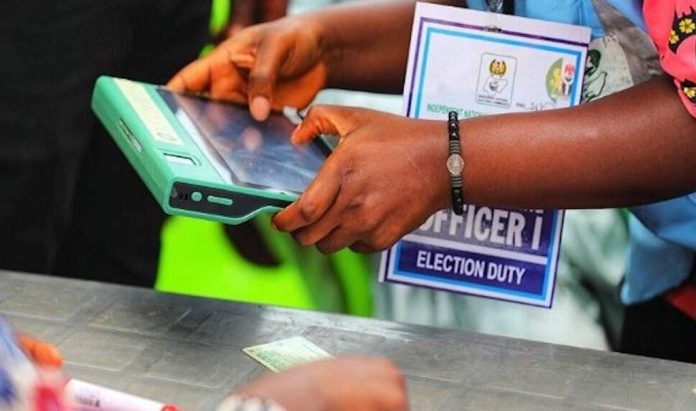
October 22, (THEWILL) – The Nigerian Senate has proposed the mandatory transmission of election results and results sheets, used at collation centres to the headquarters of the Independent National Electoral Commission (INEC), in Abuja, before final declaration of the winners of elections.
The Red chamber has also recommended the introduction of diaspora voting, to enable Nigerians resident abroad to vote during elections in Nigeria.
Other recommendations include stiffer punishment for any political party that fails to submit register of party members to INEC at a period not less than 30 days before election, primaries or congresses; the unbundling of INEC to improve its efficiency and effectiveness, among others.

THEWILL reports that the recommendations were part of resolutions reached at a two-day retreat for senators in Ikot Ekpene, Akwa Ibom State. The retreat was organised by the National Institute for Legislative Studies (NILDS).
In a communiqué released on Saturday, at the end of the retreat, the Senate noted the ambiguity in Section 64 of the Electoral Act, 2022, and recommended it should be expunged to allow for the use of technology in transmitting election results.
“Relating to the use of technology in elections, remove the ambiguity evident in Section 64 of the EA22. Also, make electronic transmission of results mandatory from the next general elections in 2027 including the uploading of polling unit-level results and result sheets used at different levels of result collation.
“Introduce diaspora voting, at least for presidential elections, to enable citizens to vote, especially those on essential service abroad, such as military, paramilitary and other security personnel abroad, embassy staff, and other citizens.
“Relating to political parties; stipulate sanctions for failure to submit the register of party members not later than 30 days before the date of party primaries, congresses, or conventions in relation to Section 77(3) EA22, which the political parties have observed in the breach in the 2023 elections without penalty.
“INEC should be unbundled to improve its efficiency and effectiveness in the preparation and conduct of elections”, the communiqué stated.
On the general insecurity in the country, the lawmakers identified poverty and lack of opportunities as causes of terrorism, banditry and rising criminality.
They, therefore, proposed a security bill that will guide lawmakers in making legislative decisions relating to insecurity.
“Develop and enact a comprehensive national security strategy that outlines the nation’s security objectives, threats, and policy priorities. Such a strategy can serve as a guiding framework for legislative action in the security sector.
“Address the root causes of terrorism/banditry, which is often driven by poverty, inequality and a lack of opportunity.
“Promote community policing and engagement to identify and prevent terrorist attacks. The government should also work with civil society organisations and local/traditional communities to identify and address security concerns.”
“Establish independent oversight mechanisms for the security sector. These mechanisms can help to investigate allegations of abuse and corruption and to ensure that security forces are accountable to the law.
“Legislative engagement and oversight in Nigeria’s security sector can be significantly bolstered through comprehensive legislative reforms. These reforms are essential for ensuring that the legislative branch is equipped with the necessary tools and mechanisms to fulfil its critical role in security sector reform.
“The periodic engagement of the National Assembly with the security chiefs for adequate briefing. There is a need for the Senate President and the Speaker, House of Representatives, to be part of the weekly security briefing that goes to the President. The Senate should develop its Legislative Agenda that incorporates the outcome of this retreat.”