
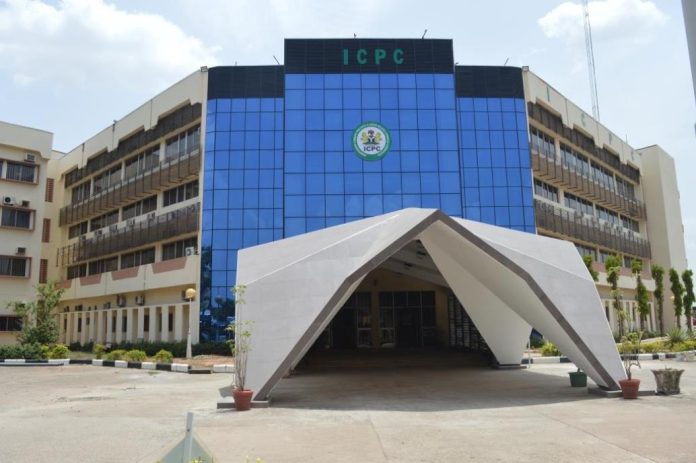
March 26, (THEWILL) — The Independent Corrupt Practices and Other Related Offences Commission (ICPC) has tightened its grip on public spending, tracking about 950 projects valued at approximately ₦415.25 billion across 26 states and the Federal Capital Territory, while also overseeing contracts worth over ₦21 trillion under the Federal Ministry of Works.
Chairman of the Commission, Musa Adamu Aliyu, SAN, disclosed this on Thursday in Abuja during a workshop organised in collaboration with the Nigerian Union of Journalists (NUJ), underscoring the agency’s commitment to ensuring that public funds translate into tangible benefits for citizens.
Aliyu said the projects were monitored under the Constituency and Executive Projects Tracking Initiative (CEPTI), a preventive framework designed to curb corruption by closely supervising the execution of government-funded projects nationwide.

He noted that the initiative has recorded measurable impact, including the identification of abandoned and underperforming projects, while also compelling contractors to return to sites and complete ongoing works.
According to him, this has significantly improved service delivery and strengthened accountability in the use of public resources.
The ICPC boss further revealed that projects under the Federal Ministry of Works valued at over ₦21.23 trillion were also tracked, highlighting the vast scope of the Commission’s oversight responsibilities.
Emphasising prevention as the most effective strategy in the fight against corruption, Aliyu described project tracking as a critical tool for deterring the misuse of public funds and ensuring value for money in government expenditure.
He called for stronger collaboration between the Commission and the media, describing journalists as key stakeholders in promoting transparency and holding public officials accountable.
The workshop, themed “Reinvigorating the National Anti-Corruption Strategy (2022–2026): A Post-Assessment Roadmap for the Fourth Estate,” was designed to generate practical ideas and deepen partnerships in Nigeria’s anti-corruption drive.
In his goodwill message, Chairman of the Senate Committee on Anti-Corruption and Financial Crimes, Senator Emmanuel Udende, described corruption as a major impediment to national development, warning that it erodes public trust, weakens institutions, and deprives citizens of essential services.
He reaffirmed the commitment of the National Assembly to strengthening legislative frameworks and oversight functions to support transparency and good governance.
Other speakers, including the Managing Director of the News Agency of Nigeria (NAN), Ali Mohammed Ali, and the Director-General of the Nigerian Television Authority (NTA), Salihu Abdulhamid Dembos, stressed the need for sustained collaboration among institutions, the media, and citizens to build a culture of integrity and accountability.
They reaffirmed the media’s critical role in preventing corruption, describing it as a powerful tool for civic education and public sensitisation.
Dembos noted that leveraging the media would significantly enhance public enlightenment, enabling citizens to better understand and resist corrupt practices while supporting institutional accountability.
On his part, the President of the NUJ, Kole Shettima, described the forum as a significant step towards confronting corruption and advancing transparency in governance. He called for a shift from rhetoric to measurable cooperation that fosters integrity and restores public confidence.
Shettima expressed optimism that sustained partnership between the media and anti-corruption agencies would strengthen systems that deter corruption and promote good governance.
The workshop was officially opened by the Minister of Information, Mohammed Idris, who was represented by the Director-General of Voice of Nigeria, reflecting the Federal Government’s continued support for initiatives aimed at strengthening accountability and transparency nationwide.

Felix Ifijeh is a journalist with years of professional reporting experience. Known for his keen news sense, compelling storytelling and commitment to accurate, impactful reporting, he has built a reputation for turning leads into clear, engaging, and well-structured reports that resonate with readers. His work reflects deep newsroom experience and a commitment to accurate, impactful journalism.
