October 20, (THEWILL) — Stakeholders have continued to knock the Independent National Electoral Commission (INEC) for demanding N1.5 billion as processing fee for a Freedom of Information request.
The Commission last Thursday approved a request by V-C Ottaokpuku & Associates for a certified true copy of the National Register of Voters and details of all existing polling units across Nigeria, in line with the Freedom of Information Act (FOIA) 2011.
According to a letter cited by THEWILL, dated October 13, 2025 and signed by the Secretary to the Commission, Rose Oriaran-Anthony, INEC acknowledged receipt of the firm’s earlier correspondence dated October 8, 2025, seeking access to the documents. The Commission said the request was granted pursuant to Section 15 of the Electoral Act, 2022, which allows access to electoral information.

However, INEC directed the law firm to pay a processing fee of N1,505,901,750 (One Billion, Five Hundred and Five Million, Nine Hundred and One Thousand, Seven Hundred and Fifty Naira) to cover the cost of producing the requested materials.
The electoral body further advised that the payment be made through its official Remita Retrieval Reference (RRR) platform, with proof of payment required before the processing of the request could commence.
Following a barrage of public angst over the request, the Commission clarified the basis for the N1.5 billion cost quoted for the issuance of Certified True Copies (CTCs) of the National Register of Voters and the full list of polling units across the country.
Mrs Victoria Eta-Messi, Director of Voter Education and Publicity, explained that the charges were in line with Section 8(1) of the Freedom of Information Act, 2011, which allows public institutions to recover the “actual cost of document duplication and transcription.”
According to INEC, the computation also follows the Commission’s guidelines for the issuance of CTCs, derived from Section 15 of the Electoral Act 2022, which fixes the charge at N250 per page.
INEC further disclosed that the National Register of Voters currently contains 93,469,008 registered voters, with 16 voters per page, translating into 6,018,661 pages. In addition, the country’s 176,848 polling units require 4,946 pages, bringing the total to 6,023,607 pages. At the approved rate of N250 per page, the total sum amounts to N1,505,901,750.
The Commission stressed that the quoted cost reflects only the actual expenses incurred in duplication and transcription, without any additional or hidden charges.
INEC further reaffirmed commitment to transparency, accountability, and responsible management of public resources.
Reactions immediately trailed the demand. Media Rights Agenda (MRA) condemned the Commission for attempting to frustrate a legitimate Freedom of Information (FOI) request by “demanding an outrageous fee of over N1.5 billion for a copy of the National Register of Voters and list of polling units in Nigeria,” describing its demand as a blatant attempt to weaponise cost as a tool for denying access to vital public information.
MRA’s Executive Director, Mr. Edetaen Ojo, noted that the National Register of Voters and the list of polling units are arguably the most essential public records needed by civil society organisations, political parties, election observers, and the media to effectively monitor the electoral process,” arguing that by “placing such a colossal financial barrier in the way of a requester, INEC is deliberately hindering the public’s right and ability to scrutinise its operations, thereby compromising transparency and avoiding accountability.”
Describing the charge as excessive, prohibitive and a clear violation of the spirit and letter of the FOI Act, Mr. Ojo said: “Section 8(1) of the FOI Act clearly stipulates that fees shall be limited to standard charges for document duplication and transcription, where necessary. The staggering amount of over N1.5 billion cannot be a standard charge for duplication and is a clear and deliberate attempt to make public data inaccessible to the public. This is an affront to transparency and democratic accountability.”
He pointed out that in the exercise of his powers under the FOI Act, former Attorney-General of the Federation and Minister of Justice, Mr. Mohammed Adoke (SAN) issued Guidelines for public institutions on the Implementation of the Act, in which he stipulated the fees chargeable for duplication of records under the Act, limiting photocopy or scanning and printing to a maximum of N10 per page.
Mr. Ojo argued that the list of 93,469,008 registered voters and list of 176,846 polling units in the country could not number up to 150 million pages, for the cost of duplicating those lists to amount to over N1.5 billion at the legally permissible rate of fees.
Besides, he noted, In November 2017, the African Commission on Human and Peoples’ Rights adopted the Guidelines on Access to Information and Elections in Africa, as a soft law instrument “to provide guidance to States on the categories of information on the electoral process that must, at the minimum, be proactively disclosed.”
According to him, Paragraph 17(e) of the Guidelines requires any election management body in Africa, during pre-election periods, to proactively disclose “Voters roll containing information allowing the unique identification of each voter, including the full name, identity number, photograph (where it exists), gender and age of each voter, and any subsequent amendments to this information”.
Mr. Ojo stressed that the requested documents, the National Register of Voters and the list of polling units, are public records that are fundamental to electoral transparency and are likely already digitized and centrally stored, which means that the cost of reproducing such electronic data is negligible and would certainly not be in millions of Naira.
He warned even on a charitable interpretation of INEC’s action, with its mandate to conduct free, fair, and credible elections, which hinges on public trust and transparency, the response of the Commission sends a strong signal that it is prioritizing bureaucracy and profit over its constitutional and statutory obligations to the Nigerian people, or that it is deliberately impeding public scrutiny of its operations.
Mr. Ojo said: “The primary objective of the FOI Act is to make public records and information freely available. If allowed to stand, this action by INEC sets a dangerous precedent, which will encourage other government agencies to impose exorbitant fees, effectively nullifying the gains of the FOI Act and rolling back this transparency initiative in Nigeria.”
He therefore called on INEC to immediately and unconditionally withdraw the outrageous fee demand and provide the requested information either completely free of charge, in accordance with the principle established by the African Commission on Human and Peoples’ Rights, or at a fee that strictly adheres to the provision of Section 8(1) of the FOI Act and the Attorney-General’s FOI Implementation Guidelines.
Olusola Oludiran, contributor to the Nigeria Democratic Report, stated that while the clarification was supposed to lay the matter bare, the reverse has been the case, as INEC’s explanation appears to be impenetrable to convince Nigerians of its justification.
According to him, some of the common reactions to the electoral commission on the demand for N1.5 billion revolve around the probe of the standard cost of N250 for transcription and duplication as stated by the electoral act.
“In their arguments, Nigerians questioned the rationale for making the average cost of duplicating and transcribing the document in a public setting like the electoral body, while the cost in the open market could be lower. Meanwhile, NDR reached out to Mr Elujoba Adebowale, the managing director of Impact logic Printing Press, a registered and independent printing press based in Lagos, who stated that the cost of duplicating a page of any document is on average N100. However, he expressed uncertainty about the procedure and the cost of document transcription, explaining that it would be challenging to estimate the cost because it might be exclusive to the electoral commission.”
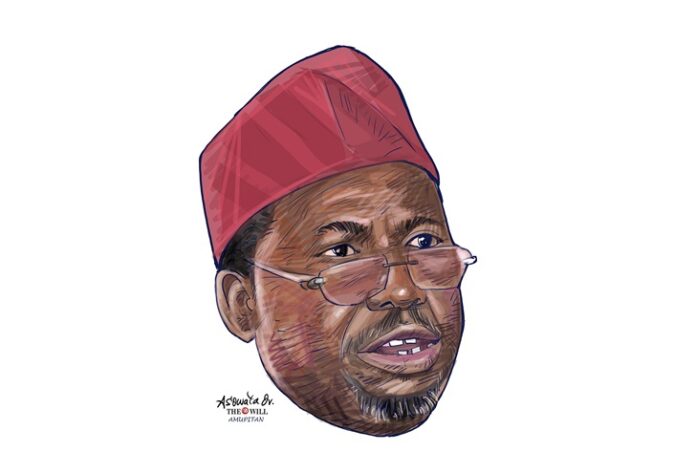
There is also the poser about whether those seeking information for public good should pay for it. In other words, is freedom of information not trampled upon when access to information is denied? Besides, must the information only be stored as documents when hard copy format is better and could easily be retrieved and issued in soft copies.? These are questions that the INEC stand will continue to generate among Nigerians as Prof Joash Amupitan assumes office and reorganises the Commission as he promised during his screening at the Senate last week.

Felix Ifijeh is a journalist with years of professional reporting experience. Known for his keen news sense, compelling storytelling and commitment to accurate, impactful reporting, he has built a reputation for turning leads into clear, engaging, and well-structured reports that resonate with readers. His work reflects deep newsroom experience and a commitment to accurate, impactful journalism.