September 1, (THEWILL) – 1963 was a good year for Nigeria, being the time it became a republic after gaining independence from Britain three years before. For the people of the Midwest region, it was an even better year, being the time they became independent of the Western Region.
Prior to its creation as an independent region in August of that year, the indigenes of a vast territory stretching from its northern reaches in Kukuruku Hills through the fertile grasslands of Afenmai, Benin, Esan and Asaba to the swampy terrains of Bomadi and Patani in the Niger Delta, were under the suzerainty of the Western Region. As such things go, they owed fealty and paid taxes to the political leaders at Ibadan under the control of the Action Group.
Unsurprisingly, there were cries of marginalisation against the AG government, headed by Obafemi Awolowo.

Spurred on by the Midwest State Movement (MSM), there was a natural “fear of colonisation by the Yoruba” based on testimonies from prominent sons of Benin at the time. First among them was Chief Humphrey Omo-Osagie, who detailed the discriminatory tendencies of leaders of the Western Region against non-Yoruba. The Benin division, Omo-Osagie testified at the Henry Willincks Minority Commission, “had not, under the period of review, received any scholarships, while the Ijebu province (home to Chief Awolowo), had secured 17 such awards.”
There were other allegations made by Madam Eweka such as “lack of rubber markets and processing facilities, excessive local taxation, including head taxes which would then be remitted to Ibadan, poor infrastructure, and discrimination in the award of scholarships and opportunities for Edo women traders at Ibadan.”
There were testimonies of Chiefs Ezomo, Oliha, Ogbebor and Isaac Asemota. The last pointedly noted that “while Benin City stayed in the dark with no electricity, running water, good roads, separate and unequal schools and grossly inadequate health clinics, there in Ibadan, Edo tax monies were being squandered in the construction of Cocoa House, Mapo Hall and Commercial Broadcasting Service Radio Station whose frequency we couldn’t even pick up in Benin-City. The best we could hope for was Re-diffusion radio which had a very low frequency and could not be heard more than two miles away from the broadcasting booth.”
To the non-Yoruba indigenes, the lopsided arrangement was more like robbing Peter to pay Paul. Against that backdrop, the clamour for the Midwest Region resonated strongly with the government of Prime Minister Abubakar Tafawa Balewa and so the Referendum on its creation was set in motion. 654,130 people were registered voters in the Federal Electoral Register of 1959. 89.07 percent voted in favour of the Midwest Region far, far more than the 60 percent (or 392,478) required.
Though some top AG politicians opposed it, notably Awolowo, Alfred Rewane and Anthony Enahoro, the majority had their way and thus did the Midwest Region begin life separate from the Western Region. Its creation also meant enjoying the benefits accruable to other regions which it had been denied in the past.
Midwest also united different tribes across a vast geographical spread. Its status as a region was changed into that of a state in 1967 and then Bendel state in 1976. The state was further carved into two – Edo and Delta – in 1991.
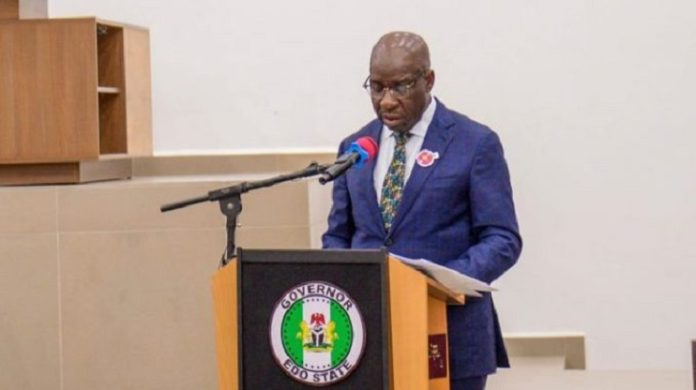
Even so, the spirit of the Midwest has lived on in the minds of the citizens of one of the most dynamic regions in the history of Nigeria. And it was recently demonstrated by none other than the governor of Edo state Godwin Obaseki when he hosted his counterparts from Delta and Bayelsa states in Benin City to mark the Midwest @60 anniversary.
By mid-morning on August 28, the Victor Uwaifo Creative Hub on Airport Road Benin was packed to the rafters with guests from Edo, Delta, and Bayelsa states. Deputy governor of Delta state Sir Monday Onyeme represented Governor Sherriff Oborevwori, while Ambassador Igali Godknows represented Governor Duoye Diri of Bayelsa state. One-time governor of Edo state and now senator representing Edo North Senatorial District Adams Oshiomhole hugged his successor warmly at the event. Prince Nduka Ogbaibena Chairman of THISDAY/ Arise Media Group moderated the colloquium on “60 Years after the Referendum: Which Way Midwest?”
The answer to that was provided by Governor Obaseki in his welcome address. “Today marks a significant milestone in our journey as a people, celebrating our achievements, acknowledging our challenges, and renewing our commitment to the ideals that shape our present and future,” the governor said and then went on to give reasons for the August gathering.
“Six decades ago, the people of Edo and Delta states and parts of Bayelsa united in agreement for their self-determination, to chart their own course to political and economic freedom and break free from the chains of regional dominance. The Midwest Region in 1963, which was carved out of the Western Region, three years after independence and colonial rule, was a product of the bold character and love for freedom of our forebears. The region later came to be known as Bendel state in 1976, was the first state in Nigeria to be created by a referendum, signalling our staunch belief in democratic ideals.
“It was the foresight, sacrifice and struggle of courageous and notable leaders such as Oba Eweka II, Oba Akenzua, Chief Denis Osadebay, Chief Humphrey Omo-Osagie, Senator Dalton Asemota and Chief Anthony Enahoro, among others, that secured the creation of the then Midwestern Region. They braved the odds and battled to create a distinctive political identity for a people who have always loved and cherished their freedom, culture and creative energies.
“The story of the Midwest Referendum is one of unity, resilience, and the power of collective action. It is a story that continues to inspire us to this day, reminding us of our capacity to overcome challenges, transform adversity into opportunities, and forge a better path for ourselves.”
With a mind on restructuring as an enduring solution to the myriads of problems besetting Nigeria today, Obaseki wondered if that might not be a way out of the woods for the country. “An important question to ask is: Are the conditions that led to the Midwest Referendum in 1963 not staring us in the face in Nigeria today? Would we not be able to plan better for the future of our people and attain accelerated development with a less cumbersome system of government that promotes competition among sub-nationals and discourages the constant resort to Abuja for direction and resources?
“Nigeria is in dire straits today as a result of the poor handling of the economic fortunes. And with the removal of the fuel subsidies among other political and economic challenges, maybe perhaps the Midwest Region may just be what we need to fall back to in order to stand a chance at survival and set a new course for economic rejuvenation.”
On his part, Sir Monday gave a thumbs up for the colloquium, referencing the historical referendum sixty years ago. “It is worthy of note that when the people decide on a stand, nothing can change it, not even intimidation. Eighty-nine percent of people voted for a referendum to opt out from the Western Region to form the Midwest Region without violence as the people’s choice prevailed.”
Oshiomhole was similarly bowled over. “This is the kind of event that is needed as it will bring the unity we need for the progress of our people. When I received the invitation letter personally signed by you, I said to myself that I must be here to solidarise and support you as Edo is one. There are a lot of young people here in this hall and this kind of event will enable our young people to know when the Midwest was created and formed. The Midwest is truly the only region of unity that came together to fight for its freedom.”
Michael Jimoh is a Nigerian journalist with many years experience in print media. He is currently a Special Correspondent with THEWILL.