
March 07, (THEWILL) — Iranian President Masoud Pezeshkian on Saturday apologised to neighbouring countries over his country’s recent barrage of missile and drone attacks across the region, attributing the strikes to miscommunication within military ranks, even as he rejected the United States’ demand for “unconditional surrender.”
In a prerecorded address aired on state television, Pezeshkian said Tehran would halt attacks on regional countries and expressed regret for the strikes, some of which targeted civilian locations, including airports, leading to widespread flight delays and cancellations.
He disclosed that Iran’s temporary leadership council had approved the suspension of attacks against neighbouring countries unless any attack on Iran originated from those countries. Many states in West Asia host United States military bases, which have been central to the escalating confrontation.

Pezeshkian also dismissed Washington’s insistence on unconditional surrender as a precondition for negotiations, describing it as “a dream that they should take to their grave.”
The Iranian leader’s comments came a day after US President Donald Trump reiterated that there would be no deal with Iran unless it agreed to unconditional surrender.
Tensions across the Middle East intensified early Saturday following Iranian strikes targeting several Arab West Asian states. Air raid sirens sounded in Bahrain, while Saudi Arabia said it intercepted drones heading toward the Shaybah oil field and shot down a ballistic missile aimed at Prince Sultan Air Base, which hosts US forces.
Explosions were also reported in Dubai, prompting authorities to activate air defence systems. At Dubai International Airport, passengers were moved to underground train tunnels after warning alarms sounded.
Long-haul carrier Emirates later announced that all flights to and from Dubai had been suspended until further notice amid the security situation.
Witnesses said at least one drone struck close to the passenger concourse at Dubai International Airport, while another Iranian attack drone reportedly hit the airport, narrowly missing a major terminal facility.
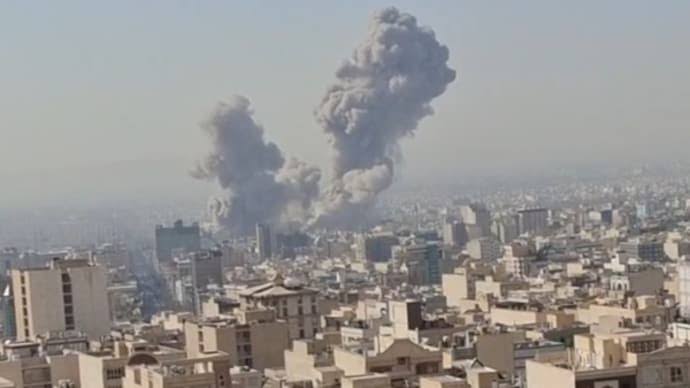
Meanwhile, Israel, which launched joint strikes alongside the United States last week, said it had carried out a broad wave of fresh attacks on Iranian targets. Explosions and smoke were reported over western Tehran, while incoming Iranian missiles triggered alerts across Israel, sending residents into bomb shelters.
The United States and Israel have carried out extensive strikes on Iranian military facilities, leadership targets, and elements of its nuclear programme since the conflict erupted exactly a week ago.
Iran’s Supreme Leader, Ayatollah Ali Khamenei, was reportedly killed in the first wave of strikes last Saturday, marking a dramatic escalation in the crisis.
US Treasury Secretary Scott Bessent warned in a television interview that the “biggest bombing campaign” of the conflict could still lie ahead.
Reiterating Washington’s position, Trump said in a social media post on Friday that the United States would only consider a deal after Iran’s “unconditional surrender” and the emergence of what he described as “acceptable leaders.”
Officials say the conflict has so far killed more than 1,200 people in Iran, over 200 in Lebanon, and about a dozen in Israel, while six US troops have also died.
Iran’s ambassador to the United Nations has said the country would “take all necessary measures” to defend itself as the regional crisis deepens.

Felix Ifijeh is a journalist with years of professional reporting experience. Known for his keen news sense, compelling storytelling and commitment to accurate, impactful reporting, he has built a reputation for turning leads into clear, engaging, and well-structured reports that resonate with readers. His work reflects deep newsroom experience and a commitment to accurate, impactful journalism.
