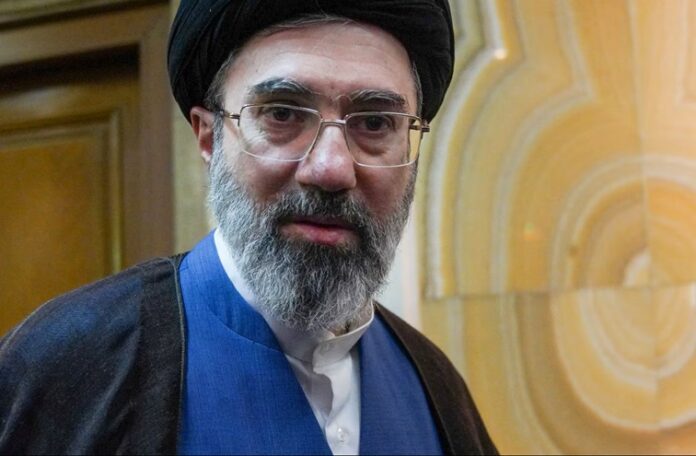
March 12, (THEWILL) — Iran’s newly appointed Supreme Leader, Ayatollah Mojtaba Khamenei, has declared that the strategic Strait of Hormuz will remain closed as a pressure tactic, while warning that Tehran will continue targeting United States military bases across the region.
In his first message since assuming leadership, Mojtaba said the closure of the vital maritime route would remain a “tool of pressure” against Iran’s adversaries amid escalating tensions in the Middle East.
The message, which was read by an anchor on Iranian state television, also warned that Iran would continue retaliatory attacks on U.S. military facilities located in neighbouring countries hosting American troops.

“We have had good relations with all these neighbouring countries… We only targeted these military bases and we will continue to do so,” Khamenei said in the address.
Although he did not directly name any country, the remarks were widely interpreted as referring to the United States and Israel, which Tehran accuses of carrying out attacks on Iranian territory.
Khamenei further warned that Iran would demand compensation for damages caused by the conflict, stating that if such compensation is not provided, Tehran would retaliate by targeting the assets of its adversaries.
“We will ask for compensation from the enemy. If we can’t get compensation from the enemy, we will destroy their properties as much as they have destroyed ours,” he said.
The Iranian leader also urged neighbouring countries hosting U.S. forces to shut down those bases immediately, warning that they could become targets if they continue to support American military operations.
“These countries must make their duty clear to the invaders of our beloved homeland and the murderers of our people,” he said, recommending that they close U.S. bases “as soon as possible.”
Despite Khamenei’s claim that Iran is only targeting military facilities, reports from across the region indicate that several recent attacks have also hit civilian infrastructure and oil-related installations, raising fears of a broader regional escalation.
The Strait of Hormuz, one of the world’s most critical energy corridors through which roughly a fifth of global oil supply passes, remains at the centre of the crisis, with analysts warning that any prolonged disruption could significantly impact global oil markets and international shipping.
Crude prices spiked above $100 per barrel on March 9 before retreating to $87 per barrel the following day. As of Thursday, March 12, Brent crude oil traded around $100 per barrel.

Felix Ifijeh is a journalist with years of professional reporting experience. Known for his keen news sense, compelling storytelling and commitment to accurate, impactful reporting, he has built a reputation for turning leads into clear, engaging, and well-structured reports that resonate with readers. His work reflects deep newsroom experience and a commitment to accurate, impactful journalism.