

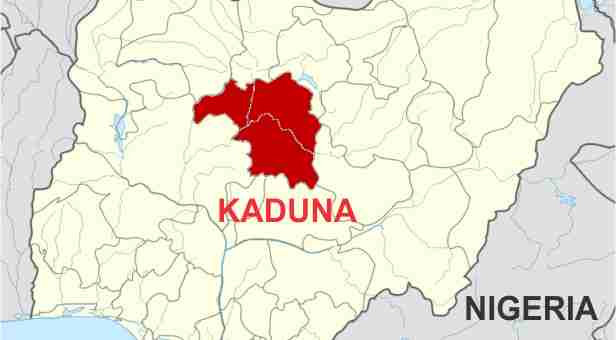
BEVERLY HILLS, February 11, (THEWILL) – The Kaduna State Government has approved the disbursement of N81 million to 13 researchers to study the various aspects of education reforms in the state.
A statement today by Special Adviser on Media and Communication, Muyiwa Adekeye, said that the decision was taken by the State Executive Council chaired by Governor Nasir El-Rufai.
Adekeye said that the Commissioner of Education, Dr. Shehu Usman Muhammad, had briefed the council that 13 proposals were selected from the 75 that were submitted.

The statement said: “Earlier, the Ministry had issued an invitation for expression of research interest in October 2020 and 75 researchers had indicated interest.
‘’Scholars were invited to assess the education sector in Kaduna State in the light of ongoing reforms and to help improve knowledge on issues such as access to education, the quality provided and the trajectory of human capital development in the state.
“Proposals were evaluated by a 12-member committee, chaired by Professor Ben Chindo of Kaduna State University.
“The committee selected 13 research proposals for the award of grants after rigorous screening. The selected research projects are expected to be completed within nine months, after which the State Ministry of Education will organize a conference to present the research findings.”
It further said that the budget for research grants would continue to be domiciled in the Ministry of Education, but ‘’Kaduna State Government will broaden the scope of funded research to other sectors such as Agriculture, Health, Infrastructure and Security.’’
Adekeye further said that the ‘’successful research proposals cover topics such as Higher Education and the Fourth Industrial Revolution, Impact of ICT on Learning Outcomes and the Development of a Science, Technology, Engineering and Mathematics (STEM), e-Literacy Platform for Secondary Education in Kaduna State.‘’
The Special Adviser recalled that, “Since 2015, the El-Rufai government has pursued a policy of promoting equality of opportunity through investments in human capital development.
‘’This has prioritised Education and Health in budgetary allocations, and has manifested in decisive actions such as making the first 12 years of schooling free and compulsory, renovation of schools, building of more classrooms and the replacement of 21,780 failed teachers with 25,000 qualified primary school teachers.”




