March 16, (THEWILL) – Lagos has reached a new economic milestone, ranking as Africa’s second-largest city economy behind Cairo. The state government attributes this achievement to strategic economic policies, improved fiscal planning, and an expanding private sector. Recent reports indicate that Lagos now has a Gross Domestic Product of $259 billion based on the Purchasing Power Parity (PPP) evaluation model. The data, revealed in the Lagos Economic Development Update for 2025, highlights significant growth in various sectors of the economy. The first half of 2024 saw the economy expand to N27.38 trillion, a major increase from the N19.65 trillion recorded in 2023. Officials believe this progress reflects ongoing structural reforms and increasing investor confidence.
Purchasing Power Parity is an economic metric used to compare the value of goods and services across different countries by adjusting for differences in price levels. It provides a more accurate reflection of an economy’s true strength by considering what a unit of currency can buy locally rather than relying solely on nominal exchange rates. This method allows for a fair comparison of economies, as it accounts for cost-of-living differences that are not captured in traditional Gross Domestic Product calculations.
When a city or country is ranked using Purchasing Power Parity, it means its economic value is being measured in terms of real purchasing power rather than the fluctuating value of its currency in international markets. The use of this metric in Lagos’ latest economic ranking means that, despite fluctuations in the naira’s exchange rate, the city’s economic size and commercial activity remain strong enough to place it ahead of most African cities.

The government has projected further economic expansion, estimating that the state’s Gross Domestic Product will rise from N54.77 trillion in 2024 to N66.47 trillion in 2025. The expected growth rate ranges between 5.02 percent and 6.49 percent. The service sector remains the main driver of the economy, supported by agriculture and industrial production. Plans for fiscal stability rely on declining petrol prices and a more stable exchange rate. There are also projections that the state will generate N2.79 trillion in revenue for the 2025 fiscal year, which officials believe will strengthen government spending on infrastructure, technology, real estate, and manufacturing.
Governor Babajide Sanwo-Olu has described Lagos as a hub for trade, investment, and economic opportunities. He noted that the latest data proves the city’s growing influence in Africa. The report highlights the government’s commitment to fiscal responsibility and revenue generation. However, the state’s tax-to-Gross Domestic Product ratio remains low at 2.3 percent, which analysts say is insufficient to support long-term development. There is an ongoing push for better tax collection strategies to increase funding for major projects.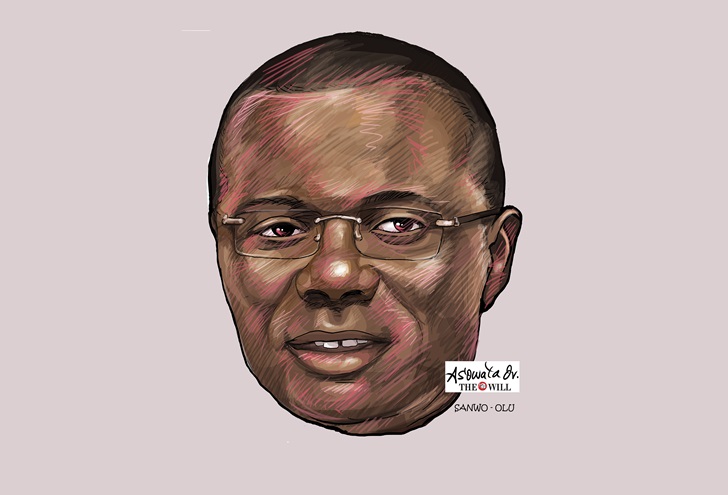
Despite the economic progress, there are areas where Lagos has not met expectations. The infrastructure deficit remains a major concern, with many roads in poor condition. While the state’s transportation system is considered one of the strongest in the country, it is still far from adequate. Traffic congestion remains severe, limiting movement across the city. Efforts to improve public transport include the expansion of the Bus Rapid Transit system and the introduction of the Lagos Blue Line rail project, but these initiatives have yet to resolve the larger problem of urban mobility.
Housing remains another significant challenge. Lagos has a high population density, and many residents struggle to find affordable accommodation. The housing sector is dominated by private developers, with little public intervention to regulate prices. Many areas lack basic facilities, forcing residents to rely on self-help solutions. There is no central water supply system, leaving much of the population dependent on boreholes, water tankers and unreliable sources. Electricity supply is also unstable, with frequent power cuts affecting businesses and daily life. The Lagos State Government has encouraged private investment in renewable energy solutions, but this has not yet delivered widespread improvements.
Security has seen improvements, but it is not yet at the level expected for a city with Lagos’ economic standing. Crime remains a challenge, particularly in certain areas where law enforcement presence is weak. The government has invested in surveillance technology and community policing initiatives, but these efforts have not completely addressed concerns about public safety. The high cost of living has also contributed to social pressures, with residents facing rising prices for essential goods and services. Inflation in Lagos is projected to be 34.2 percent in 2025, with food inflation expected to reach 34.9 percent.
The economic potential of the coastal areas has not been fully explored. Lagos has a natural advantage with its coastal location, but this has not translated into large-scale improvements in transportation and tourism. Water transport remains underdeveloped, despite efforts to encourage the use of ferries. Many coastal communities lack proper infrastructure to support marine transport. Tourism has yet to reach its full potential, as many waterfront areas remain inaccessible or underutilised. Officials have discussed plans to develop these locations, but actual implementation has been slow.
Political uncertainty in the state has also raised concerns. The power struggle within the Lagos State House of Assembly over the speakership involving Mudashiru Obasa and Mojisola Meranda has created distractions from governance. Internal disputes within the ruling party have led to delays in legislative processes. These conflicts weaken decision-making and reduce the government’s ability to focus on long-term development goals. Stability in governance is essential for maintaining investor confidence and ensuring that economic policies are properly executed.
I want to state emphatically that while the economic milestone achieved by Lagos is significant, it does not automatically translate into better living conditions for residents. Many of the challenges facing the city require immediate attention. Infrastructure investment must be matched with stronger regulation and enforcement to ensure that roads, housing, and essential services meet global standards.
Tax reforms are necessary to increase government revenue, but they must be balanced with policies that do not overburden businesses and residents. Lagos has the potential to improve revenue collection without resorting to excessive taxation. The government can explore methods such as property taxation, broadening the personal income tax base, and improving tax compliance among high-income earners. These strategies could significantly increase the state’s internally generated revenue without discouraging investment.
The informal sector, which includes digital entrepreneurs, content creators, and small businesses, remains largely untaxed. Formalising these sectors could provide a new source of revenue for the government. However, this must be done in a way that does not stifle small businesses, as they play a critical role in the state’s economy.
Investment in coastal development could transform transportation and tourism in Lagos. Water transport should be prioritised as an alternative to road travel. This would reduce congestion and create new economic opportunities. Properly planned waterfront projects could also attract investors to the tourism sector.
Long-term economic growth will depend on how well the government addresses these challenges. Lagos has positioned itself as a major economic hub, but the benefits must be reflected in the daily experiences of its residents. Economic expansion should lead to better roads, reliable public services and a higher standard of living.
The state’s administration must focus on strengthening governance, improving infrastructure, and implementing policies that encourage sustainable development. While there is cause for optimism, there is also a need for serious reflection on the areas where Lagos has fallen short. The economic statistics may indicate progress, but real success will only be achieved when Lagosians experience tangible improvements in their quality of life.