March 02, (THEWILL) – The Lagos State House of Assembly, the legislative heart of Nigeria’s economic powerhouse, finds itself in the grip of a deepening controversy that threatens to destabilise governance in the State. This situation, centred on the speakership, has escalated since January 2025, pushing the state to the brink of a major political storm.
Hon. Mudashiru Obasa, a long-serving Speaker, was impeached in a dramatic move by a majority of lawmakers, only to storm the House of Assembly with a team of policemen on Thursday, February 27, asserting his claim to the position.
Mojisola Meranda, elected as his successor, holds firm with significant support, while the withdrawal and reinstatement of her security detail underscores the volatility of the crisis.

Allegations of financial misappropriation, internal power struggles within the All Progressives Congress and interventions from national leaders in Abuja fuel this unrest, raising concerns about its implications for the Centre of Excellence.
If not addressed swiftly, this crisis could fracture party unity and ripple into a broader conflict ahead of the 2027 elections, threatening the stability of Nigeria’s most economically vital state.
The origin of this turmoil trace back to January 13, when 32 out of 40 members of the House voted to remove Obasa, a sixth-term lawmaker representing Agege Constituency I. He had held the speakership since 2015, overseeing significant legislative milestones, but faced mounting accusations of misconduct.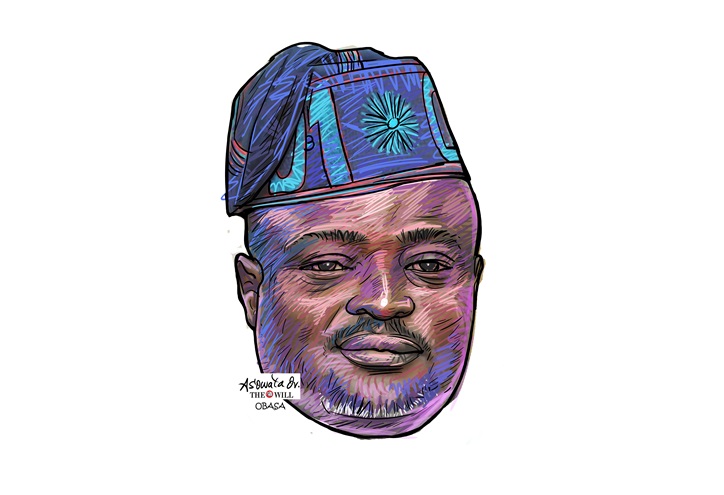
Lawmakers cited financial mismanagement, including approving billions of naira for questionable projects, alongside claims of intimidation, absenteeism at the signing of the state’s appropriation bill and arriving after the governor was seated at public functions in breach of protocols. One notable grievance was his authorisation of N43 billion for lawmakers’ vehicles, a decision that sparked outrage among colleagues who felt it epitomised his high-handed approach. While abroad, Obasa was replaced by Mojisola Meranda, his deputy from Apapa Constituency I, marking her as the first female Speaker in Lagos history. Her election initially appeared to signal a shift, but Obasa’s refusal to accept his removal set the stage for a prolonged standoff.
Obasa’s return to the House of Assembly complex last week, accompanied by a small group of loyal lawmakers and heavy security, presiding over a plenary session with just four members present is appalling. This bold move came despite a lawsuit he filed at the Lagos State High Court in Ikeja, challenging the legality of his impeachment on grounds that it occurred during a recess and without proper procedure. Meanwhile, 36 lawmakers reaffirmed their support for Meranda, insisting she remains the legitimate Speaker. The withdrawal of her security detail earlier that day, followed by its reinstatement, highlight the chaotic interventions from President Bola Tinubu in the matter to the chagrin of majority of lawmakers. These events reveal deep divisions within the state’s political leadership and the House splitting it into rival factions and paralysing legislative functions at a time when Lagos needs stable governance.
Several factors underpin this crisis, with financial allegations forming a critical thread. Obasa has faced scrutiny since 2020, when the Economic and Financial Crimes Commission investigated him for alleged fraud, claims he denied. More recently, lawmakers pointed to excessive spending and abuse of office, accusing him of prioritising personal gain over public interest.
Beyond money, political ambitions amplify the tension. Observers suggest Obasa’s recent comments hint at a potential run for governor in 2027 and this has alienated party leaders who see it as a challenge to established hierarchies. This rift ties into broader struggles within the APC, Lagos’s dominant party, where loyalty and succession often dictate power dynamics. The impeachment, some argue, was less about funds and more about curbing Obasa’s growing influence ahead of future elections.
Key figures shape this unfolding drama, each wielding significant influence. Obasa, a seasoned politician with deep roots in Agege, commands a loyal base and retains backing from some party elders. His legal challenge and dramatic return reflect a determination to reclaim his position, bolstered by claims of support from President Tinubu, the party’s national leader and the most powerful figure in Lagos politics, whose own son’s alleged ambitions for the governor’s post is growing.
Meranda, from a prominent Lagos family, has solidified her standing with majority support in the House, earning praise for her resolve despite pressure to step down. Governor Babajide Sanwo-Olu, while publicly neutral, faces accusations of quietly opposing Obasa’s reinstatement, possibly to assert his own authority. The Governance Advisory Council, an influential body within the party, struggles to mediate, with reports of internal splits—some members back Obasa, others Meranda—leaving it unable to enforce a unified stance.
National intervention adds another layer of complexity. President Tinubu reportedly expressed displeasure at Obasa’s removal, directing party leaders to swiftly resolve the crisis.
Heavyweights like former governors Bisi Akande, Segun Osoba and Akinwunmi Ambode have joined efforts to broker peace, engaging both Obasa and Meranda in talks to end the crisis. There are suggestions that they could both step aside for a neutral candidate, possibly David Setonji from Lagos West, to become speaker. This suggestion aims to balance power across the state’s senatorial districts, addressing grievances from Lagos West lawmakers who feel sidelined. However, negotiations remain stalled, with Obasa’s court case looming as a potential flashpoint that could override political solutions if it rules in his favour.
The fallout from this crisis carries serious risks for Lagos and beyond. Legislative work has ground to a halt, delaying critical policies in a state that drives Nigeria’s economy. The House of Assembly’s inability to function undermines public trust, already strained by perceptions of political infighting over public service. Within the APC, divisions deepen, with Obasa’s Mandate Group faction clashing with supporters of Sanwo-Olu and Tinubu’s broader camp.
If unresolved, this fracture could weaken the party’s cohesion, exposing vulnerabilities ahead of local government elections and the 2027 General Election. Lagos, a bellwether for Nigerian politics, risks losing its reputation as a model of governance, which could deter investors and stall economic progress.
Public reaction underscores the urgency of resolution.
Many see the situation as a betrayal of democracy, pointing to security agencies’ involvement—such as the Department of State Services sealing off the Assembly—as evidence of overreach. Lawmakers loyal to Meranda condemned these actions as an assault on legislative independence, urging Tinubu to intervene decisively.
Meanwhile, Obasa’s supporters, including hundreds who rallied during his return, frame his removal as a coup against a grassroots leader, amplifying the narrative of a power grab. This polarisation risks spilling into the streets, where Lagos’s volatile political history could turn rhetoric into unrest.
Options for resolution remain on the table, though each carries challenges. A political settlement, brokered by party elders, could see a compromise candidate emerge, allowing both Obasa and Meranda to step back gracefully. Alternatively, the court’s ruling could settle the matter definitively, though a decision favouring Obasa might alienate the majority, while upholding Meranda could provoke his camp to escalate defiance. Either way, time is short—prolonged uncertainty benefits no one and heightens the chance of broader conflict.
The stakes extend beyond the Assembly’s chambers. Lagos, as Nigeria’s economic heartbeat, cannot afford a crippled legislature or a divided ruling party. A fractured party risks ceding ground to opposition forces, a scenario Tinubu, Sanwo-Olu, and other leaders can ill afford in Lagos. Beyond politics, the crisis tests Lagos’s claim to excellence, challenging its institutions to rise above personal ambition and deliver for its people.
Swift action is essential to prevent this situation from spiralling out of control. Party leaders must prioritise dialogue over division, ensuring the Assembly resumes its duties without further disruption. The court process should be swift but should not delay political efforts to stabilise the state. Lawmakers, too, bear responsibility to set aside factional loyalty for the public good. If this crisis festers, its effects could echo into 2027, undermining governance and party strength at a pivotal moment. Lagos stands at a crossroads—resolution now can preserve its stability; delay invites chaos. The Centre of Excellence must prove it can weather this storm through decisive, unified leadership.