
September 21, (THEWILL) — The recent decision of the UK First-Tier Tribunal in Tali Shani v Chief Mike Agbedor Abu Ozekhome [2025] UKFTT 1090 (PC) has thrown Nigeria’s legal community into a deep reflection. At first glance, it appeared to be a straightforward dispute over a London house. Yet the judgment quickly escalated into a serious inquiry about credibility, forged documents and the involvement of a Senior Advocate of Nigeria (SAN). For many lawyers, students and members of the public, the outcome is not only a legal setback but also it shows how fragile professional integrity has become.
The property in question is a modest but valuable home at 79 Randall Avenue, Neasden, in North London. Records show it was registered in 1993 in the name of “Tali Shani.” In 2021, Chief Mike Ozekhome, one of Nigeria’s most visible SANs, applied to have the house transferred to his name. That application was challenged by a female claiming to be Ms. Tali Shani, who insisted that she remained the rightful owner and had never authorised such a transfer.
As the case progressed, retired General Jeremiah Useni, a former military administrator of the defunct Bendel State, who had also served as Minister of the FCT during the military era, appeared as a key figure. Useni, who died in January 2025, told the tribunal in evidence before his death that he had personally purchased the property in 1993 with his own funds. He admitted that the registration was not in his name but in “Tali Shani,” whom he said he did not know at that time. This unusual arrangement set the stage for what Judge Ewan Paton later described as a web of contradictions and implausible claims. From all we know, It appeared Useni bought the property with funds illicitly acquired while in public service and intended to hide it by registering it in a fictitious name.

The tribunal paid close attention to the evidence produced by the party claiming to be Ms. Shani. Passports, a Nigerian National Identity Number slip, a Power of Attorney and a death certificate were filed. These documents did not withstand scrutiny. Judge Paton found them riddled with inconsistencies, some appearing to be forged or fraudulently acquired.
A man identified as Mr. Tali Shani also gave evidence, stating that he was born in Plateau State in 1973 and had been the one that bought the London house at the age of 20. He claimed that his funds came from farming and cattle trading. The judge rejected this as implausible, pointing out the absence of supporting financial records and the improbability of such a purchase by someone of his age and background in 1993.
The tribunal concluded that “Tali Shani” was most likely a fictitious name, created to mask the real ownership of the property. While Useni admitted to purchasing the house and using a code name, the use of a false identity meant that no clean chain of title could be established. As a result, neither Ozekhome nor the Shani claimants were recognised as the rightful owner.
It is the involvement of a SAN that has caused such embarrassment. The rank of Senior Advocate is meant to be the pinnacle of legal achievement in Nigeria. It is conferred on a select few who demonstrate exceptional skill and integrity. Yet here, a SAN was tied to a case where the central documents were found to be fabricated and the claimant’s very existence was doubtful.
Across the board, the public commentary in the country has focused on the damage to credibility. If a SAN can appear in a foreign court advancing claims tainted by dubious documents, then what message does that send to younger lawyers, clients and international partners? This is not the first time Nigerians have voiced concerns about the conduct of the legal elite. Over the years, unease has grown over how disciplinary cases are handled, how transparently SANships are awarded and whether ethics are given as much weight as advocacy skills. The Shani case reinforces those anxieties.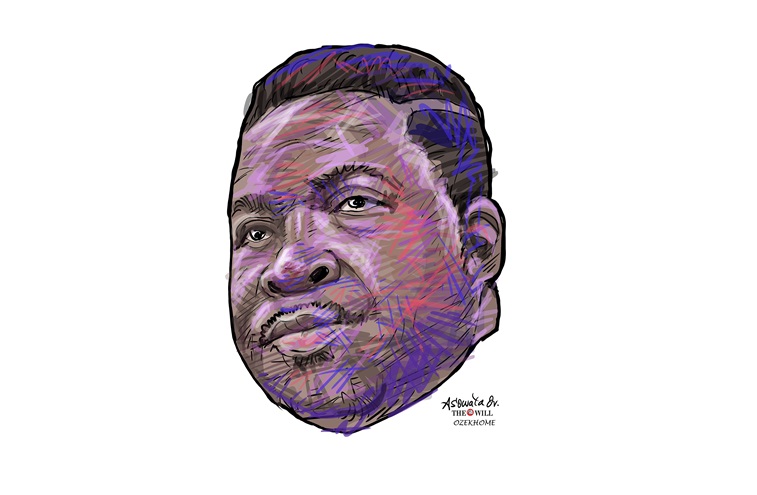
The troubling aspect is not only the risk of personal dishonour. It is the collective reputational cost. A foreign tribunal’s explicit finding that Nigerian legal documents presented in court were likely forged is a blow to the credibility of all Nigerian practitioners. The bar’s standing in cross-border disputes, commercial transactions and arbitration depends on a presumption of integrity. Once that is eroded, every lawyer from Nigeria and Nigerians presenting documents sourced from the country faces an uphill task to be trusted abroad.
The tribunal’s judgment offers at least three lessons. First, lawyers must treat evidence with uncompromising rigour. It is not enough to submit documents that look official; they must be verifiable and consistent. In an age where courts have access to databases, registries and forensic document experts, any weakness will be exposed.
Second, senior lawyers must recognise that their personal reputation extends to the entire bar. The SAN title should not be a mere symbol of longevity or visibility in practice. It should remain tied to honesty, diligence and upright conduct. When one SAN falters, the whole rank suffers a loss of value. Third, Nigerian regulatory bodies cannot continue to look away when allegations of forgery or fraud involve prominent members. The Nigerian Bar Association and the legal practitioners council should have clear procedures for investigating investigating such cases and imposing sanctions, if necessary. Public trust will not be restored by silence or delay.
There is also a political undertone. General Useni was a top military officer with resources and connections. His role in purchasing the property under a false name raises questions about transparency and accountability in Nigeria’s public life. This sort of fraudulent practice exists till date and likely on a way larger scale with lawyers and bankers colluding with public office holders to execute fraudulent schemes.
For the legal profession, the lesson is that international scrutiny is unforgiving. Documents that may pass unchallenged in a Nigerian registry or court are unlikely to escape forensic examination abroad. That is why lawyers must be the first line of defence, advising clients against shortcuts and refusing to lend their credibility to dubious claims.
The Ozekhome case is a painful episode, but it can be turned into a moment of reform. Nigeria’s legal community should use it to launch a serious conversation about standards. Some steps that could be taken include: A review of how lawyers, especially SANs, are disciplined when linked to professional misconduct, even outside Nigeria; mandatory training on cross-border litigation, evidence standards and document verification; stronger collaboration with government agencies to confirm the authenticity of passports, NIN slips and death certificates before they are ever placed before a court; a cultural shift where lawyers value integrity as highly as eloquence.
The UK tribunal’s decision in Tali Shani v Ozekhome is not just about a disputed house in Neasden. It is a judgment on credibility, honesty and the ethical backbone of a profession that holds itself out as the guardian of justice. For Nigeria’s legal community, it should not be remembered only as a scandal but as a wake-up call. If the bar responds with courage, enforces discipline and recommits to honesty, then the SAN title can regain its meaning. If not, this case will stand as evidence that prestige without integrity is nothing more than an empty title.