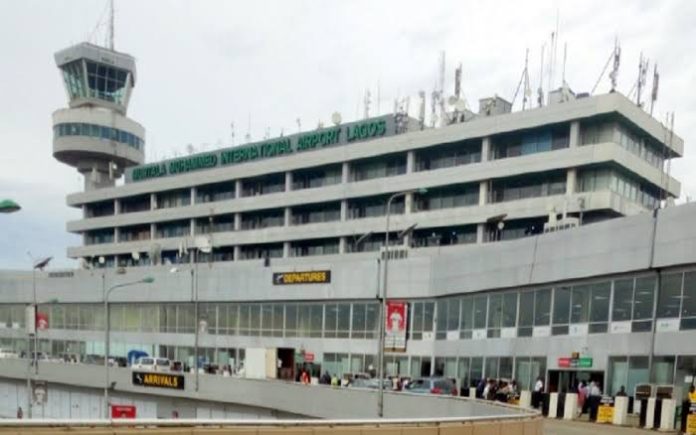
December 24, (THEWILL) — As part of its efforts to ensure aviation safety and operational excellence, the Murtala Muhammed International Airport (MMIA), Lagos, on Tuesday, conducted a comprehensive Table-Top Exercise (TTX) to evaluate emergency preparedness and inter-agency coordination in the event of an aircraft incident.
The exercise simulated an aircraft crash on the runway involving 103 passengers, during which participating agencies demonstrated coordinated rescue, search, and recovery operations in line with established emergency response procedures. The activation of the Emergency Operations Centre (EOC) was also simulated to assess command, control, and communication effectiveness.
The exercise brought together critical stakeholders within the aviation and emergency response ecosystem. Participants included the Federal Airports Authority of Nigeria (FAAN), Lagos State Emergency Management Agency (LASEMA), National Emergency Management Agency (NEMA), Nigerian Police, Nigerian Aviation Handling Company (NAHCO), Skyway Aviation Handling Company (SAHCO), Lagos State Fire Service, Federal Fire Service, Federal Road Safety Corps (FRSC), the Military, FAAN Medical Services, Aviation Security (AVSEC), Nigerian Safety Investigation Bureau (NSIB), the Nigerian Red Cross Society, airlines, and traditional rulers from airport host communities. The Regional General Manager (RGM) for the Southwest Region served as the Incident Commander.

During the observation and feedback session, traditional rulers emphasised the importance of having clear and accessible emergency contact numbers to ensure prompt communication in the event of an incident. Participants also emphasised the immediate activation of the “tripartite alert” system involving the Control Tower, Fire Station, and Base Station, rather than delays occasioned by awaiting further approvals.
Observers highlighted the absence of media representation at the exercise, stressing the importance of strategic communication during emergencies. It was also observed that some security agencies lacked adequate familiarity with the airport’s emergency response contact framework and were advised to obtain and study the Aerodrome Emergency Plan (AEP).
Other observations included the need for more detailed post-incident runway clean-up and decontamination procedures. Stakeholders further recommended the installation of additional fire hydrants across the airport and the provision of sufficient fire-fighting foam concentrate to enhance operational readiness.
Participants reiterated that fire service personnel must retain full protective equipment at crash scenes and strictly utilise designated rendezvous points located at NAHCO, Gate 3, and Gate 19. The mandatory use of respirators during aircraft fire-fighting operations was also emphasised, given the combustible and potentially hazardous nature of aircraft materials, making strict compliance with personal protective equipment (PPE) protocols essential.
FAAN was also urged to intensify public awareness and community sensitisation on emergency response procedures, particularly within communities adjoining the airport.
In his remarks, the Regional General Manager commended the contributions of royal fathers and all participating stakeholders, reaffirming FAAN’s commitment to sustained collaboration and synergy in emergency management. He assured participants that all observations and recommendations would be reviewed and implemented, while disclosing that partial and full-scale emergency exercises are scheduled for 2026.
Speaking last, the Head of the Safety Department expressed appreciation to all stakeholders for their active participation and constructive input. She noted that the exercise underscores FAAN’s resolve to uphold global best practices in aviation safety, adding that continuous training, stakeholder collaboration, and regular drills remain critical to effective emergency preparedness at MMIA.

Anthony Awunor, is a business correspondent who holds a Bachelor of Arts Degree in Linguistics (UNILAG). He is also an alumnus of the Nigerian College of Aviation Technology (NCAT), Zaria Kaduna State. He lives in Lagos.