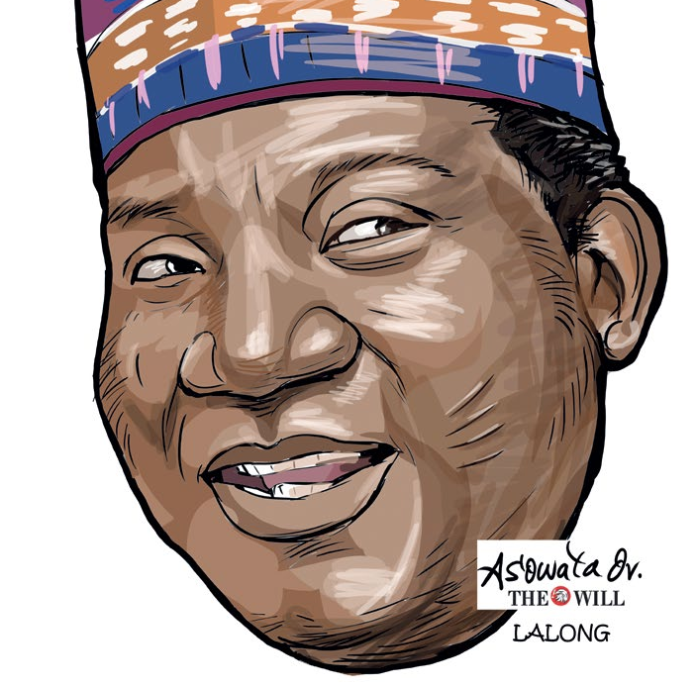
The immediate past administration in Plateau State, headed by Simon Bako Lalong, one of the few sitting governors popularly rejected by their people in the February 25, 2023 National Assembly Election, apparently sought to ventilate its anger and predicament as a result of electoral humiliation and rejection by creating cogs in the wheel of transfer of power, using malicious handover notes replete with half-truths and misrepresentations, to frustrate the smooth take-off of the new administration.
This was besides handing over an impoverished treasury, demoralised and angry thousands of workers on forced holidays due to unpaid wages, an economy in tatters and groaning under a grinding and unsettling debt burden, and an environment besieged by predator bandits and politico-economic provocateurs spilling blood and questing to grab the land.
Earlier, immediately after March 20, 2023, when the Independent National Electoral Commission, INEC, announced Barrister Caleb Manasseh Mutfwang of the PDP as winner of the March 18 gubernatorial election, Government House at Little Rayfield, and Government Guest Houses and Liaison Offices came under intense plunder and petty stealing, including unconfirmed reports that even the cutleries in Government House were carted away by soldiers-at-arms of the departing APC’s Lalong administration. There were also reports of sale of Government properties, including lands, houses, and vehicles that were either stolen or forged as scrap and sold to government officials and their cronies.

Before the May 29 handover however, Mutfwang’s instincts of possible ambush and sabotage by his predecessor and his grieving foot soldiers were positive; and he took precaution in setting up a committee of professional technocrats to fashion out a development blueprint which implementation by his government will restore and set Plateau State on the path of prosperity and self actualization.
Almost simultaneously, Mutwang had to also constitute the Transition Implementation Committee, a necessary arrangement to liaise with a counterpart of the outgoing government to take inventory of the assets and liabilities of government as one political phase was fading and giving way to another. The Committee was headed by Professor G. Lombin, who will also be respected, trusted, and deemed worthy enough to head the body of professionals and technocrats to fashion out a four-year blueprint for strategic development of the State.
Inaugurated on April 25, once the committee settled down to work, it discovered that the grounds were unsettling and shifty as officials of the Lalong government put spanners in the works. There were media reports of sundry tricks and ploys deployed by the government side to frustrate the two sides from meeting to receive briefings and notes from the outgoing side. On several occasions, according to some members of the Mutfwang Transition Committee, the Lalong side would excuse themselves and abort a scheduled meeting, claiming the SGS, or one official or the other was “unavoidably away on official assignment”.
Submitting the report of the Committee during a twin occasion last Monday, Professor Lombin, in a representative lamentation, admitted that although the “joint committee designed a mutually acceptable template to work with, the joint committee was faced with formidable operational challenges that could not allow the presentation of a joint report”, as he resigned all to fate, saying “the rest is history”.
Before history will unfold however, Lombin’s lamentations continued in a heart-rending narrative: “an important part of the work of the Transition Committee was to study the handover notes and make appropriate recommendations to Your Excellency on the way forward. The out-gone government, unfortunately, did not avail us the opportunity of making inputs into their handover documents handed over to you on May 29, as all efforts to have the draft documents were not successful”.
From a cursory study and analysis of the hand over notes received by Mutfwang on May 29, by the Committee on Roadmap for Strategic Development, it was surmised that the handover notes “were scanty and lacked necessary details as they did not follow the agreed template developed by the Joint committee”.
“Whereas the hand over notes stated that the total revenue which accrued to the Plateau State Government for the period May 2015 to May 2023 stood at N872billion, the total expenditure was only given for the period May 2015 to December 2022”, the report pointed out, noting further that “the State is in dire financial distress. Its total debts and liabilities, including contingent liabilities, amount to about three hundred and seven (307) billion naira. This is far more than the amount reflected in the handover notes”.
With a charge to develop a four-year strategic development blueprint for Plateau State, last April, the then Governor-elect, Barrister Caleb M. Mutfwang, constituted a six-man committee headed by Professor G. Lombin, to develop and provide a document that “would assist the incoming administration in plotting its development agenda and roadmap in fulfilling its social contract with the people”.
The Committee was particularly to provide the foray and compass for development in agriculture, health care delivery, education and human resources development, physical infrastructure including urban renewal, industry and tourism, mining and mineral resources exploitation, public institutions and public sector reforms, and public sector funding and resources mobilization.
Noting that “for each thematic area, the plenary was requested to categorize clearly the immediate/short, medium, and long term policy objectives and the appropriate programme implementation plan, the Committee submitted its report last Monday, with a highlight on peace and security which it underscored to the effect that it should be handled by a “a small theme of experts who will submit their report directly to the Governor”.
About the Local Government System, the Committee observed that “the current system of local government administration was emplaced by the military administration in 1976”, noting further that “conceptually, the system remains one of the most effective and efficacious ways of bringing government activities, with all the attendant benefits, to the various communities in the State, thereby fulfilling the desire to extend participatory development activities to the grassroots”.
The Committee expressed reservation, nevertheless, that “over the years, the system has been largely abused, partly at the level of direct operators, and partly due to the absence of diligent supervision by the State government”.
Thus, it advises the new administration of Mutfwang to “make it a point of duty to minimize areas of mutual corporate frustration, and enhance accountability and service delivery at that level”.
Pointing that “good governance is the bedrock and pre-requisite for social inclusiveness, social justice, peace and public confidence in the political leadership”, it also emphasized that “good governance” per se “is premised essentially on the principles of accountability, transparency, zero tolerance for corruption, respect for the rule of law, and upholding unity in diversity”.
The two Professor Lombin Committees, which reports were submitted during a twin event last Monday, clinically capture the booby traps, land mines, and frustrations ranged against Mutwang and the PDP in the bid to revamp and reposition Plateau State. In an ironic twist, the two committees have succeeded in offering Mutfwang the way to go to rediscover Plateau, leaving Lalong sprawling in the dust and harsh opinion of the Plateau court.
Describing the debt burden of 307 billion naira as “intimidating and worrisome”, Governor Caleb Manasseh Mutfwang, on the occasion, gave the people of Plateau cause to cheer and be strong as he declared that “the challenges confronting us are not insurmountable….We are determined to fulfil our constitutional mandate, to protect the lives and property of our people. We will leave no stone unturned to protect the Plateau legacy.”