
July 13, (THEWILL) — The Nigerian Content Development and Monitoring Board (NCDMB) has stepped up support for the oil and gas industry towards engaging in production activities such as manufacturing, thus enhancing value adding activities that boost employment.
With increased investment in the sector and more foreign firms expressing renewed confidence in the economy, the NCDMB is seen stepping up its commitment to its objective. This will impact on the backward integration policy that had lagged as a result of unstable policy environment amidst lingering infrastructure deficit.
Backward integration is a practice where companies are encouraged to cultivate their own raw materials by purchasing from their suppliers or establishing their own farms to grow produce for their factories.
Many manufacturing firms keyed into the scheme and have since taken giant strides in its implementation, which is to the benefit of the MSMEs, especially those engaged in the agriculture and transport value chain. The commitment of the NCDMB to its objective has resulted in increased engagement towards production.
Recently, the NCDMB Board pledged its full support to ensure that world-class safety boots manufactured by a local firm, Yikodeen Company Limited, are utilised in-country.
Yikodeen, which recently inaugurated its expanded safety footwear manufacturing plant in Ejigbo, Lagos State, showcased a 120,000-square-foot, state-of-the-art facility capable of producing 5,000 pairs of safety boots per day. With backward integration in place, many micro, small and medium (MSMEs) will be involved in the value chain through various sub-activities. It was a historic milestone that indicates the resilience of indigenous entrepreneurship amid various macro-economic challenges, such as inflation, high interest rate, high cost of production and poor infrastructure.
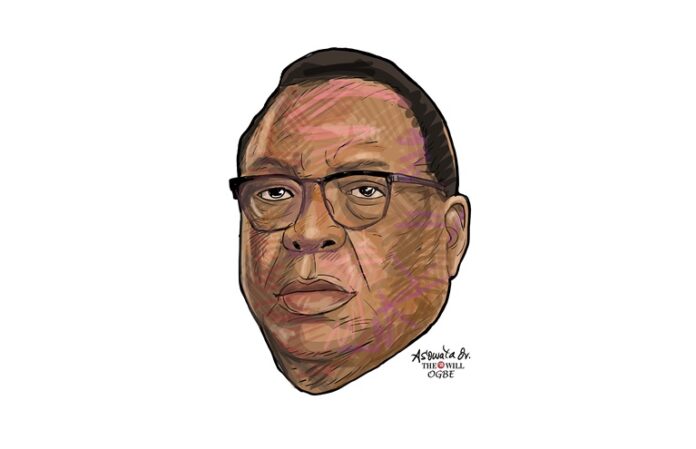
Representing the Executive Secretary of NCDMB, Engr. Felix Omatsola Ogbe, the Director of Capacity Building, Engr. Abayomi Bamidele described the inauguration as a landmark event that aligned with the Board’s core mandate to promote local content across Nigeria’s oil and gas value chain and beyond.
“Enterprises like Yikodeen are at the heart of what we stand for at NCDMB. The ‘D’ in our name stands for Development, and the ‘M’ means ‘Monitoring’, which describes our dedicated effort to ensure that Nigerian-made products are not just produced but utilised,” he said.
According to him, the NCDMB will continue to support the company, especially as its products meet global standards and they are already being used in the oil and gas industry.
“The Executive Secretary has mandated me to confirm our full support to ensure that these world-class safety boots are utilised in-country,” he said.
The NCDMB chief cited the Federal Government’s ‘Nigeria First’ policy, stressing its implications across all sectors. “The President, through the Bureau of Public Procurement, has directed that all safety footwear procured with public funds must be made in Nigeria. Yikodeen stands to benefit immensely from this directive if strategically positioned,” he said.
He also commended the founder’s determination, saying, “If, indeed, he started in 2016 and you take away nine years from his age, you can imagine what he looked like when he started this dream. That ‘shoemaker’ is now a billionaire shoemaker.”
He urged the youth in Nigeria to channel their energy into entrepreneurship, describing the Yikodeen journey as one that inspires national pride.
Governor Babajide Sanwo-Olu of Lagos State, represented by the Commissioner for Commerce, Cooperatives, Trade and Investment, Mrs Folashade Ambrose-Medebem, lauded the company’s achievement, describing it as symbolic of Lagos’ industrial vision.
“From a modest workshop in 2016, Yikodeen has emerged as the largest footwear manufacturing company in West Africa. This is not just a factory; it is a movement, a demonstration that Lagos can produce, compete, and export globally,” he said.
Sanwo-Olu affirmed that the factory directly aligned with the Lagos State Industrial Policy (2025–2030), which seeks to double manufacturing’s contribution to the state’s Gross Domestic Product from 7.5 per cent to at least 15 per cent by 2030, reduce dependence on imports for basic consumer goods and foster an ecosystem where local industries can thrive through forward and backward value chain integration.
“Yikodeen is not only producing shoes; it is producing livelihoods, opportunities and dignity,” the governor added.
The founder and CEO of Yikodeen, Mr. Atunde Shamsideen, while recounting his entrepreneurial journey, described the venture as a stubborn dream born in 2015.
“This vision started in a room, with just 20 pairs of shoes. Today, we produce over 2,000 pairs daily to ISO, ASTM and Nigerian industrial standards,” he said.
He commended the NCDMB for its pivotal role in the company’s growth, noting how the Board helped facilitate years of product testing and eventual adoption by oil and gas companies like Saipem and Daewoo. “Their enforcement ensured our products got through. Today, those same companies are our biggest customers,” he said.
Shamsideen stressed the potential for job creation if local procurement policies are enforced, claiming: “Just two percent of safety boots used in Nigeria are locally manufactured. If we enforce local purchase in the oil and gas and public sectors, we can create over 35,000 jobs.”
Yikodeen’s production ecosystem already engages women in raw material recycling and trains over 1,000 people yearly, according to the CEO. “Buying Made-in-Nigeria goes far beyond commerce; it is about creating value chains, livelihoods and national dignity,” he added.
The Director for Lagos Operations, Standards Organisation of Nigeria, Mrs Teresa Ojomo, who represented the Director-General, Dr Ifeanyi Okeke, praised Yikodeen’s adherence to national and international safety standards.
“This is not just a facility; it’s a declaration that Nigerian manufacturing can lead globally. SON will continue to support companies like Yikodeen who take quality seriously,” he said.
Okeke underscored SON’s partnership with Yikodeen since 2006, culminating in the Mandatory Conformity Assessment Programme certification, which assures consumers of quality and safety.
He also cited Yikodeen’s certification under critical standards, such as NIS ISO 20346:2004 and ISO 20345:2022, adding, “Standards are not obstacles — they are enablers. They are the bridge between ambition and market access.”
The Ogwa-Olusan of Warri, Chief Brown Mene, representing HRM, Ogiame Atuwatse III, CFR, the Olu of Warri, described Yikodeen as a beacon of hope for Nigeria.
He likened the company to a stubborn vision that refused to be beaten by headwinds, proving that “Nigeria is on an upward trend.”
He also urged the team to remain visionary and expand globally, assuring that “the name of Yikodeen will blaze bright and proud.”

Sam Diala is a Bloomberg Certified Financial Journalist with over a decade of experience in reporting Business and Economy. He is Business Editor at THEWILL Newspaper, and believes that work, not wishes, creates wealth.
