August 11, (THEWILL) — Predominant consumer goods firm, Nestle Nigeria Plc, experienced a strong rebound in the first half of 2025 after seeing sharp losses in 2023 and 2024 due to currency devaluation, and this is good news for Backward Integration.
Backward integration is a practice where companies are encouraged to cultivate their own raw materials by purchasing from their suppliers or establishing their own farms, for instance, to grow produce for their factories.
The consumer goods firms, in particular, keyed into the scheme introduced by the Nigerian government in the 80’s, and have since taken giant strides in its implementation. This is to the benefit of the MSMEs, especially those engaged in the agriculture and transport value chain.

For instance, Nestlé Nigeria at a time instituted a project to engage 5,000 smallholder farmers, initially, for the supply of raw materials for its agro-business operations. The initiative, ‘Developing Inclusive Grain Value Chains Project’, was in partnership with IDH — a Sustainable Trade Initiative and TechoServe outfit.
Backward integration practice sustained Nestle Nigeria’s operations when other manufacturing firms that relied heavily on imported raw materials became stranded in the midst of severe forex scarcity some years past. This is why the turnaround being experienced by the firm is significant.
Scourge of devaluation
THEWILL findings had revealed that many thriving businesses involved in the value chain of major manufacturing companies, under the backward integration policy, had to scale down their operations; or stop doing business as a result of the naira devaluation, high inflationary pressure and prohibitive costs of operations. The worst hit were the MSMEs.
The development impacted severely on the balance sheets of the affected businesses as they had to source extra funds in local currency to meet their dollar-denominated obligations.
According to Abdulrasid Yarima, president/chairman of the governing council of the Nigerian Association of Small and Medium Enterprises (NASME), about 10 percent of the 40 million MSMEs in the country have shut down since the subsidy removal.
In a statement, Yarima said, “It’s been very tough for our members as we are managing to survive. Some of them are closing shops while others are looking for new business opportunities.”
“At a time that the manufacturing companies were faced with the challenge of accessing foreign exchange to import raw materials and other accessories, Nestle Nigeria played a leading role in boosting backward integration, a policy it embraced with unyielding vigour,” said Ben Damire, owner of a grain processing outfit in Ota, Ogun state.
Enter topsy-turvy
Nestle Nigeria experienced a significant profit decline in 2023 and 2024 after a period of steady profits in 10 years prior. The company had seen consistent growth, with profits increasing from N22.2 billion to N49 billion between 2014 and 2022.
However, in 2023, the leading consumer goods firm reported a loss of N79.5 billion, constituting a 262 percent decline from the previous year. In a continued downward slope, the losses deepened in 2024, reaching a record N164.6 billion, nearly wiping out all profits made in the preceding eight years.
The game changer
Nestle Nigeria showed a significant turnaround in H1 2025, reporting a net profit of N50.6 billion, effectively reversing a loss of N176.6 billion from the same period in 2024. The impressive performance was also underscored by a 43 percent increase in revenue to N581.1 billion and a 106 percent increase in operating profit.
For the 64-year-old consumer goods firm, moving from a loss of N252.5 billion in H1 2024 to a profit before tax of N88.4 billion was an exceptional quantum leap in an operating environment of biting headwinds.
In particular, marketing and distribution expenses rose to N73.69 billion against N50.95 billion from the same period in 2024, representing a 44.6 percent increase.
In the same vein, administrative expenses soared by 58.2 percent to N21.47 in H1 2025 billion from N13.57 billion in the preceding period.
Cumulatively, these pushed the cost of operating activities to a significant high: N130.44 billion from N63.07 billion prior in H1 2024, constituting a whopping 106.8 percent increase during the period.
Positive balance sheet
Notwithstanding the pressure on equity, the firm strengthened its balance sheet with total assets increasing marginally by 4.7 percent to N899.74 billion up from N858.69 billion as of December 2024. This reaffirms the firm’s strong fundamentals, resilient business model, and disciplined execution of its strategic priorities in a challenging environment that put manufacturing firms on edge.
The 86.4 percent sharp drop in finance costs, a key expense factor that the firm had battled with in previous years, which fell to N43.16 billion in the review period, from N318.112 billion in H1 2024, was remarkable.
It showed that the strong measures applied by the management to steer the topmost consumer goods firm back to profitability is one that would delight the shareholders. It also signposts a stronger positioning as the firm grapples with economic challenges that almost choked the manufacturing sector.
Voice of executive
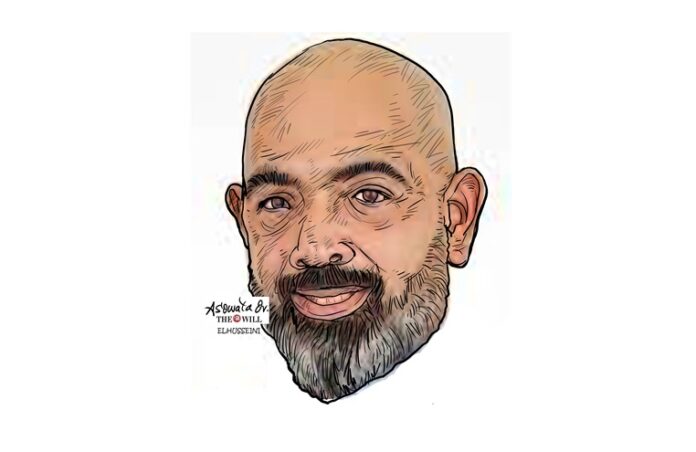
Mr. Wassim Elhusseini, CEO/Managing Director of Nestlé Nigeria Plc, while commenting on the unaudited report, emphasised the company’s commitment to strengthening its earnings profile stated, “The robust topline growth of 43 percent and profit after tax of N50.6 billion in H1 2025 support our return to profitability which commenced in Q4 2024. This performance reflects our unwavering commitment to operational excellence, the support of our stakeholders and the dedication of our team to drive sustainable growth in the face of evolving challenges.”
Looking ahead, Mr. Elhusseini stated, “We will continue to focus on improving our margin management while driving innovation and renovation to meet changing consumer needs. We will also maintain our investment in community programs that create sustainable value for our stakeholders.”

Sam Diala is a Bloomberg Certified Financial Journalist with over a decade of experience in reporting Business and Economy. He is Business Editor at THEWILL Newspaper, and believes that work, not wishes, creates wealth.