-
The Nigerian Financial Intelligence Unit (NFIU) says terrorists, kidnappers, drug traffickers, cybercriminals, and other organised criminal groups depend on illicit financial flows, with financial intelligence increasingly helping to disrupt their operations.
-
The agency disclosed that intelligence generated by its Organised Crime Department has supported investigations by the Nigeria Police Force, EFCC, NAPTIP, the Office of the National Security Adviser, and financial intelligence units in 186 countries.
-
NFIU CEO Hafsat Bakari called for stronger collaboration among intelligence agencies, financial institutions, regulators, and international partners, warning that organised crime can only be defeated through coordinated action.
-
Nigeria’s first National Organised Crime Strategy, developed by 13 government agencies, will be submitted to the Presidency after validation to strengthen the country’s response to terrorism financing and organised crime.
July 17, (THEWILL) — The Nigerian Financial Intelligence Unit (NFIU) has tightened the noose on terror financiers with the unveiling of Nigeria’s first National Organised Crime Strategy, aimed at disrupting illicit financial flows that sustain terrorism, kidnapping, drug trafficking, cybercrime, and other organised crimes.
The Chief Executive Officer of the NFIU, Mrs Hafsat Bakari, disclosed this on Friday in Abuja during the validation exercise for the strategy document, saying the initiative marks a shift from merely complying with international anti-money laundering standards to achieving measurable results in tackling organised crime and terrorism financing.
She explained that criminal enterprises (including terrorism, kidnapping, drug trafficking, cybercrime, human trafficking, migrant smuggling, and illegal mining), are sustained by illicit financial flows.

Bakari however stressed that tracking the movement of money remains one of the most effective ways of identifying criminal networks, exposing their financiers, and preventing attacks.
According to her, the NFIU established a dedicated Organised Crime Department in 2024 to trace illicit financial flows within Nigeria and across international financial systems.
She disclosed that intelligence generated by the department has supported investigations by the Nigeria Police Force, the Economic and Financial Crimes Commission (EFCC), the National Agency for the Prohibition of Trafficking in Persons (NAPTIP), the Office of the National Security Adviser (ONSA), as well as financial intelligence units in 186 countries.
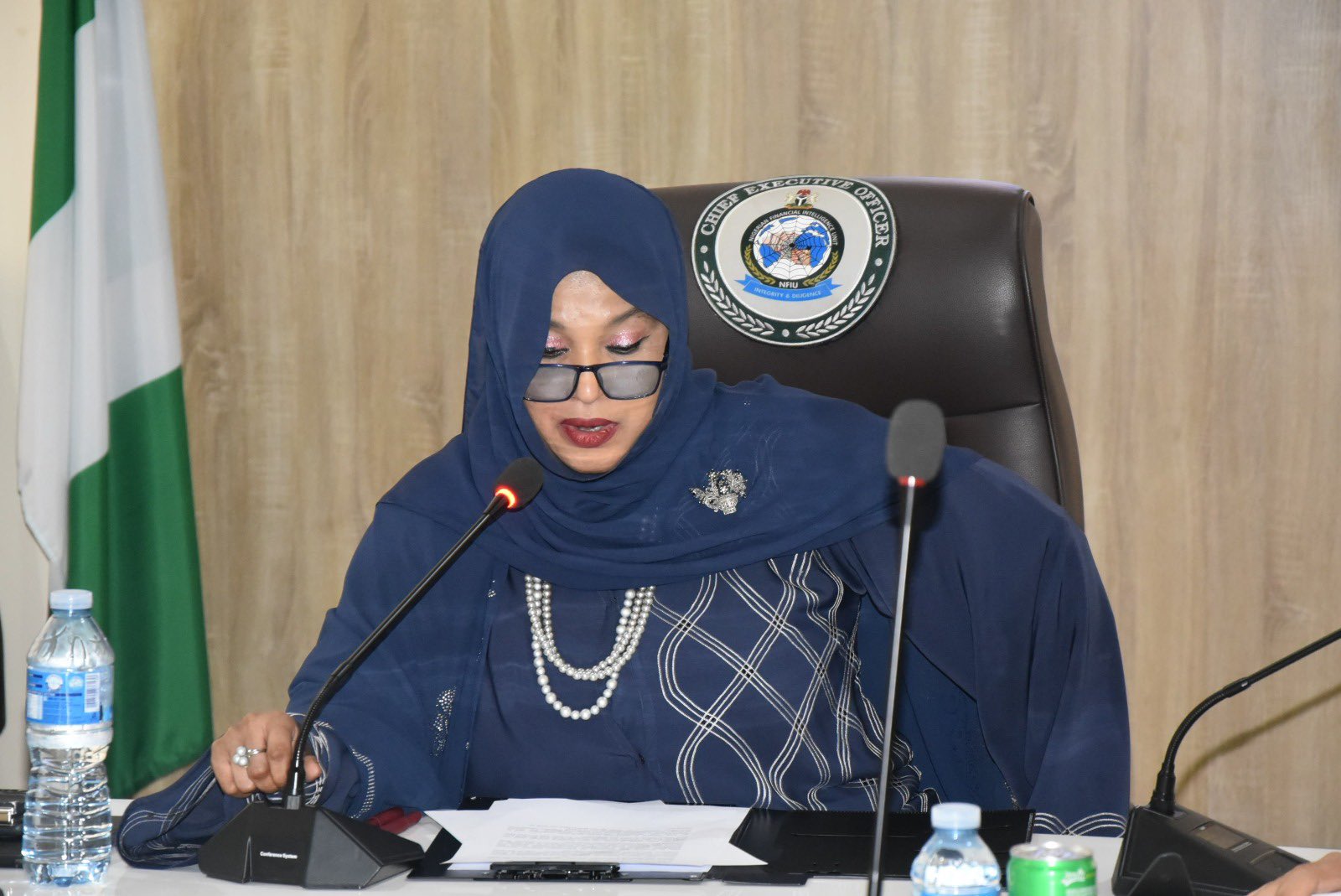
“We have already taken significant steps. Our response must be more organised than the criminals we are confronting,” Bakari said.
She stressed that organised crime has become increasingly sophisticated and transnational, making collaboration among intelligence agencies, financial institutions, regulators, and international partners essential to dismantling criminal financial networks.
According to the NFIU boss, strengthening intelligence-sharing and coordinated enforcement will significantly weaken the financial infrastructure sustaining criminal organisations operating across borders.
13 Agencies Develop National Strategy
Also speaking, the National Coordinator of the National Cybersecurity Coordination Centre (NCCC), Office of the National Security Adviser, Mr Sa’ad Abubakar, said organised crime had evolved into an interconnected ecosystem where cybercrime, drug trafficking, human trafficking, migrant smuggling, and illicit financial flows often rely on the same criminal networks, financial systems, and governance weaknesses.
He said Nigeria’s proposed National Organised Crime Strategy adopts a whole-of-government and whole-of-society approach anchored on four strategic pillars—prevention, prosecution, protection, and partnership.
Abubakar disclosed that no fewer than 13 government agencies contributed to drafting the strategy, demonstrating the Federal Government’s determination to strengthen coordinated national action against organised crime.
He added that the strategy clearly assigns institutional responsibilities and measurable performance indicators to ensure accountability and effective implementation.
Strategy to Be Submitted to the Presidency
The NCCC coordinator disclosed that following the validation exercise, the National Organised Crime Strategy would be submitted to the National Security Adviser before being transmitted to the Presidency for consideration and approval.
He urged stakeholders to ensure the strategy remains practical, measurable, and flexible enough to respond to emerging threats, particularly crimes increasingly driven by artificial intelligence and rapidly evolving digital technologies.
The validation exercise attracted representatives of security and intelligence agencies, anti-corruption institutions, development partners, civil society organisations, and international partners, who reviewed the framework expected to strengthen Nigeria’s coordinated response to organised crime, terrorism financing, and other transnational security threats.

Felix Ifijeh is a journalist with years of professional reporting experience. Known for his keen news sense, compelling storytelling and commitment to accurate, impactful reporting, he has built a reputation for turning leads into clear, engaging, and well-structured reports that resonate with readers. His work reflects deep newsroom experience and a commitment to accurate, impactful journalism.