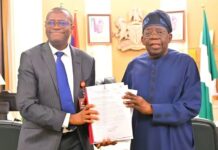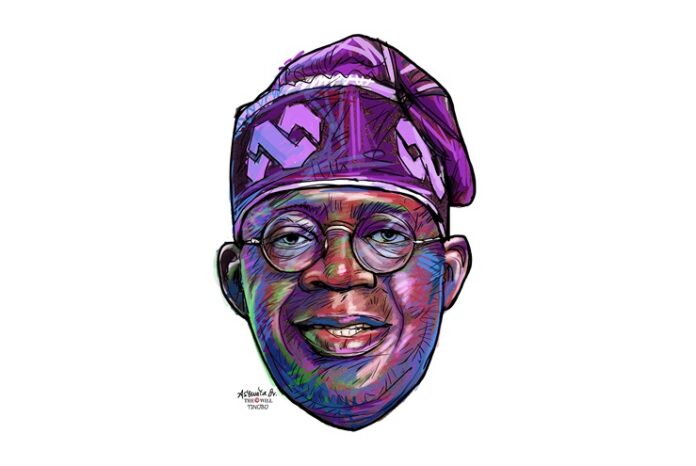
October 05, (THEWILL) — Nigerians from all works of life are still divided over the strides made by the country in its 60 years of life. For the Federal Government, which christened the 65th Independence Anniversary celebration, “All Hands on Deck for Greater Nigeria,” the country was developing at a pace set by its founding fathers since independence and it is time for every Nigeria to join the bandwagon.
During a nationwide broadcast to mark Nigeria’s 65th Independence anniversary on October 1, 2025, President Bola Tinubu declared that Nigeria had turned the corner economically.
“The worst is over,” he said, as he reeled out key achievements of his administration.

Tinubu said his government’s painful but necessary reforms, including fuel subsidy removal and foreign exchange unification, were dismantling decades of distortions and freeing up resources for development.
“We now have more money to build the Nigeria we deserve,” the President stated, insisting that the sacrifices of Nigerians were beginning to yield tangible results.
He cited recent economic data showing that Nigeria’s GDP grew by 4.23 percent in the second quarter of 2025, the fastest in four years.
Inflation, he said, fell to 20.12 percent in August, the lowest in three years, while external reserves rose to $42.03 billion, the highest since 2019. He added that Nigeria had now recorded five straight quarters of trade surpluses, while crude oil production had recovered to 1.68 million barrels per day.
Tinubu further revealed that non-oil revenues had surpassed ₦20 trillion this year, reducing the debt-service-to-revenue ratio from nearly 97 percent to below 50 percent.
On social investment, he announced that ₦330 billion had been disbursed as direct cash transfers to more than eight million vulnerable households. He also highlighted the National Student Loan Fund (NELFUND), which has so far disbursed ₦99.5 billion to 510,000 students in 228 institutions, alongside youth-focused initiatives such as Credicorp, YouthCred, and iDICE.
The 36 state governors in unison called for unity and rededication of Nigerians to the ideals of nationhood where loyalty, patriotism, selflessness and justice thrive.
The opposition caucus in the House of Representatives however said there is more work to be done on almost all fronts and urged the nation to confront the uncomfortable truth that its political and economic structures require deliberate and timely reforms.
In a congratulatory message jointly signed by caucus leaders — Rep. Kingsley Chinda, Minority Leader; Rt. Hon. (Dr) Ali Isa J.C, Minority Whip; Rt. Hon. Aliyu Madaki, Deputy Minority Leader; and Rt. Hon. George Ozodinobi, Deputy Minority Whip, the caucus said: “As we celebrate another year of freedom from colonial rule, we salute the sacrifices of our founding fathers and heroes past who gave everything for the independence we enjoy today.
Today presents another opportunity for sincere reflection and objective introspection — for us as a people to look back on our journey of nationhood, the road taken and not taken. In doing this, we must be honest in our assessments.We must be fair, frank and firm. Only when we are true and factual about the state of our nation can Nigeria break free from stunted development and realise her full potential as a prosperous country.”
They called for the presence of inclusive economic growth to uplift millions trapped in poverty, adding that insecurity, hunger, youth unemployment and infrastructure deficits remain persistent obstacles to development.
For them, the ideals of equity, fairness and justice that should unite us are increasingly strained, resulting in divisions that threaten cohesion and progress.
Dr. Olu Fasan, an economist and politcal analyst described the occasion as one for sober reflection. For him, the sad truth is that, “beyond the fact of its existence as a political entity, there’s little worthy of jubilation about Nigeria at 65. If that statement sounds outlandish, then consider the following three critical measures of a nation’s success: unity, security and prosperity. Add a fourth: state capacity. How well has Nigeria fared, at 65, on these indices of development? Abysmally, one must say! The answer is no.”
Arguing that the capacity of the Nigerian state to deliver public services amid corruption has reduced over the years, he stated that as a country with one of the lowest per capita incomes in the world, which was once listed as the “poverty capital of the world”, with most of its citizens living below the poverty line, Nigeria is a deeply unequal country; the gap between the rich and the poor is so wide that the middle class has virtually vanished. Yet, the expansion of the middle classes is a test of a healthy nation.
“The foregoing is the state of Nigeria 65 years after its independence. If Nigeria is not a failed state, it is certainly a fragile one. It has all the symptoms of state fragility set in a seminal report titled “Escaping the fragility trap”, jointly published in 2018 by Oxford University and the London School of Economics. Young and educated Nigerians are fleeing the country in droves to have the chance to experience rich-country living standards and opportunities that are elusive to them at home. But here’s the paradox: The same Nigeria that seemingly can’t govern and transform itself from poverty to prosperity has citizens who are transforming other nations and running world bodies like the World Trade Organisation, ably led by Dr Ngozi Okonjo-Iweala, a world-renowned technocrat. What, then, is the problem? Well, every symptom has a root cause. So, what are the root causes of Nigeria’s symptoms of state failure or fragility? ”
Now, without an iota of doubt, Nigeria is what Acemoglu and Robinson described in their book, Why Nations Fail, as an extractive state, where the distribution of power is narrow and unconstrained, where those with political power use their offices to amass wealth and use the wealth to sustain their power, and where there is absolutely no incentive for those in power to provide the basic public services that would improve the quality of life for ordinary people and to engender economic progress and prosperity for many, not a few. That’s the political, economic and social cul-de-sac that Nigeria is trapped in today, 65 years after independence.”
Former Minister of State for Defence, Senator Musiliu Obanikoro reflected on the country’s journey through the years and insisted that Nigerians had consistently risen above adversity and pointed to the stability of democratic governance and the global achievements of Nigerians as proof of the country’s enduring greatness.
He said, “Sixty-five years ago, our founding fathers, with uncommon courage and conviction, reclaimed our sovereignty and entrusted us with the sacred responsibility of nationhood.
“Since then, Nigeria has faced trials that would have broken lesser nations. Yet, time and again, Nigerians have demonstrated an unyielding capacity to rise above adversity, to endure, and to hope. It is this resilience that continues to define us as a people,” Obanikoro stated.
The governing All Progressives Congress, APC, admitted that times have been hard and the country has gone through “difficult challenges, raging storms and calmer seasons,” It added that, “ our nation has continued to triumph on the back of the solid will, perseverance, sacrifices, resilience and self-evident patriotism of citizens of our great Republic,” according to National publicity Secretary, Felix Morka.
Labour Party leader, Peter Obi however, accused the ruling party of diminishing the fortunes of the country in over a decade of its being in power.
According to him, in 1999, Nigerians overcame military dictatorship and restored democracy, beginning a renewed journey toward prosperity, freedom, and justice.
“That journey helped us build Africa’s largest economy and strengthen democratic institutions. But over the last decade, under the APC’s incompetent, divisive and corrupt leadership, Nigeria has been greatly diminished,” As a remedy, he advised that, ”old politics must end,” and a “new politics of prosperity” for all must begin with people-centred policies, projects and programmes.
Felix Ifijeh is a journalist with years of professional reporting experience. Known for his keen news sense, compelling storytelling and commitment to accurate, impactful reporting, he has built a reputation for turning leads into clear, engaging, and well-structured reports that resonate with readers. His work reflects deep newsroom experience and a commitment to accurate, impactful journalism.