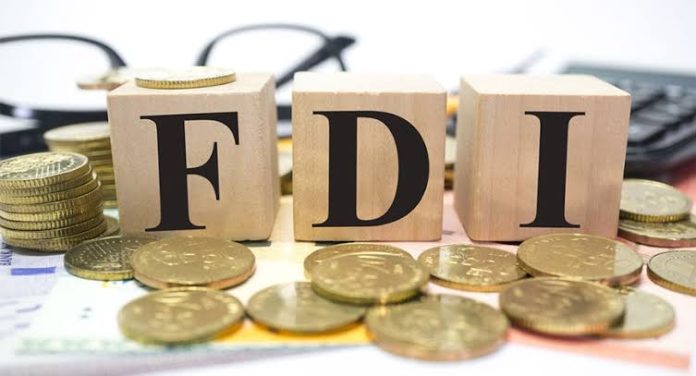
December 30, (THEWILL) — Foreign Direct Investment (FDI) inflows into Nigeria rose sharply to $720 million in the third quarter of 2025, marking the highest quarterly inflow recorded so far this year, according to data from the Central Bank of Nigeria (CBN).
The strong Q3 performance represents a significant rebound from the $90 million recorded in the second quarter, highlighting a renewed appetite for long-term investment after a subdued start to the year. On a year-on-year basis, inflows also improved, exceeding the $570 million recorded in the corresponding quarter of 2024.
The surge in FDI contributed positively to Nigeria’s external position during the quarter, supporting improvements in the balance of payments, foreign exchange liquidity, and external reserves. Analysts attribute the uptick largely to gradual macroeconomic stabilisation, ongoing exchange-rate reforms, and improving investor sentiment toward structural investments in the Nigerian economy.

FDI — which comprises equity investments, reinvested earnings, and intercompany loans — is viewed as a more stable source of capital than portfolio flows. It plays a critical role in job creation, technology transfer, and sustainable economic growth, making it a key indicator closely watched by policymakers and capital market participants.
Despite the encouraging Q3 figures, analysts caution that Nigeria’s FDI inflows remain below long-term potential, constrained by persistent infrastructure deficits, policy uncertainty, and security challenges. Nonetheless, the strong third-quarter showing has raised cautious optimism that foreign investment inflows could remain resilient into the final quarter of 2025 and beyond.

Ogochukwu Onwaeze