-
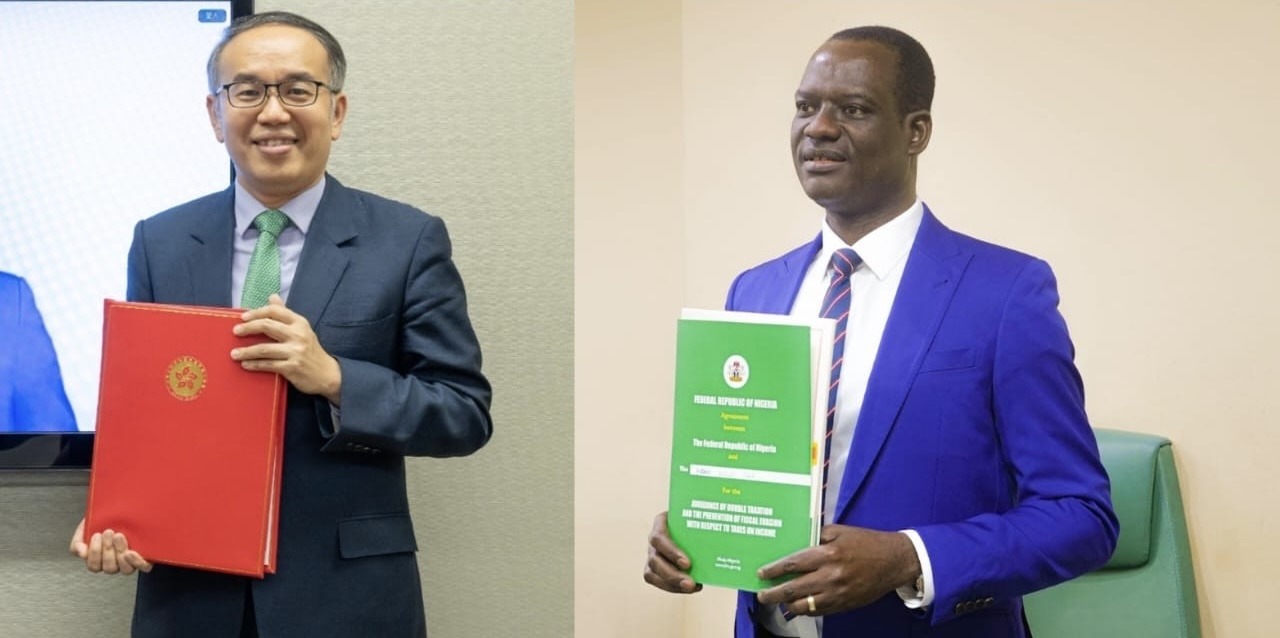
Nigeria’s newly signed Double Taxation Agreement with Hong Kong could significantly improve the country’s attractiveness to international investors by eliminating the risk of double taxation on cross-border income.
-
The treaty provides greater tax certainty, lowers compliance costs and creates a more predictable investment environment for businesses operating between both jurisdictions.
-
It also positions Nigerian companies to expand more confidently into Asian markets while strengthening Hong Kong’s role as a gateway to regional investment.
-
Beyond immediate tax relief, the agreement reinforces Nigeria’s broader economic reform agenda and could support increased foreign direct investment, trade and long-term commercial partnerships.
July 14, (THEWILL) — Nigeria’s Double Taxation Agreement with Hong Kong could reshape how businesses and investors approach cross-border opportunities between the two markets. Beyond preventing companies from being taxed twice on the same income, the treaty could reduce investment barriers, improve tax certainty and make Nigeria more attractive to international capital. For investors and traders, tax certainty is often as important as market opportunities.
Businesses are more willing to commit long-term capital when they have clarity on how profits, dividends, and other income will be taxed.
As Nigeria seeks to deepen economic ties with Asia and attract more foreign investment, here are seven ways the agreement could strengthen the investment climate for businesses and market participants.
1. The agreement removes the burden of double taxation

One of the biggest barriers to international investment is the possibility of paying tax twice on the same income, once in the country where the income is earned and again in the investor’s home jurisdiction.
By allocating taxing rights between Nigeria and Hong Kong, the agreement reduces this burden, allowing businesses and investors to retain more of their returns while making cross-border investments more commercially viable.
2. It gives investors greater certainty before committing capital
Beyond tax savings, investors value predictability. Long-term investments in infrastructure, manufacturing, financial services, or technology often require years to recover initial costs.
A formal tax treaty provides clearer rules governing the taxation of dividends, interest, royalties and business income, enabling companies to assess risks more accurately and make investment decisions with greater confidence.

3. Chance to improve Nigeria’s appeal to Asian investors
Hong Kong remains one of the world’s leading international financial centres and a gateway to mainland China and the broader Asian market. By establishing a Double Taxation Agreement with Hong Kong, Nigeria strengthens its position among Asian investors considering opportunities in Africa.
While the treaty alone may not guarantee immediate capital inflows, it removes a significant tax-related barrier that multinational companies typically assess before entering new markets.
4. Nigerian businesses may find it easier to expand into Asian markets
The benefits extend beyond foreign investors. Nigerian companies looking to establish regional offices, attract Asian partners or expand exports into Hong Kong could face fewer tax-related complications and lower compliance costs.
This could improve profitability, simplify business planning, and encourage more Nigerian firms to explore opportunities beyond traditional export destinations.

5. Reduction in compliance costs and the risk of tax disputes
Cross-border businesses often spend significant time and resources resolving tax obligations across multiple jurisdictions.
Double taxation treaties generally provide agreed mechanisms for determining where certain income should be taxed and how disputes can be resolved. This can lower administrative costs, reduce uncertainty, and allow businesses to focus more resources on growth and expansion.
6. It strengthens Nigeria’s competitiveness for foreign direct investment
Countries increasingly compete for global investment not only through market size but also through the quality of their investment environment. Expanding Nigeria’s network of tax treaties signals a commitment to internationally recognised tax standards and greater policy predictability.
Combined with broader fiscal and regulatory reforms, the agreement could improve Nigeria’s attractiveness relative to other emerging markets competing for the same pool of international capital.
 7. Reinforcing confidence in Nigeria’s long-term reform agenda
International investors rarely make decisions based on a single policy announcement. Instead, they assess whether successive reforms point towards a stable and predictable business environment. The agreement with Hong Kong complements Nigeria’s wider efforts to improve tax administration, strengthen international cooperation and attract long-term investment. For investors and traders, it represents another indication that the country is working to align its investment framework with global best practices.
While tax treaties are not a guarantee of immediate investment inflows, they are widely regarded as an important foundation for cross-border commerce. By reducing tax uncertainty, lowering compliance costs and strengthening investor confidence, the Nigeria-Hong Kong agreement has the potential to support deeper trade, encourage new investment opportunities and reinforce Nigeria’s position as an increasingly attractive destination for international business.

Ogochukwu Onwaeze is a writer specializing in business and economic journalism. At THEWILL News Media, she translates market trends, financial developments, and policy shifts into clear and engaging stories.