April 22, (THEWILL) –
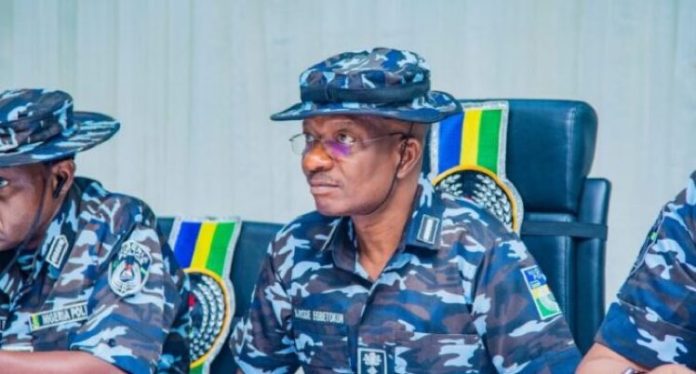
The Inspector-General of Police (IGP), Kayode Egbetokun, has said the country is yet to mature and ready for the establishment of state-controlled police.
IGP Egbetokun spoke on Monday, at the ongoing national dialogue on state police organised by the House of Representatives in Abuja.

Represented by Assistant Inspector-General of Police, Ben Okolo, Egbetokun, who spoke on the theme, “Pathways to Peace: Reimagining Policing in Nigeria”, said, “It is the submission of the leadership of the Nigeria police force that Nigeria is yet to mature and ready for the establishment of state-controlled police.”
The IGP said instead of creating a State Police structure, the Nigerian Security and Civil Defence Corps (NSCDC) and the Federal Road Safety Corps (FRSC) should be merged as a Department under the Nigeria Police Force (NPF).
He also called for increased budgetary allocations to the Nigerian Police for effective training of personnel in modern policing to enhance efficiency and amendment of the 1999 Constitution for more empowerment and funding of police, which is the lead internal security agency.
Egbetokun noted that if State Police is established, governors will use the structure under their control for political or personal gains, undermining human rights and security, adding that creating state police at the moment will exacerbate ethnic tension in the country.
He said the agitations for state police were informed by the perception that Police were not living up to their responsibility, a development caused by a motley of challenges militating against the Force.
The IGP identified some of the challenges as inadequate manpower, inadequate operational equipment: arms and ammunition, surveillance equipment, inadequate training due to poor funding as well as inadequate office and barracks accommodations.
“Most police stations and barracks that were built over the years in the colonial period have not undergone any renovations despite the increase in the strength of the Force. These have impacted negatively on the performance of the personnel.
“The police leadership is recommending the following instead of creating state police: merging the Nigerian Security and Civil Defence Corps and Federal Road Safety Corps as a department under the Nigeria Police.
“Yearly police recruitment should be increased by at least 30,000 to meet the United Nations requirements. Increase in the budgetary allocations to the Nigerian Police Force. Effective training of personnel in modern policing to enhance efficiency,” he stated.
On his part, the Minister of Police Affairs, Senator Ibrahim Geidam, observed that while state police was essential to local security, it had the potential for political interference and human rights abuse.
“Establishment of state police is not without its demerits. One of them is political interference. Oversight and accountability are paramount and must be put in place to ensure the interference is reduced. An implementation roadmap is essential for successful operation,” he said.
THEWILL reports that the national dialogue is the beginning of deliberations on the Constitution of the Federal Republic of Nigeria (alteration) bill 2023 (Establishment of State Police) sponsored by the Deputy Speaker of the House of Representatives, Benjamin Kalu, and 13 others.
The proposal in the bill, designed to improve public safety and strengthen law enforcement in Nigeria by decentralising the police, also provides for state police alongside the federal police.
It outlines a constitutional framework for states that choose to establish and maintain their service.
While giving his welcome remarks, Deputy Speaker, Benjamin Kalu, who also chairs the House Constitution Review Committee, said that the bill “aims to clarify the scope of the powers and responsibilities of the federal and state police, and to provide for their funding and oversight.”
Former Nigeria’s military Head of State, Gen. Abdulsalami Abubakar (retd.), ex-President Goodluck Jonathan, and retired Catholic Archbishop, John Onaiyekan, are some of the dignitaries participating in the national dialogue.
Felix Ifijeh is a journalist with years of professional reporting experience. Known for his keen news sense, compelling storytelling and commitment to accurate, impactful reporting, he has built a reputation for turning leads into clear, engaging, and well-structured reports that resonate with readers. His work reflects deep newsroom experience and a commitment to accurate, impactful journalism.