
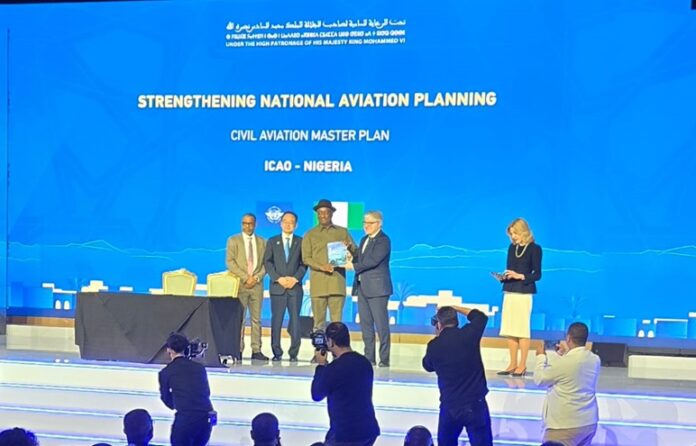
April 14, (THEWILL) — Nigeria has secured a major aviation policy milestone as the Minister of Aviation and Aerospace Development, Festus Keyamo, SAN, officially received the country’s 20-year Civil Aviation Master Plan (CAMP) from the International Civil Aviation Organisation during the opening session of the ICAO Global Implementation Support Symposium (GISS) held in Marrakech on Tuesday, April 14, 2026.
This was disclosed in a statement signed on Tuesday by Tunde Moshood, Special Adviser on Media and Communications to the Honourable Minister.
The presentation of the comprehensive aviation blueprint marks a defining milestone in Nigeria’s aviation transformation journey, providing a structured and forward-looking framework designed to guide the sector’s growth, safety enhancement, and economic expansion over the next two decades.

Keyamo, who also featured as a special guest at a high-level Ministerial Round Table at the symposium, delivered a presentation on the theme “Future of Aviation Workforce in Nigeria”, where he underscored ongoing reforms targeted at bridging critical skills gaps in the country’s aviation ecosystem and preparing a new generation of globally competitive aviation professionals.
The Civil Aviation Master Plan, which covers a 20-year horizon from 2025 to 2045, was developed under the technical guidance of ICAO’s Capacity Development and Implementation (CDI) unit following the Minister’s approval of the initiative. Work on the project formally commenced in September 2024, beginning with a comprehensive national training programme on civil aviation master planning that brought together key stakeholders across Nigeria’s aviation industry.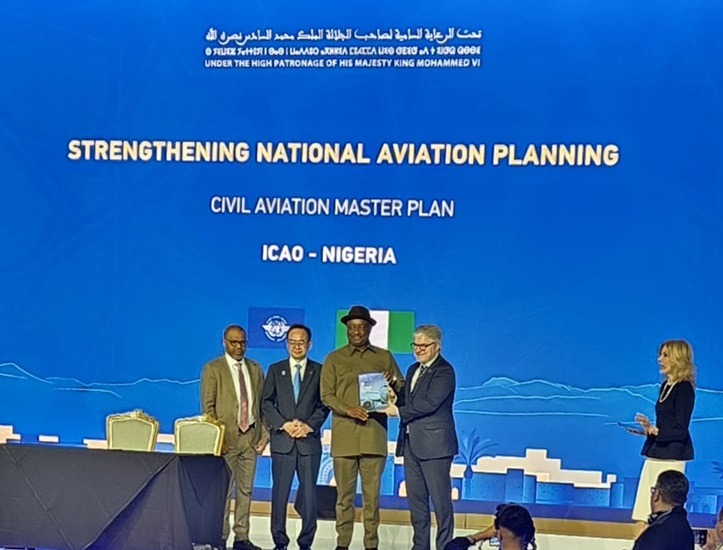
The document is fully aligned with Nigeria’s National Development Plan and other key government policy frameworks, ensuring a coordinated approach to infrastructure development, economic diversification, and global competitiveness.
At the core of the CAMP is a bold agenda for infrastructure renewal and technological transformation. It provides a roadmap for the modernisation of airport facilities across Nigeria to accommodate rising passenger demand and expanding cargo operations.
The plan also integrates advanced aviation technologies, including the regulated deployment of unmanned aerial systems (drones), to improve operational efficiency, safety oversight, and sector innovation.
A central pillar of the Master Plan is Nigeria’s sustained commitment to maintaining a zero-fatality aviation environment. The framework reinforces strict compliance with international safety and security standards, positioning Nigeria as a leading aviation hub in Africa with strong alignment to global best practices.
The CAMP further outlines the transformation of key airports into aerotropolis hubs—integrated aviation-driven economic zones designed to stimulate trade, logistics, tourism, and job creation. This approach is expected to deepen national connectivity while unlocking new investment opportunities across multiple sectors of the economy.
The plan places strong emphasis on sustainability and innovation, particularly in aligning Nigeria’s aviation growth with global environmental standards and green aviation initiatives. It also prioritises human capital development, with targeted programmes to build a highly skilled and future-ready aviation workforce across all segments of the industry.
In addition, the CAMP opens new frontiers for private sector participation, especially in Maintenance, Repair and Overhaul (MRO) facilities, modern cargo terminals, and ancillary aviation services—creating significant opportunities for domestic and international investors.
The presentation of the Master Plan at the ICAO Global Implementation Support Symposium underscores Nigeria’s growing visibility within the global aviation community and its commitment to adopting international best practices in aviation governance and development.
As the global authority responsible for setting standards and regulations for aviation safety, security, efficiency, and environmental protection, the International Civil Aviation Organisation continues to play a pivotal role in supporting Nigeria’s aviation reform agenda and long-term sectoral transformation.
Through his engagement at the ministerial roundtable, Keyamo reiterated Nigeria’s determination to close the aviation skills gap and reposition the sector as a hub for innovation, capacity development, and employment generation.
The Civil Aviation Master Plan is regarded as a cornerstone policy instrument to guide Nigeria’s aviation evolution, ensuring resilience, competitiveness, and sustainability in an increasingly dynamic global industry.
The document’s presentation in Marrakech, therefore, represents not only a diplomatic and technical achievement but also a strategic affirmation of Nigeria’s readiness to fully integrate into the future of global aviation.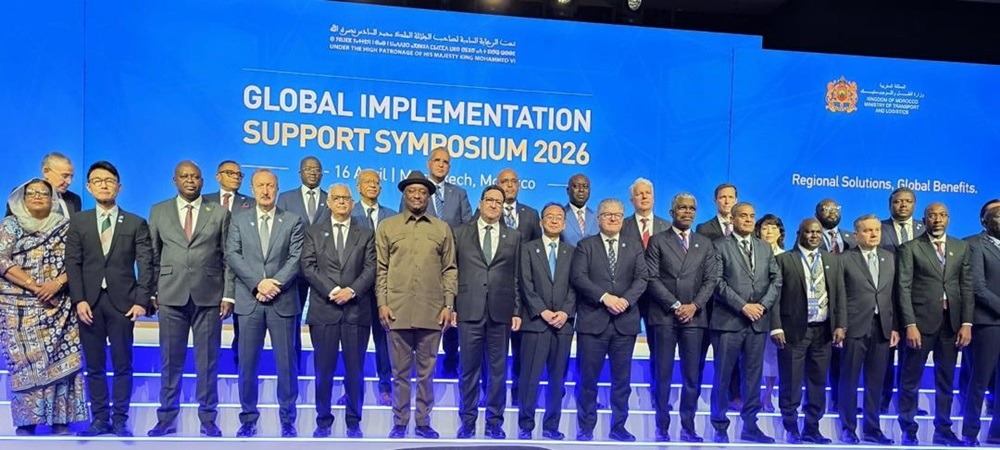

Felix Ifijeh is a journalist with years of professional reporting experience. Known for his keen news sense, compelling storytelling and commitment to accurate, impactful reporting, he has built a reputation for turning leads into clear, engaging, and well-structured reports that resonate with readers. His work reflects deep newsroom experience and a commitment to accurate, impactful journalism.
