
November 07, (THEWILL) — Nigeria has announced plans to mobilise up to $3 billion annually in climate finance, as part of renewed efforts to strengthen its response to climate change and attract global investment into the country’s green economy.
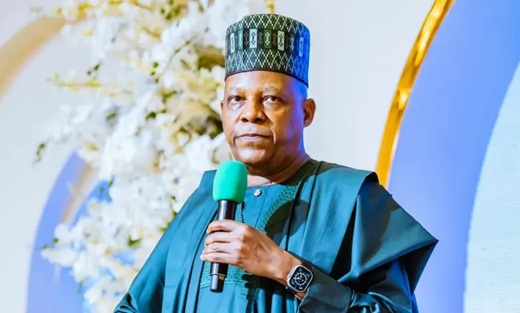
Vice President Kashim Shettima, representing President Bola Ahmed Tinubu at the ongoing COP30 climate summit in Brazil, disclosed that the Federal Government has approved a National Carbon Market Framework and activated the Climate Change Fund to drive the initiative.
According to Shettima, these measures aim to position Nigeria to actively participate in global carbon markets, leveraging its vast natural resources and renewable energy potential to generate sustainable revenue while advancing its climate commitments.

Shettima said: “Our goal is to unlock between $2.5 billion and $3 billion in carbon finance annually through an effective carbon market system.
“This framework will help Nigeria transition from a fossil-fuel-dependent economy to one that thrives on innovation, sustainability, and climate resilience.”
The Vice President noted that President Tinubu has also directed the restoration of the National Council on Climate Change (NCCC) to the federal budget, ensuring better coordination and accountability in the implementation of Nigeria’s climate policies.
Nigeria’s carbon market framework is designed to create an enabling environment for verified carbon-credit trading, encourage private-sector participation, and attract international climate investments in sectors such as energy, agriculture, waste management, and forestry.
Environmental experts describe the move as a significant step toward bridging Nigeria’s climate finance gap, which has limited the country’s ability to meet its Nationally Determined Contributions (NDCs) under the Paris Agreement.
However, they caution that achieving the $3 billion annual target will depend on transparent governance, robust verification systems, and global demand for carbon credits.
Nigeria, Africa’s largest economy, remains highly vulnerable to climate impacts from desertification and flooding to food insecurity and has pledged to achieve net-zero emissions by 2060. The new initiatives, officials say, align with that long-term target while creating opportunities for green jobs and sustainable industrial growth.
As world leaders gather at COP30 to scale up global climate finance, Nigeria’s announcement signals its determination to play a leading role in Africa’s transition to a low-carbon future.

Ogochukwu Onwaeze
