February 15, (THEWILL) — President Bola Tinubu signed a record ₦54.99 trillion budget into law for the 2025 fiscal year, describing it as a tool for national renewal and economic transformation. Recently, ministers appearing before the National Assembly revealed a troubling reality: Their departments had received only fractions of approved capital allocations, with some receiving nothing at all. The gap between budgetary promise and fiscal delivery has become so severe that it threatens the entire credibility of Nigeria’s public financial management.
The scale of the shortfall is staggering. The Minister of Transportation, Senator Sa’idu Alkali, during his budget presentation and defence before the Joint National Assembly Committee on Land Transport in Abuja, told lawmakers his Ministry received approximately ₦2.5 billion from an allocation of ₦256.7 billion, representing roughly one per cent of approved funds. The Ministry of Health and Social Welfare, fared worse, with Coordinating Minister, Professor Muhammad Ali Pate, obtaining just ₦36 million out of ₦218 billion set aside for capital projects. David Umahi, the works minister, reported that his Ministry had received only about 9.7 per cent of its capital budget, despite responsibility for critical infrastructure including the Lagos-Calabar Coastal Highway. By the third quarter of 2025, only 17 per cent of the total capital budget had been released.
Finance ministry officials have attributed the problem to a substantial revenue shortfall. The minister of finance, Wale Edun, informed the Senate Committee on Finance that whilst the government projected roughly ₦40.8 trillion in revenue for 2025, actual expectations now stand at only ₦10.7 trillion, leaving an estimated gap of around ₦30 trillion. Even substantial borrowing, reported at approximately ₦14.1 trillion, has failed to bridge this chasm.

The arithmetic presents a puzzle that deepens with scrutiny. Nearly 29 per cent of the entire budget, some ₦15.81 trillion, services debt before a single naira reaches any ministry for development purposes. Recurrent expenditure consumes another ₦14.28 trillion for salaries and running costs. This leaves roughly ₦14.21 trillion for capital expenditure, yet even this reduced portion fails to reach the ministries tasked with spending it.
The paradox becomes more perplexing when examining the revenue side. The removal of petrol subsidies was meant to free between ₦3 trillion and ₦5 trillion annually, yet the Nigerian National Petroleum Company Limited reportedly spent between ₦7.1 trillion and ₦7.8 trillion on pipeline security and related costs in 2024, exceeding projections by up to 45 per cent. Government agencies claim to have generated ₦28 trillion in revenue. The Customs Service collected over ₦5.07 trillion in 2024. Total public debt has climbed past ₦121 trillion, with servicing consuming 35 to 40 per cent of the budget.
With multiple revenue streams flowing into government coffers and borrowing at historically high levels, the failure of funds to reach line ministries represents a serious accountability gap. Civic organisation BudgIT has identified ₦6.93 trillion in added projects, including 238 items exceeding ₦5 billion each, totalling ₦2.29 trillion, often without clear justification. They also noted ₦3.7 trillion without detailed allocations.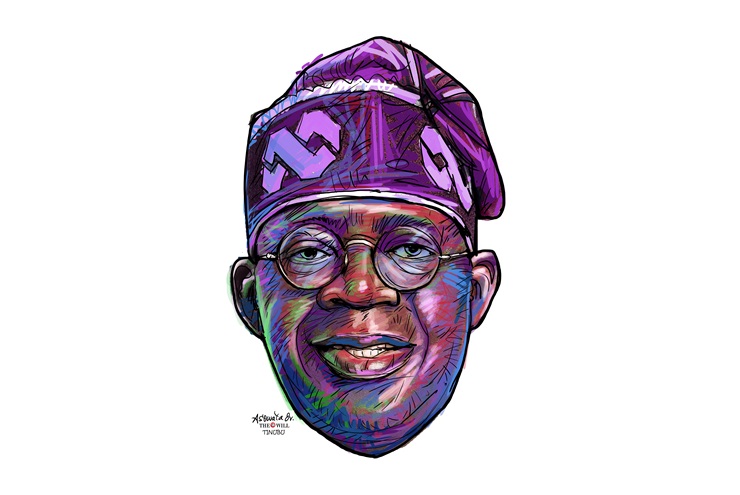
The Ministry of Budget and Economic Planning recently issued a circular instructing ministries to defer as much as 70 per cent of their capital allocations from 2025 to 2026. The Senate has sharply criticised this practice, noting that it creates overlapping budgets, 2024 and 2025 running simultaneously, making fiscal planning unpredictable and undermining the entire appropriation process.
The human cost manifests in tangible ways. Health services suffer from delayed hospital upgrades. Unfinished roads slow commerce. Power generation occasionally falls below 4,000 megawatts due to funding constraints and other factors. Contractors, who are being owed over ₦4 trillion for verified works completed as far back as 2024 have protested at the National Assembly over unpaid work. Education institutions report poor implementation of capital budgets. Humanitarian programmes miss targets, leaving millions without planned support.
Yet other African nations demonstrate that budget fidelity need not remain aspirational. Rwanda consistently achieves budget execution rates above 90 per cent through an Integrated Financial Management Information System that tracks every franc from appropriation to expenditure in real time, reducing fiscal losses by up to 15 per cent through digital systems and political commitment to accountability.
Botswana maintains fiscal discipline through a medium-term expenditure framework linking annual budgets to three-year spending plans. The country keeps public debt at 21 percent of GDP (though this has increased recently as the country navigates an economic contraction) through careful borrowing, maintaining low interest costs and preserving space for development investments.
Kenya has pursued extensive public financial management reforms to tighten accountability, automate financial systems and reinforce legislative oversight. Whilst challenges persist, long-term reforms have strengthened oversight mechanisms. Ghana has similarly expanded budget reporting and in-year tracking through digital platforms, supporting better fiscal discipline despite remaining capacity constraints.
These examples prove that budget discipline depends on systems, laws and political will to enforce them. Rwanda possesses fewer resources than Nigeria. Botswana has a fraction of Nigeria’s population and natural resources. Yet these countries have built financial management systems that function because they prioritised fiscal discipline.
The Senate has threatened zero allocations for the accountant-general’s office in 2026 unless fund releases improve, questioning why ₦28 trillion in reported revenues failed to produce better disbursements. The House of Representatives has recommended removing funds from 22 agencies for accountability failures. The fact remains that late fund releases encourage wasteful year-end spending and heighten corruption risks.
President Tinubu has promised to end the practice of overlapping budgets by March 2026, allowing a single budget to operate from April onwards. The question remains whether this commitment if achieved, will translate into systemic reforms: real-time expenditure tracking, mandatory release schedules, independent oversight of public fund withdrawals, and regular public reporting on budget execution.
The removal of fuel subsidies was sold to Nigerians on the promise that savings would flow into development. Citizens accepted higher fuel prices with the understanding that sacrifice would yield improvements in infrastructure and services. If saved funds fail to reach ministries responsible for delivering those improvements, then Nigerians are paying the price of reform without receiving promised benefits.
Over the past three years, approved capital spending has exceeded actual releases by more than ₦15 trillion, leaving departments unable to deliver services. A country that borrows heavily, taxes increasingly, removes subsidies cushioning the poor, generates record revenues, yet still fails to fund basic ministries, has lost control of its fiscal process. Until the federal government can demonstrate that appropriated funds actually reach intended recipients, the annual budget exercise will remain an elaborate performance rather than a genuine commitment to national development. For a nation with continental leadership ambitions, Nigeria should be setting standards for fiscal responsibility in Africa. The systems exist. The examples are proven. What remains is the political will to implement them.