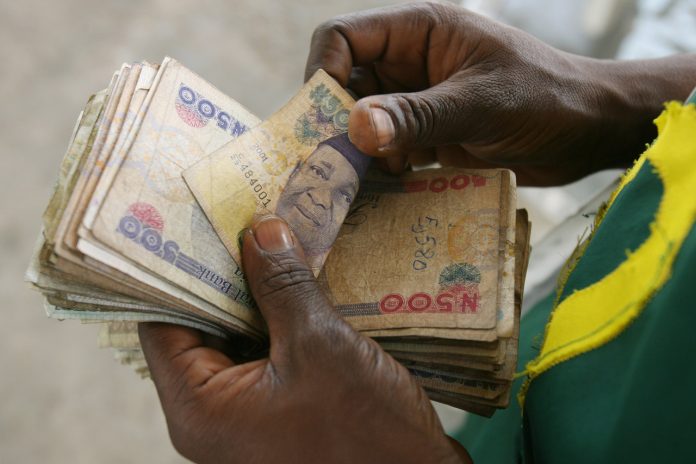
Similar to a February 16, 2022 media report in which economic experts urged the Federal Government to seek a debt moratorium and reduce the cost of governance in order to reduce funds expended on debt servicing, which stands as the best available option because it will enable the government to suspend payment for now and re-strategise, particularly since the government cannot continue to service its rising debt profile at the expense of meeting the competing needs of the people, economic analysts warned that the government’s increased borrowing could eventually suffocate the country if not mitigated.
Speaking in Akure, Ondo State, at the 32nd Annual Seminar for Finance Correspondents and Business Editors themed: ‘Exchange Rate Management and Economic Diversification in Nigeria: The Pave Option’ the experts hinted that going by government’s borrowing plans, a fresh N6.3 trillion debt may be added to the current debt stock of N39.556 trillion ($95.779 billion as at December 31, 2021) to ultimately push the country’s total debt stock to N45.86 trillion by December 2022.
Notwithstanding this unhealthy trend, they argued it was high time the country invested more in boosting local production and export oriented infrastructure before the huge debt burden sinks the country.

Indeed, from the explanation and concerns expressed by these experts, this writer clearly agrees that Nigeria’s debt stock has finally become an issue that calls for a more drastic approach to support the fiscal and monetary authorities in their efforts to tow Nigeria’s economy out of the doldrums.
What calls for concern is the fact that despite prophecies revealing what will happen if the present situation does not changed, acting as information and warning, the Federal Government has become even more entrenched in borrowing and ignoring these warning signals.
There are so many factors that visibly qualify as a tragedy: the government’s indifferent attitude and failure to adhere to heed the warning signals.
In 2020, a major national newspaper, in its editorial comment among other observations, warned that Nigeria might face another round of fiscal headwinds with the mix of $83 billion debt; rising recurrent expenditure; increased cost of debt servicing; sustained fall in revenue and about $22 billion debt plan waiting for legislative approval. It may be worse if the anticipated shocks from the global economy, such as the Brexit, the United States-China trade war and interest rate policy of the Federal Reserve Bank go awry.
The nation’s debt stock, currently at $83billion, comes with a huge debt service provision in excess of N2.1 trillion in 2019. But it is set to rise in 2020. This challenge stems from the country’s revenue crisis, which has remained unabated in the last five years, while borrowing has persisted, an indication that the economy has been primed for recurring tough outcomes, the report concluded.
Secondly a recent news report indicated that the Federal Government made a total of N3.25tn in 2020, out of which it spent a total of N2.34tn on debt servicing within the year. This means, the report underlined, that 72 per cent of the government’s revenue was spent on debt servicing. It also puts the government’s debt servicing to revenue ratio at 72 per cent.
Finally, Pricewaterhouse Coopers, a multinational professional services network of firms, operating as partnerships under the PwC brand, in a report entitled, ‘Nigeria Economic Alert: Assessing the 2021 FGN Budget,’ warned that the increasing cost of debt servicing would continue to weigh on the government’s revenue profile. It said, “Actual debt servicing cost in 2020 stood at N3.27tn and represented about 10 per cent over the budgeted amount of N2.95tn. This puts the debt-to-revenue ratio at approximately 83 per cent, nearly double the 46 per cent that was budgeted. This implies that about N83 out of every N100 the Federal Government earned was used to settle interest payments for outstanding domestic and foreign debts within the reference period. In 2021, the government planned to spend N3.32tn to service its outstanding debt. This is slightly higher than the N2.95tn budgeted in 2020.”
Today, such fears cannot be described as unfounded, just as this author doesn’t need to be an economist to know that as a nation, we have become a high-risk borrower.
It would have been understandable if these loans were taken to build a standard railway system in the country that will assist poor village farmers in Benue and Kano states, as well as other remote villages situated in the landlocked parts of the country, move their farm produce to the food disadvantaged cities in the South in ways that will help the poor farmers earn more money, contributes to lower food prices in Lagos and other cities through the impact on the operation of the market, increase the welfare of household both in Kano, Benue and Lagos States and others while improving food security in the country, reducing stress/pressure daily mounted on Nigerian roads by articulated/haulage vehicles and drastically reduce road accidents on our major highways.
Again, it would have been pardonable if the loans were deployed to revitalise the power sector, to re-introduce a sustainable power roadmap that will erase the epileptic power challenge in the country and in its place restore the health and vitality of the country’s socioeconomic life while improving small and medium scale businesses in the country.
What about the nation’s refineries? One recalls now with nostalgia that one of the popular demands during the fuel subsidy removal protest in January 2012, under the Goodluck Ebele Jonathan administration, was that the Federal Government should take some measures to strengthen corporate governance in the Nigerian National Petroleum Corporation (NNPC) and the oil and gas sector as a whole. This is because of the belief that weak structures made it possible for the endemic corruption in the management of the downstream and upstream sectors of the oil and gas industry.
The present administration, as part of it campaign promises in 2015, agreed to ensure a better deal for Nigerians. Six years after such demand was made and Jonathan gone, the three government-owned refineries in the country have not been able to function at full capacity as promised by the present administration.
Today, if there is anything that Nigerians wish that the FG should accomplish quickly, it is getting the refineries to function optimally and making the NNPC more accountable to the people. As what happened under President Jonathan has become a child’s play when compared with the present happenings in Nigeria’s oil/gas and power sectors.
Finally, within this period of economic vulnerability, new awareness that must not be allowed to go with political winds is the expert warning that accumulated debt can hinder a country’s development, especially when most of the revenue generated is used to service debt.
Utomi Jerome-Mario is the Programme Coordinator (Media and Public Policy), Social and Economic Justice Advocacy (SEJA).