
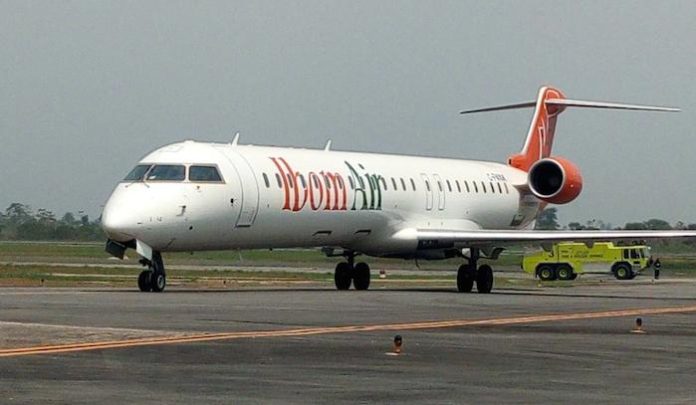
April 28, (THEWILL) — When passengers board Ibom Air’s inaugural Uyo–Accra flight on May 2, 2026, it will be more than a routine departure; it will be the culmination of a vision that has steadily moved from blueprint to runway reality. For Akwa Ibom State, this moment represents a defining transition: from a regional aviation player to an emerging international gateway.
The significance of this milestone becomes clearer when placed against the backdrop of December 2025, when national dailies reported the federal government’s approval upgrading Victor Attah International Airport to international status. At the time, it was a policy announcement filled with promise. Today, it is a lived reality, marked by the hum of engines and the anticipation of cross-border travel.
Ibom Air’s entry into international operations is not accidental. It is the product of deliberate state-led investment in aviation infrastructure, a rare model in Nigeria where subnational governments often hesitate to venture into capital-intensive sectors. Yet, Akwa Ibom has doubled down, first with the establishment of a state-owned airline, and now with the expansion into international routes.

The Uyo–Accra service is a strategic choice. Accra is not just a regional hub; it is a gateway to West Africa’s economic and cultural networks. By linking directly to Ghana, Ibom Air is positioning Uyo as a node in a broader regional aviation map, one that could stimulate trade, tourism, and business mobility.
Behind this moment lies an intense period of construction and technological transformation. At the heart of it is the new terminal at Victor Attah International Airport, a facility designed to integrate both domestic and international operations under one roof.
According to Engr. Oliver Ebong, chairman of VKS Construction Ltd, the concept is unprecedented in Nigeria.
Rather than the traditional separation of domestic and international terminals, the Uyo airport adopts a unified, “smart” model. Automated systems regulate everything from lighting to energy consumption, while high-speed internet and advanced passenger processing infrastructure are designed to meet global standards.
The goal is efficiency, not just in movement, but in cost and sustainability.
Critical to achieving international readiness has been the installation of modern equipment, including passenger boarding bridges. These components, recently delivered after complex logistics across Nigerian road networks, symbolise the final stretch of a long journey.
Their installation marks the airport’s readiness to handle the scale and sophistication of international traffic.
Equally notable is the emphasis on inclusivity and user experience. The terminal incorporates facilities for persons with disabilities, offering both integrated and dedicated spaces depending on passenger preference. It is a small but important signal that the airport aims to meet not just operational standards, but human-centred ones.
Government officials have framed the development as part of a broader economic strategy. Commissioner for Finance, Emem Bob, highlighted that the project is entirely state-funded, a bold undertaking in an era of fiscal constraints. More striking is the claim that it has been executed without resorting to new commercial loans, relying instead on federal allocations and internally generated revenue.
This financial model adds another layer to the story. It suggests that the airport and by extension, the airline, is not merely an infrastructure project, but a statement about governance capacity and economic ambition at the subnational level.
For Governor Umo Eno’s administration, the maiden international flight is both a milestone and a test. It validates earlier commitments to complete and operationalise the airport, but it also raises expectations.
Sustaining international operations will require consistent passenger traffic, competitive pricing, and operational efficiency areas where many Nigerian carriers have struggled. Yet, Ibom Air enters this phase with certain advantages.
Its domestic operations have earned a reputation for reliability, and its expansion appears measured rather than overly ambitious. By starting with a regional route, the airline avoids the pitfalls of overextension while building capacity for future growth.
The broader implications extend beyond Akwa Ibom. Uyo’s emergence as an international aviation hub could redistribute air traffic within Nigeria, easing pressure on congested airports like Lagos and Abuja. It may also encourage other states to rethink their approach to infrastructure development, particularly in sectors traditionally dominated by the federal government.
Still, challenges remain. Aviation is a notoriously volatile industry, sensitive to fuel costs, currency fluctuations, and regulatory shifts. The success of this new route will depend not just on infrastructure, but on market dynamics and policy stability.
As the countdown to May 2 continues, the mood in Uyo is one of cautious optimism. The runway is ready, the aircraft are set, and the systems are in place. What remains is the real test: turning a historic first flight into a sustainable aviation corridor.
In many ways, the story of Ibom Air’s international debut is a story about momentum; how a policy decision in December 2025 has translated into a tangible leap forward in less than a year. It is a reminder that in aviation, as in development, the distance between promise and performance is measured not in miles, but in execution.
And for Akwa Ibom, that journey has just taken off.

