October 07, (THEWILL) — Let me begin by extending warm congratulations to my fellow citizens on the 65th anniversary of our cherished nation. Although it comes somewhat belatedly, it remains both fitting and heartfelt.
With that said, it’s only proper to share the inspiration behind this essay’s theme and title, which delve into the origins, cultivation, and evolution—or absence—of inclusive leadership in our beloved Nigeria, alongside its far-reaching consequences.
As I pondered the focus for this reflection, I was torn between two directions: examining Nigeria’s 65-year journey of independence and the recurring obstacles to our national progress, or analyzing the recent standoff in the oil and gas sector—the face-off between workers’ unions and the Dangote Refinery that threatened to disrupt fuel supplies and reignite nationwide scarcity.

However, once the good news broke that the dispute had been amicably resolved last Wednesday, my dilemma vanished. I then chose to reflect on Nigeria’s 65 years of sovereignty.
Aligning with fellow commentators reviewing our national trajectory, I encountered another challenge—whether to spotlight the deep-rooted ailments holding Nigeria back or to adopt a more hopeful lens. I chose the latter, inspired by Segun Adeniyi’s compelling column in ThisDay titled “Reflections on Nigeria at 65,” and his companion piece, “Amala to the Rescue.”
In that essay, Adeniyi shared a personal ordeal: his battle with the flu that robbed him of appetite, only to find miraculous relief in a humble bowl of amala from a street vendor. This story struck me deeply, as I too have struggled with a persistent flu over the past month, despite several treatments. If amala could heal my friend, why not me?
For those unfamiliar, amala—a yam-flour delicacy—is a Yoruba staple now embraced nationwide. Adeniyi’s witty link between food and nationhood inspired me to reach out to him, praising his knack for weaving Nigeria’s struggles into such a relatable narrative. I teased him that I would visit that same amala spot when next I’m in Abuja and thanked him for reminding us that even humble remedies can nourish hope.
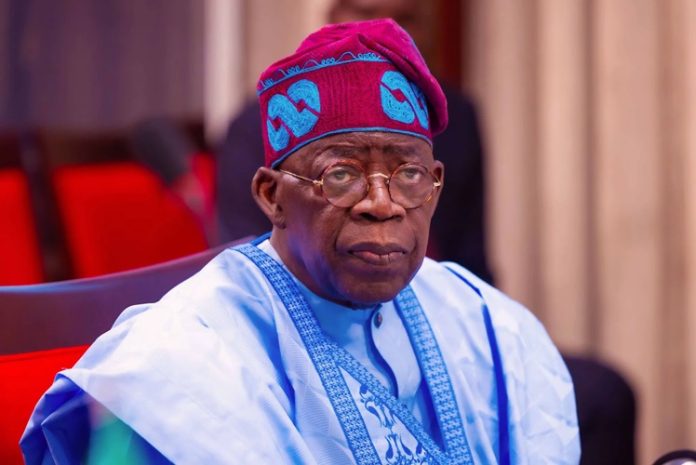
During our exchange, I also recalled President Tinubu’s Independence Day speech at the reopening of the Wole Soyinka Centre for Arts and Culture. He urged Nigerians to speak positively about the country, highlighting the power of affirmations. I share this belief, though I also recognize that optimism alone cannot rebuild a nation—it must be paired with practical, visionary governance.
Our conversation evoked the biblical question: “Can anything good come out of Nazareth?” That question, I believe, mirrors Nigeria’s situation today. For as the scripture reminds us, the rejected stone often becomes the cornerstone.
In political terms, President Tinubu’s rise—secured with about 8.8 million votes, fewer than his predecessor Buhari’s 15.2 million—was not the product of overwhelming public support. Yet midway through his term, he has made strides that have steadied the economy through bold reforms: scrapping petrol subsidies and unifying exchange rates.
These tough measures have eliminated fuel queues and boosted national reserves from $33 billion to $43 billion, while swelling allocations to states and local governments. Salaries long unpaid have been cleared, and many states are investing in infrastructure—roads, clinics, bridges, and housing.
Still, the cost of living remains high, as policy dividends take time to materialize. Economists point to improved GDP growth (4.23% in Q2 2025), rising purchasing power, and easing inflation, but for ordinary Nigerians, these metrics can feel abstract. The disconnect between economic data and daily experience fuels skepticism.
Here, government communication must evolve. The Ministry of Information and the National Orientation Agency (NOA) must better explain how reforms affect everyday life—connecting GDP growth to food prices or wages. Only then can mistrust soften and citizens begin to appreciate the broader picture.
Critics like Prof. Itse Sagay argue that Tinubu’s Independence Day address ignored ordinary Nigerians’ pain. But through clear outreach, the administration can translate reforms into relatable terms and rally support around its Renewed Hope agenda.
The revival of the National Theatre—now renamed after Nobel laureate Wole Soyinka—stands as a metaphor for national renewal. Once abandoned, it was rescued through the partnership of the CBN and the Bankers Committee, symbolizing how public-private synergy can restore national pride.
Honoring Soyinka is a fitting gesture. Despite criticism from some quarters, few figures have done more to defend Nigeria’s unity and democracy. Those deriding the honor forget his sacrifice during the civil war and his lifetime of service to truth and freedom.
The restored theatre, unveiled during Nigeria’s 65th anniversary, embodies Tinubu’s “Renewed Hope” vision: transforming decay into vitality. Just as the Bankers Committee coordinated the theatre’s revival, Tinubu’s team—spanning finance, economy, and judiciary—is driving Nigeria’s own structural renewal.
This administration’s achievements—removing fuel subsidies, consolidating exchange rates, and recapitalizing banks—are laying the foundation for lasting progress. The passage of four new tax bills in June 2025 modernizes colonial-era frameworks and sets the stage for sustainable growth from 2026 onward.
Critics may deride these measures as “Amala Reforms,” mocking the Yoruba roots of the President and his top aides. Yet, beyond the ethnic jest lies a serious truth: these reforms are reshaping Nigeria’s fiscal architecture and stabilizing its future.
The recent meeting between President Tinubu and Bayo Ogunlesi, the Nigerian co-CEO of BlackRock—the world’s largest asset manager—underscored international confidence. Ogunlesi’s words after the meeting were telling: “Nigeria is now an exciting place to invest.” Such validation from a global investor carries more weight than praise from international financial institutions.
Under Tinubu’s leadership, Nigeria resembles a bridge under reconstruction—temporary discomforts masking deeper progress. The pilings are being driven into the earth; the structure is not yet complete, but its stability is being assured for the long haul.
Therefore, whether one calls it “Amala Reform” or not, what matters is results. As I have long maintained, it matters little what dish fuels the reformers—be it amala and ewedu, akpu and onugbu, or tuwo and miyan kuka—so long as Nigeria’s destiny is revived.
A wise Chinese proverb reminds us that the color of the cat is irrelevant, as long as it catches the mouse. The same applies to governance: the results—not rhetoric or ethnicity—are what count.
Tinubu’s Renewed Hope agenda, if sustained with integrity and inclusivity, can indeed steer Nigeria back to greatness. Let us focus less on tribe or taste and more on tangible progress.
Once again, happy Independence Day to all Nigerians.
Magnus Onyibe, entrepreneur, public policy analyst, author, democracy advocate, and former Delta State commissioner, writes from Lagos.

Magnus Onyibe