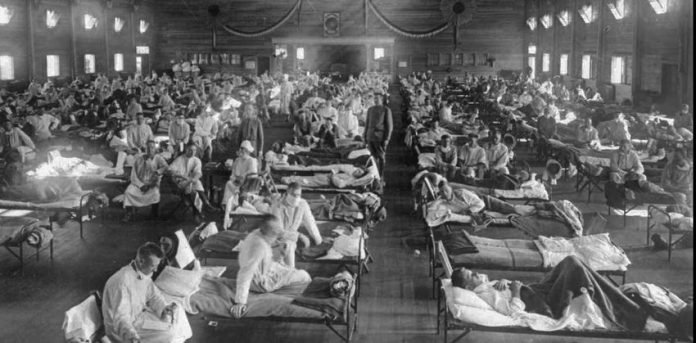
It is often said that if you want to understand today, you have to search yesterday. Going by this, we have to critically take a look at the Spanish flu pandemic of 1918 in light of the current day COVID-19 pandemic. Without mincing words, the Spanish flu ravaged the world and infected about one-third of the entire world’s population. In fact, at least 50 million people lost their lives. Although at that time, science was not yet advanced as we have today, and there was nothing like the electron microscope used in identifying the virus or even technologies like Gene sequencing. Besides, the origin of the pandemic is still in contention as to whether it originated from Spain or not. Arguably, it is believed that the spread of the virus was facilitated by millions of soldiers travelling across the globe after the World War, I. There was gross shortage of medical professionals as many also died in the course of carrying out their humanitarian duty of saving lives and replacement were difficult. Hospitals were grossly overwhelmed as they were limited in space and capacity, while mortuaries were overflowing.
The traditional approach to prevention and management carried out at that time was; isolation, developing quarantine camps, banning and limiting public gatherings with few crucial meetings held in open spaces, use of disinfectants, good personal hygiene, compulsory use of gauze face masks by all and sundry, ventilating homes, camphor balls were hung on their necks to help manage the flu and a combination of sunlight and fresh air was also found effective for all including the sick. Public places, government offices, railway stations, places of worship, streets, cafeteria were all disinfected and spitting was banned.
ALSO READ: Nigeria Records Largest Single Day Increase With 20 New Confirmed Cases Of Coronavirus
Today, science has evolved, and we have more sophisticated technologies, insight and knowledge at our disposal than then to tackle with the Coronavirus (COVID-19) and therefore there is great hope in overcoming this scourge in no distant time if all of this can be put into good practice. Some approach used in curtailing the spread of the Spanish flu of 1918, might remain relevant today. Slight modifications to the traditional approaches could be very necessary. We have ventilators, protective kits, N95 face masks, PCR test kits in testing for the virus, and antibiotics to help tackle the symptomatic bacterial infections that might manifest in infected patients. Scientists, and indeed Pharmaceutical companies are working assiduously to develop a vaccine and a possible cure for this virus. It is therefore, necessary for us to imbibe all the precautionary measures mentioned with emphasis on social-distancing, virtual classes, virtual interviews, virtual meetings, self-isolation, use of alcohol-based hand sanitizers, staying at home and staying healthy (both mentally and physically) since some of these measures have been proven repeatedly to be useful in time past, and still hold much efficacy in present day.

Written by Akinmutola Abayomi (Pharm.D) Nigeria.