
July 05, (THEWILL) — African football has never lacked talent, it has never lacked passion, physicality, flair, or tactical intelligence. Across generations, African players have dominated Europe’s biggest leagues, won continental titles, and carried some of the world’s biggest clubs on their backs. Yet when it comes to major international tournaments, especially the FIFA World Cup, African nations repeatedly find themselves falling short against European opposition. This is not because they are less talented, but because many are psychologically, structurally, and administratively handicapped before a ball is even kicked.
The biggest opponent for African football is no longer tactical inferiority; it is politics, corruption, poor administration, and the endless mishandling of football federations.
This World Cup once again exposed the painful truth.

Champions in Crisis: Senegal arrived at the tournament as African champions and one of the continent’s biggest hopes. On paper, they had everything needed to compete toe-to-toe with Europe’s elite: experience, tactical structure, physical strength, and players competing at the highest level in Europe.
But behind the scenes, all was not well.
Reports surrounding the Senegal camp before and during the tournament painted a picture of tension, uncertainty, and internal distractions. Questions over bonuses, federation management, player welfare, camp organisation, and off-field pressure lingered around the team. Even as holders of the AFCON title, there were murmurs of instability that should never surround a team carrying a continent’s expectations.
And it showed, against Belgium, Senegal looked mentally fragile despite racing into a commanding lead. A team that should have closed out the game lost composure, concentration, and control. Belgium came from behind to win after Senegal had gone two goals up. It was not a tactical collapse alone; it felt psychological. European teams often survive difficult moments because their structures are stable, their camps are calm, and the environment around the team protects the players mentally. African teams rarely enjoy that luxury. The burden of off-field chaos eventually enters the pitch.
Tunisia’s Disappointment: They became the only African nation eliminated at the group stages. Once again, the issue was not merely a tactical deficiency. Tunisia have always been one of Africa’s most organised footballing nations tactically. However, recurring administrative disputes, federation instability, and pressure from football politics continue to affect consistency and long-term planning.
African federations too often prioritise short-term survival over sustainable football development. Managers are changed impulsively. Selection debates become political battles. Decisions are influenced by familiarity, favouritism, or pressure rather than footballing logic. At the highest level, instability kills confidence.
DR Congo and the Psychological Gap: DR Congo’s performance against England perfectly reflected the hidden problem African football faces.
For long periods, DR Congo were the better side. They led 1-0 comfortably and looked capable of shocking one of Europe’s giants. But as pressure increased, belief faded. England remained calm, structured, and psychologically composed. DR Congo slowly lost control, retreated mentally, and eventually lost 2-1.
The difference was not talent; the difference was mentality built through systems.
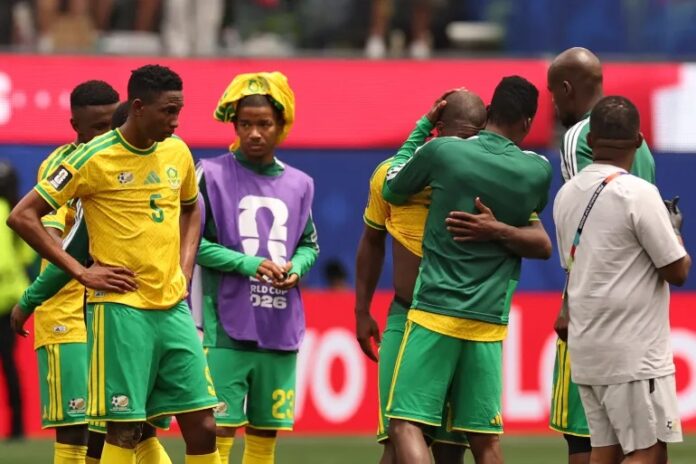
South Africa and Ghana: Repeating the Same Story – South Africa’s struggles also highlighted the broader issue. Despite possessing exciting talents and improved tactical organisation, inconsistency and administrative shortcomings continue to undermine progress.
Ghana, one of Africa’s traditional football powers, have also suffered from repeated federation controversies over the years — player disputes, public disagreements, questionable appointments, and administrative confusion. Every tournament seems to come with unnecessary drama.
African teams are constantly fighting battles that European teams solved decades ago. Professionalism should not be a luxury.
Côte d’Ivoire and Another Painful Collapse: The Ivorians possess immense talent, athleticism, and technical quality. Historically, they have produced some of Africa’s finest footballers and continue to develop players competing across Europe’s top leagues. Yet, like many African nations, their football progress has repeatedly been interrupted by federation instability, internal politics, questionable decision-making, and inconsistent football planning.
Against Norway, Côte d’Ivoire showed flashes of brilliance and moments where they looked capable of matching the Europeans physically and technically. But once adversity struck, the familiar psychological cracks appeared. Norway remained composed, disciplined, and structurally organised, while the Ivorians gradually lost rhythm and confidence.
Nigeria: A Giant Failing to Qualify
Perhaps the clearest example of football mismanagement is Nigeria.
For the second consecutive World Cup cycle, the Super Eagles failed to qualify. This is a country overflowing with talent across Europe and beyond. Nigerian players shine weekly in England, Italy, Germany, Spain, France, and Saudi Arabia. Yet the national team continues to underachieve relative to its potential.
Before a crucial World Cup qualifying play-off, reports emerged of protests over unpaid bonuses and allowances. Imagine players preparing for the most important match of their careers while simultaneously fighting for money owed to them.
This has become a recurring embarrassment in Nigerian football.
The problem goes deeper than one generation or one coach. Corruption, favouritism, poor planning, administrative interference, quota systems, and political appointments have damaged the football structure for years. Coaches are often undermined. Selections become controversial. Merit is questioned.
Football administration in many African countries has become an extension of politics rather than a professional sporting institution, and the players suffer for it.
Cameroon: Endless Chaos
Cameroon’s football story has become synonymous with conflict. Public disputes between coaches and federation officials, political interference, dressing room instability, and administrative controversies continue to overshadow one of Africa’s greatest footballing nations.
A country with such a rich football heritage should be competing consistently at the highest level. Instead, chaos too often defines the environment around the national team. No team can fully succeed when instability becomes normal.
European nations build environments where players feel secure, protected, and supported. African players often enter tournaments carrying pressure from unpaid bonuses, federation politics, poor planning, travel issues, media distractions, and uncertainty over internal management.
That mental fatigue matters in decisive moments.
Most of Africa’s footballing nations’ losses at this World Cup were another reminder that until African football federations fix the chaos surrounding the game, many of the continent’s teams will continue to fall short against opponents who are not necessarily more talented — just better organised.
Morocco: The Model Africa Must Study
Then there is Morocco, they have shown Africa what is possible when football is treated professionally.
Their federation has invested in infrastructure, youth development, technical planning, and long-term stability. More importantly, there is minimal political interference in football operations. Decisions are made with football in mind.
Players feel valued. Coaches are backed properly. The system works, and the results are visible.
Morocco have become one of the continent’s greatest ambassadors because they created an environment where football could breathe without corruption strangling it. They are psychologically strong because the structure behind them is strong.
Cabo Verde: Small Nation, Big Lessons
Cabo Verde may not possess the resources of Africa’s traditional giants, but they have built something incredibly important — order.
Their football structure emphasises organisation, discipline, merit, and professionalism. That is why they were able to go toe-to-toe with defending world champions Argentina and earn global respect.
They may not always win, but they compete fearlessly, that confidence comes from proper administration.
Let Football Be Football – African football does not need sympathy, it needs reform.
The continent already has the talent, the passion, and world-class players. What it lacks is an environment that allows footballers to perform without unnecessary political and administrative burdens.
Things must change.
Football federations must:
Appoint qualified personnel based on competence, not familiarity or sentiment.
Remove corruption from football administration.
Pay players and staff on time.
Treat players like national ambassadors, because they represent the image of their countries globally.
Build merit-based systems for player selection.
Stop quota systems, bribery, and favouritism.
Create professional environments where players feel respected, welcomed, and protected.
Focus on long-term football development rather than political survival.
When African nations begin to prioritise professionalism over politics, the gap between Africa and Europe will shrink dramatically.
Because the truth is simple: African players are already competing with Europeans every week at club level. The problem begins when they return home to dysfunctional football systems.
Africa Should Be Proud
Despite the challenges, Africa’s representatives still gave the world moments of pride, resilience, and brilliance at this World Cup. They reminded the football world that the continent remains a powerhouse of raw talent, passion, and identity.
To every African nation that represented the continent — thank you for showing the world Africa proper.
And to the teams still fighting in the tournament: the entire continent stands behind you.
Carry the flag high.

