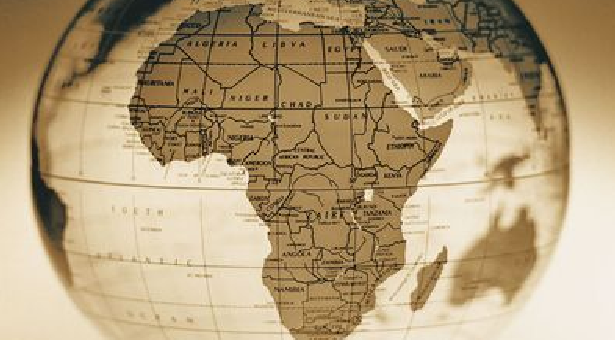
It had been an hard choice; Africa electing a new Chairperson of the African Union Commission (AUC) to run the continental body. The option had been forced on her after the Chairperson, Dr. Nkosazana Dlamini-Zuma, the former liberation fighter from South Africa resisted pressures to stand for a second term; opting to contest the Presidential elections in her country.
African leaders had last July failed to elect her successor as none of the candidates could poll the mandatory 36 votes out of the 54 voting member countries. So the 28th Heads of State Assembly this week was decisive not just in electing a new Commission Chairperson, but also AU Commissioners including into its powerful Peace and Security Commission which locked powerful countries like Nigeria and Algeria in battle.
There were other potentially controversial choices to be made, for instance whether or not to admit Morocco. There are of course the serious issues of insecurity and implementing the Africa 2063 Agenda. I found the AU Commission under former Chairperson, Jean Ping, a little bit uncoordinated, with a number of officials being quite lackadaisical. I did not have much confidence in it. But his successor, Dr. Dlamini-Zuma came with a lot of energy determined to move the continent towards clear Pan Africanist goals.

She was decisiveness and operated a Pan Africanist agenda forged in the furnace of the liberation struggles. Zuma resuscitated the AU within months. I had the privilege of a few interactions with her in Addis Ababa. In January 2013, while leading the delegation of African Workers at the AU Assembly, I went to her office. I had thought that the best African to deliver the lecture at the Fortieth Anniversary of the Organisation of African Trade Union Unity (OATUU) slated for April, 2013 was Zuma.
I did not expect to meet her because the Assembly was the busiest period in the AU. I dropped a letter hoping to call back from my Accra base.
To get the AU Commission Chairperson who is a symbol of the continent to attend the Anniversary would be a major boost to African Workers. A day after I returned to Accra, I was jolted by a call from her office; the Secretary wanted more information about the occasion. I gave the necessary reply and asked if Zuma woud be present. I did not get a confirmation, but was informed that she was interested in forging alliance with the continent’s Labour Movement. I had the privilege of playing host to her and she challenged the labour force to play a decisive role in the formulation of the continent’s 50-year Agenda.
We met the challenge; produced the African Workers Agenda. On January 30, 2017, Africa made its choice; after seven rounds of voting and stiff challenge from other candidates like Senegal’s Abdoulaye Bathily, Kenya’s Amina Mohammed, Mba Mokuy of Equatorial Guinea and Botswana’s Pelonomi Venson-Moitoi, Africa elected Chadian Foreign Minister, Moussa Faki Mahamat. A CAUSE FOR WORRY MIGHT BE THAT FAKI IS FOREIGN MINISTER OF A NOT TOO STABLE COUNTRY THAT HAS BEEN VIRTUALLY ON WAR FOOTING FOR FOUR DECADES.
In its 57 years as an independent country, Chad has had five substantive Presidents with its transition of power being through violence. Founding President Francois N’Garta Tombalbaye was killed in a 1975 coup; Felix Malloum who ruled from 1975-79 was forced by armed conflict to resign and leave the country with a Nigerian delegation. His predecessor, Goukouni Oueddei was ousted in a coup, as was the successor, Hissen Habre.
The new AU Commission Chairperson had served incumbent Chadian President Idris Derby in various capacities in the 27 years the latter has been in power. Faki served as Minister of Public Works and Transport from 2002 and as Prime Minister for two years from 2003. In the last nine years, he served as Foreign Affairs Minister. Yet the Derby Government is associated with the unending crisis in the Darfur, gross human rights violations, use of child soldiers and running a country rich in oil, uranium and gold as one of the poorest on earth. When I last visited N’Djamena in 2014, it was swarming with soldiers, and there were audible complaints by people from the south of domination.
Despite his origins, Faki may well surprise Africa by providing the needed leadership for the African Union.
The AU’s choice of friends who addressed the Assembly showed the continent’s international position; the United Nations Secretary General, António Manuel de Oliveira Guterres, President Mahmoud Abbas of the State of Palestine and the Cuban Government. Zuma on behalf of Africa paid tribute to former Cuban President Fidel Castro for playing “a critical role in the global struggle against colonialism and imperialism” Africa also decided on a mass withdrawal from the International Criminal Court; it is a bold message, Africans want to manage their own affairs.
Morocco ate the humble pie; agreeing to sit in the same room with the Saharawi Arab Democratic Republic (Western Sahara) as equals. This was the basis of its admission into the AU brotherhood. I had joined a movement of Nigerians led by the Philosopher, Dr. Dipo Fashina which sent an urgent Appeal to the AU not to admit Morocco without conditions.
We drew the AU’s attention to the fact that “The Kingdom of Morocco almost compromised the smooth establishment of the Organisation of African Unity (OAU) in 1963 by its insistence that Mauritania, one of the founding countries of the OAU, is a province of Morocco and should have no right to membership”
The Appeal urged the AU to admit Morocco only if it it accepts without conditions the 1960 United Nations Declaration on the Granting of Independence to Colonial Countries and Peoples which states that “All peoples have the right to self-determination; by virtue of that right they freely determine their political status and freely pursue their economic, social and cultural development.”
We also insisted that Morocco accepts unconditionally, the OAU/AU African Charter on Human and Peoples’ Rights which provides that “All peoples shall be equal; they shall enjoy the same respect and shall have the same rights. Nothing shall justify the domination of a people by another.” The Charter also states that: “All peoples shall have the right to existence. They shall have the unquestionable and inalienable right to self-determination. They shall freely determine their political status and shall pursue their economic and social development according to the policy they have freely chosen.”
Finally, we said Morocco must accept all the thirty three Articles of the Constitutive Act of the African Union with Western Sahara as a founding member. Morocco as a member, now accepts the AU Act which recognizes African colonial boundaries and makes its continued occupation of Western Sahara illegal. Africa has spoken!
Written by Owei Lakemfa