
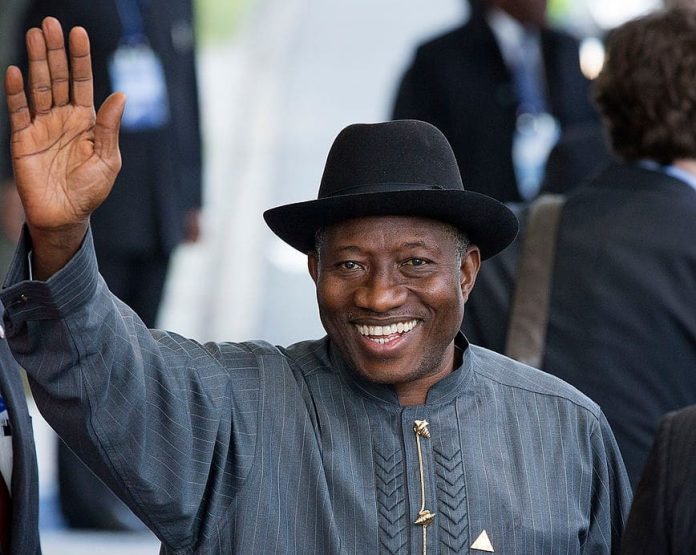
August 15, (THEWILL) — As Nigeria edges closer to the 2027 general elections, political tensions are rising, alliances are shifting, and the search for a unifying figure capable of steering the country through its most pressing challenges has intensified.
Amid the noise and uncertainty, one name consistently sparks discussion across political, social, and economic circles — Dr Goodluck Ebele Jonathan.
Jonathan, who served as President from 2010 to 2015, remains one of Nigeria’s most respected democratic figures. His decision to peacefully concede defeat in 2015 was unprecedented in the nation’s history and set a standard for political maturity and patriotism. That singular act elevated Nigeria’s democratic reputation globally, showing that leadership could be about service and sacrifice, not self-preservation.

In a political space often dominated by divisive rhetoric and personal ambition, Jonathan’s image has retained a rare blend of humility and inclusivity. His calm demeanour, conciliatory approach, and proven ability to work across party lines give him an advantage in a country craving unity.
During his tenure, Nigeria’s economy experienced one of its strongest GDP growth periods, fueled by diversification efforts in agriculture, telecommunications, and infrastructure development. While challenges existed, particularly in the area of security, the economy was stable enough to attract international investment and keep inflation at manageable levels.
Jonathan’s government also initiated reforms aimed at improving food security through the Agricultural Transformation Agenda, expanding access to education, and modernising Nigeria’s power infrastructure. These policy frameworks remain relevant today and could be revived with more focused execution in a second tenure.
Perhaps most importantly, Jonathan’s post-presidency years have been marked by a deliberate avoidance of bitter partisan battles. He has served as a peace envoy in several African nations, mediating political crises and earning a reputation as a trusted statesman across the continent. This track record positions him as a credible figure capable of mending Nigeria’s fractured political landscape.
The Need for a Grand Coalition
The truth is that Nigeria’s opposition has repeatedly suffered from fragmentation. In 2019 and 2023, multiple opposition candidates split votes, allowing incumbents to retain power despite widespread calls for change. If this pattern continues in 2027, history may repeat itself.
A strategic alliance with Jonathan as the consensus candidate could break this cycle. His cross-regional acceptability makes him an ideal rallying point for opposition forces who, despite ideological differences, share a common goal of rescuing Nigeria from economic hardship, insecurity, and political instability.
Atiku Abubakar, with his decades of experience in governance and economic reform advocacy, could bring significant value to such a coalition. His expertise in privatisation and investment could complement Jonathan’s inclusive leadership style.
Peter Obi, known for his fiscal discipline and efficiency from his tenure as governor of Anambra State, could serve as a driving force for transparency, accountability, and cost-cutting reforms in a Jonathan-led administration.
Rabiu Kwankwaso, with his grassroots influence in the North, especially in Kano and neighbouring states, could help secure the votes necessary to bridge regional divides. His commitment to education and youth empowerment could further strengthen the coalition’s policy platform.
By working together, these leaders would not only consolidate their voter base but also present a united front that projects competence, stability, and inclusiveness — the very qualities Nigerians are yearning for.
Jonathan’s Bridge-Building Potential
One of Jonathan’s most notable strengths is his ability to build trust across Nigeria’s ethno-religious divides. He remains a rare political figure respected by Christians and Muslims alike, and he has consistently emphasised national unity over sectional politics.
In a country where identity politics has often overshadowed policy debates, Jonathan’s leadership could shift focus back to governance, development, and problem-solving. His experience in balancing competing regional interests could be critical in addressing demands for restructuring and fiscal federalism.
Moreover, Jonathan has shown an openness to mentorship and talent development, often surrounding himself with technocrats and professionals rather than political loyalists alone. This could pave the way for a merit-based administration capable of delivering tangible results.
The Stakes for 2027
The 2027 elections will be about much more than just changing leadership; they will determine whether Nigeria can reverse years of economic decline, address worsening insecurity, and rebuild public trust in governance. The stakes could not be higher.
Jonathan’s return, backed by a broad coalition of experienced politicians and reform-minded leaders, offers a chance for stability. His familiarity with the machinery of government means there will be less of a learning curve, allowing for faster policy implementation.
If Atiku, Obi, Kwankwaso, and other influential figures can set aside personal ambition and rally behind Jonathan, they could create a political force capable of winning not just an election, but also the confidence of Nigerians across all regions.
Ultimately, the choice before Nigerians in 2027 will be between repeating the mistakes of fragmented opposition and forging a united path toward national renewal. Goodluck Jonathan, with his track record of peaceful leadership, economic stewardship, and bridge-building diplomacy, stands out as a candidate who could unify both the political class and the electorate.
For Atiku, Obi, and others, supporting Jonathan would not be a step back, but a strategic move forward, an investment in a leadership model that prioritises country over ego, inclusion over exclusion, and stability over chaos.
The moment calls for sacrifice, cooperation, and vision. If the political opposition can rise to the challenge, 2027 could be the year Nigeria charts a new course toward peace, prosperity, and unity.

