
Today, I want to celebrate a groundbreaking moment in the world of football. The Ballon d’Or, the most prestigious individual award in the sport, has historically been dominated by European and South American players. However, this year, the spotlight shines on Africa as Victor Osimhen and Asisat Oshoala, two extraordinary Nigerian stars, have, through sheer dint of perseverance, hard work, discipline and determination, made history by becoming the first African male and female nominees from the same country shortlisted for the esteemed award in the same year. Their achievements mark a turning point for African representation in the global football community.
The Ballon d’Or, presented annually by France Football Magazine since 1956 for men and since 2018 for women, recognises the best players in the world. The nomination and selection process involves a distinguished panel of international journalists, national team coaches and captains, as well as former Ballon d’Or winners.
Until now, only one African male, George Weah of Liberia, had claimed the honour in 1995, while no African woman had ever won the award. Instead, it went to players like Ada Hegerberg of Norway, Megan Rapinoe of the United States and Lucy Bronze of England in the first three editions of the women’s category.

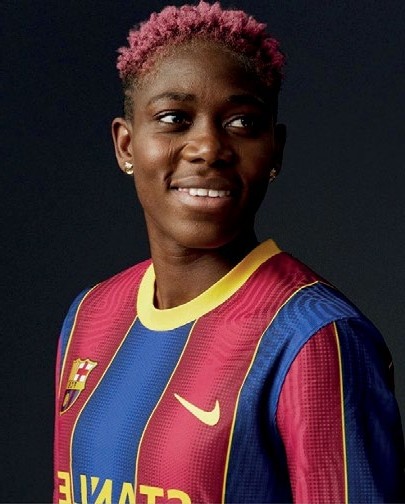
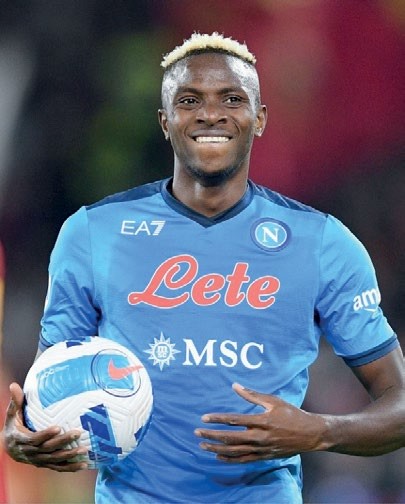
Enter Victor Osimhen and Asisat Oshoala, two exceptional talents who have captivated the football world with their skill, talent, and unwavering spirit focused on excellence. Both players have enjoyed remarkable seasons with their respective clubs and national teams, leaving an indelible mark on the sport at club, domestic and continental levels.
At just 26, Victor Osimhen has already made history. As a striker for Napoli in Italy’s Serie A, he became the first African to secure the Serie A top scorer award, to become the first black capocannoniere after netting an impressive 26 goals in 38 games. His remarkable performance not only earned him personal accolades but also propelled his team to their first league title in 33 years in the 2021/2022 season. Additionally, Osimhen’s contribution to the Nigerian national team has been invaluable. He scored five goals in six games during the Africa Cup of Nations qualifiers, leading his country to the top of their group. With 17 goals in 25 games, he currently stands as the sixth highest goalscorer in the history of the Nigerian national team.
Meanwhile, Asisat Oshoala, a 28-year-old forward playing for Barcelona Femini in Spain’s Liga F, has been setting records of her own. Oshoala became the first African woman to triumph in the UEFA Women’s Champions League, showcasing her talent with a crucial goal in Barcelona’s resounding 4-0 victory over Chelsea in the final. She also played a pivotal role in Barcelona’s domestic success, securing the Primera División title with an awe-inspiring tally of 21 goals in 28 games.
Furthermore, Oshoala’s remarkable achievements did not stop there. Just like her compatriot Osimhen in the Italian League, she became the first African woman to win the Pichichi Trophy, awarded to the top scorer in the Spanish League. Her exceptional performances helped Barcelona clinch the Copa de la Reina and the Supercopa de España Femenina, completing an unprecedented quadruple. With 31 goals in 38 games, Oshoala is also Nigeria’s all-time leading goalscorer.
The nominations of Osimhen and Oshoala for the Ballon d’Or are a testament to their unwavering commitment, resilience and exceptional abilities. These remarkable individuals have overcome countless challenges throughout their careers, from injuries to racism and have come as far as to be recognised for their talents with this nomination. Moreover, they have defied the lack of support and recognition from their own country’s government and sports administration.
Nigeria has long been a breeding ground for exceptional athletes who have represented the nation with honour on both local and international stages. However, too often, these athletes have been neglected, abandoned, or forgotten by the very authorities who should be celebrating and rewarding their outstanding achievements. Tragically, many of these talented individuals have fallen into poverty or obscurity, while others have suffered from ill health or a lack of opportunities.
Consider the case of Tobi Amusan, who achieved global recognition as the world champion and world record holder in the women’s 100m hurdles in July 2022. Despite being charged by the Athletics Integrity Unit (AIU) for alleged missed doping tests, which she vehemently denied, Amusan received minimal support from the Nigerian government or Sports Federation during her ordeal. It was only after a Disciplinary Tribunal cleared her of any violation, as she vehemently defended herself, that she was able to compete in the World Athletics Championships in August 2023.
Rashidi Yekini remains Nigeria’s all-time top scorer with 37 goals in 58 appearances. He scored Nigeria’s first ever goal at the World Cup in 1994, but he died in 2012 at the age of 48 after suffering from depression and mental illness. He was reportedly abandoned by his family and friends and lived in poverty. Christian Chukwu, who was the captain of the Green Eagles that won the 1980 Africa Cup of Nations and who later became the coach of the Super Eagles, nearly suffered a similar fate. He was diagnosed with prostate cancer and needed urgent medical attention abroad. He appealed to the government and the public for financial assistance, but he did not receive any response from the sports ministry. He was eventually helped by a philanthropist, Femi Otedola, who donated funds for his treatment.
Henry Nwosu was another victim. He was a midfielder who played for Nigeria at the 1980 Africa Cup of Nations and the 1984 Olympics. He also won the African Footballer of the Year award in 1980. He retired from football in 1992 and became a coach, but he faced several challenges in his career. At one point, as Segun Odegbami related, he could no longer sit or eat by himself and he is also suffering from memory loss as his body gave way to the illness he was suffering. Fortunately, the governments of Delta and Lagos States rallied and he began to improve. These are only a few examples that should embarrass our governments enough to evoke a change of treatment for these ambassadors.
Sadly, Osimhen and Oshoala have also faced neglect and challenges within their own football journey. They have openly voiced their frustrations with the state of Nigerian football, advocating for improved facilities, welfare, and incentives for Nigerian players both at home and abroad. In addition, they have passionately encouraged young Nigerians to look up to them as role models, emphasising the importance of self-reliance and determination in pursuing their dreams instead of relying solely on government support.
The nominations of Osimhen and Oshoala for the Ballon d’Or signify a watershed moment for African football in general and Nigerian football in particular. These exceptional players have demonstrated that with dedication, passion, and perseverance, anything is possible. They have shattered barriers and proved that Nigeria possesses the potential to produce world-class athletes who can compete and excel on the global stage. Their historic nominations demand celebration and support from all Nigerians, as they stand as true heroes and heroines of Nigerian sports.
Let us savour this moment of triumph and stand united in applauding Osimhen and Oshoala for their remarkable achievements. May their nominations for the Ballon d’Or serve as a clarion call for change, inspiring the Nigerian government, sports administration, and society at large to recognise and nurture the immense talent within the country.
By supporting and investing in athletes like Osimhen and Oshoala, Nigeria can pave the way for a new era of sporting excellence and national pride. Together, let us celebrate their extraordinary journey and champion their cause, ensuring that future generations of Nigerian athletes receive the recognition and opportunities they deserve.