
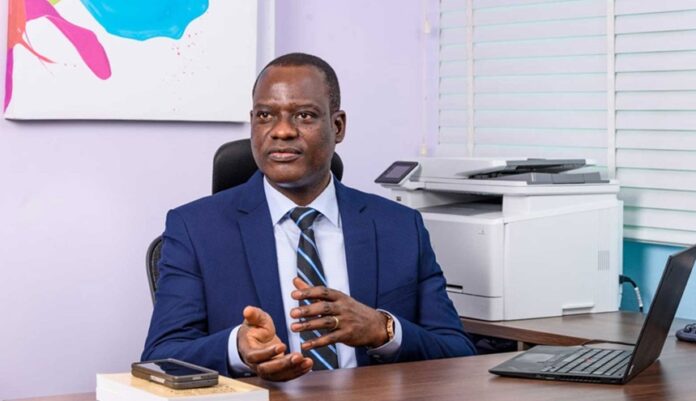
December 22, (THEWILL) — The chairman of the Presidential Fiscal Policy and Tax Reforms Committee, Taiwo Oyedele, has dismissed claims that Nigeria’s newly enacted tax reform laws were secretly altered after being passed by the National Assembly.
The denial follows growing controversy over alleged discrepancies between the tax reform bills approved by lawmakers and the versions later gazetted, a development that has triggered calls from some civil society organisations and political figures for an independent probe and suspension of the laws’ implementation.
Last week, a member of the House of Representatives, Abdulsamad Dasuki, alleged that the gazetted versions of the tax laws differed from what lawmakers debated and approved, arguing that the discrepancies amounted to a breach of the legislature’s authority.

However, speaking on Channels Television’s The Morning Brief on Monday, Oyedele, described the allegations as unfounded and misleading.
“Before you can say there is a difference between what was gazetted and what was passed, we have what has not been gazetted. We don’t have what was passed”, he said.
According to him, only the National Assembly can authoritatively confirm the final version of the bills transmitted to the President.
“The official harmonised bills certified by the Clerk and sent to the President are not publicly available. Only lawmakers can say authoritatively what was sent. Even me, I cannot say I have it. I only have what was presented to Mr President to sign”, Oyedele explained.
He also addressed concerns over a controversial provision, Section 41(8), which was reported to require the payment of a 20 percent deposit. Oyedele clarified that the provision does not appear in the final gazette, noting that earlier reports were based on draft versions circulated prematurely.
“I know that particular provision is not in the final gazette, but it was in the draft gazette. Some people wrote reports before the committee even met”, he said, adding that the House committee had confirmed it had not deliberated on the issue at the time the reports emerged.
Oyedele urged the public to allow the National Assembly to conduct its investigation, stressing that materials circulating in the media did not emanate from the committee set up by the House of Representatives.
While addressing the controversy, Oyedele warned that postponing the implementation of the new tax laws beyond January 1, 2026, would worsen the burden on Nigerian workers and businesses.
“The implication of not implementing the new tax laws by January 1, 2026, is that the bottom 98 percent of workers remain overtaxed”, he said, adding that businesses would also suffer, as they would continue to face multiple and overlapping taxes, minimum tax obligations for small and unprofitable firms, and hidden Value Added Tax (VAT) that keeps the cost of essentials such as food, healthcare and education high.
Rather than suspending the laws, Oyedele advised that any genuine concerns should be addressed transparently.
“Even if it is established that there were substantial alterations, the proper approach is to isolate those provisions that are not part of the law and implement what the National Assembly passed, while investigating how the discrepancies arose”, he stated.
Oyedele acknowledged that some sections of the legislation may still require technical amendments, particularly in areas of definitions and cross-referencing, which his committee intends to formally raise through the President.
The four tax reform laws — the Nigeria Tax Act, the Nigeria Tax Administration Act, the Nigeria Revenue Service (Establishment) Act, and the Joint Revenue Board (Establishment) Act, were recently signed into law by President Bolap Tinubu and are scheduled to take effect on January 1, 2026.
Described by the Federal Government as the most comprehensive overhaul of Nigeria’s tax system in decades, the reforms aim to simplify tax compliance, eliminate multiple taxation, expand the tax base and modernise revenue collection across the federal, state and local governments, with operations to be coordinated under a single authority, the Nigeria Revenue Service.
Felix Ifijeh is a journalist with years of professional reporting experience. Known for his keen news sense, compelling storytelling and commitment to accurate, impactful reporting, he has built a reputation for turning leads into clear, engaging, and well-structured reports that resonate with readers. His work reflects deep newsroom experience and a commitment to accurate, impactful journalism.
