Why relationships, not just policies, shape the world we live in.
August 17, (THEWILL) — We often think of politics as something distant. Suits, speeches, chambers filled with debate. But if you strip it down to its most human form, politics is really just the management of relationships: how we connect, who gets included, and what happens when trust is either built or broken.
Connection is political. Not in the cynical sense of networking for personal gain, but in the deeper recognition that every relationship carries the potential to redistribute power, reshape narratives, and redraw the boundaries of what is possible.

The Invisible Architecture of Influence
Consider the anatomy of any major social movement. Before the marches, before the legislation, before the headlines that capture our collective attention, there were countless small moments of human connection. Nigeria’s #EnoughIsEnough movement didn’t begin with the massive protests at the National Assembly; it started with young professionals sharing frustrations about corruption and governance over late-night conversations in cafés and on social media. What began as informal discussions about fuel scarcity, power outages, and government accountability gradually coalesced into a coordinated movement that would mobilise thousands across the country.
These connections operated on multiple levels simultaneously. There was the emotional bond, the trust that allowed people to be vulnerable about their deepest hopes and fears. There was intellectual exchange, ideas refined through passionate debate and collective wisdom. And there was the strategic alliance, the recognition that individual voices, however powerful, could only achieve so much alone.
Yet we rarely examine the mechanics of how these connections formed and sustained themselves. Who made the initial introductions? Which conversations happened in public versus private? How did trust accumulate across lines of difference: class, ethnicity, religion and ideology? The answers reveal the hidden infrastructure that makes social change possible.
Gatekeepers of Access
In Nigeria and across Africa, the politics of connection carries the weight of history; colonial legacies, ethnic complexity, and generational power structures. Social media has democratised voices in unprecedented ways, yet access to real influence still flows through familiar channels. Twitter storms can spark national conversations, but policy changes often happen in the private clubs of Lagos Island, the golf courses of Abuja, or the family compounds where traditional rulers hold court.
Who gets the audience with the governor when budgets are being allocated? Whose tech startup gets featured at the major conferences that attract international investors? Which young activist gets mentored by the established civil society leaders with donor connections? These decisions ripple far beyond individual careers, they determine which communities get represented in policy discussions and whose innovations get the support to scale across the continent.
The challenge runs deeper than simple networking. Nigeria’s federal character principle attempts to ensure ethnic balance in appointments, yet informal power often concentrates around shared backgrounds- those who attended the same universities abroad, or did their national service year together with the same multinational. When contract opportunities flow through ethnic or religious networks, when political appointments favour those with family connections, and when expertise gets defined by ‘man-know-man’ rather than local knowledge, connection becomes a mechanism for perpetuating inequality across both class and regional lines.
Who Gets Heard?
Perhaps nowhere is this more evident than in how social issues gain public attention across Nigeria’s diverse landscape. Some causes capture nationwide sympathy while others struggle for recognition, often based not on their objective severity but on their proximity to influential voices.
This isn’t necessarily conscious bias; it is the natural result of how empathy travels through networks of familiarity. We most readily understand experiences that mirror our own or those of people we know personally. A middle-class professional in Abuja might feel more urgency about internet shutdowns than a rural community lacking electricity, while someone from a farming family immediately grasps the impact of climate change in ways that urban dwellers might not.
The most effective advocates understand this geography of attention. They don’t just present statistics about poverty or conflict; they create opportunities for relationships across Nigeria’s divides. They bring Lagos tech entrepreneurs to meet smallholder farmers in the North West, innovating with mobile money. They arrange for Abuja policymakers to spend time in Niger Delta communities living with oil spill consequences. They facilitate conversations between traditional rulers and youth activists outside the context of protest or confrontation, finding common ground in shared concerns about community development.
The Trust Deficit
But connection across Africa’s diverse landscape faces unique and complex obstacles. Political discourse increasingly fractures along ethnic, religious, and regional lines, with social media algorithms amplifying divisive content that drives engagement. WhatsApp groups become echo chambers where misinformation spreads faster than fact-checkers can counter it. In countries like Kenya and Nigeria, political conversations often retreat into linguistic or ethnic enclaves, limiting cross-community dialogue.
Meanwhile, institutional trust varies dramatically across the continent. While some countries maintain faith in traditional authorities or religious institutions, confidence in democratic institutions, media, and even international organisations has been shaken by decades of unfulfilled promises. When people lose faith in formal systems, they naturally fall back on kinship networks, ethnic associations, or religious communities for information and support. This can strengthen local solidarity while making pan-African cooperation or even national unity more challenging.
The digital divide adds another layer of complexity. Urban elites engage in heated Twitter debates about governance and development while rural communities remain disconnected from these conversations entirely. A tech entrepreneur in Lagos or Cape Town might have more in common with Silicon Valley than with a farmer three hours outside their city. We can broadcast our thoughts to thousands of followers while struggling to have authentic conversations with our neighbours. How many of us recognise this contradiction in our own lives?
Moving Beyond Hashtag Solidarity
In this environment, there’s pressure to demonstrate connection through public gestures; the right solidarity tweet during protests, appearances at high-profile conferences, or strategic partnerships with international NGOs. While visibility matters, it often substitutes for the harder work of building relationships across Nigeria’s ethnic and class divides, or between Africa’s urban centers and rural communities.
Real connection is riskier. It means the Port-Harcourt or Lagos executive who genuinely engages with Aba traders, discovering shared concerns about infrastructure that transcend regional stereotypes. It means the civil society leader who spends time in communities they advocate for, rather than just representing them in donor meetings. Authentic relationships involve unpredictability, you might find yourself changed by the encounter.
Practising Political Connection
So how do we cultivate more meaningful connections in a fractured world? It starts with recognising that relationship-building is itself a political act that requires intention and skill.
Listen with the goal of being surprised. Most of us listen to confirm what we already believe or to formulate our response. Instead, approach conversations with genuine curiosity about what you might learn. Ask follow-up questions. Sit with uncomfortable silence. Notice when you feel defensive and get curious about that feeling instead of acting on it immediately.
Seek out spaces of productive friction. Look for contexts where people with different perspectives are working on shared challenges, community organising around local issues, interfaith social justice initiatives, bipartisan policy working groups, or even book clubs that tackle difficult topics. These settings provide structure for engagement beyond purely political identity.
Share power, don’t just platform voices. It’s not enough to amplify marginalised perspectives if decision-making remains concentrated in traditional centers of power. True connection requires redistributing influence, bringing people into rooms where decisions get made, not just where they get announced.
Invest in relationships before you need them. Crisis moments reveal the strength or weakness of existing connections, but they’re not ideal times to build new ones. The climate activist who has spent years building trust with labour leaders will be more effective during debates over green transition policies. The progressive who has genuine friendships with conservatives will be better positioned to find unexpected allies.
The Radical Act of Staying Human
In a polarised world, connection can feel like a luxury we can’t afford. When democracy itself seems under threat, when injustice demands urgent action, when time feels scarce and stakes feel high, the slow work of relationship-building can seem insufficient to the moment.
But this is precisely when connection becomes most essential. When we lose sight of each other’s humanity, and start seeing political opponents as enemies rather than neighbours, when fear and anger become our primary motivating forces. That’s when democracy begins to die from the inside out.
The most radical thing we can do is refuse to let political differences eclipse human connection. Not because politics doesn’t matter, but because politics matters too much to be left to the politicians. Real change happens in the spaces between formal institutions, in the relationships that make cooperation possible, in the trust that allows people to take risks together, in the connections that remind us why we are fighting in the first place.
Every conversation is an opportunity. Every relationship is a vote for the kind of world we want to live in. And every act of genuine connection is a small rebellion against the forces that would divide us.
So, let’s stay human. Let us remember that beneath every policy is a person. And let us never forget that sometimes the most powerful political act is simply showing up with honesty, humility, and heart to the relationships that matter most.
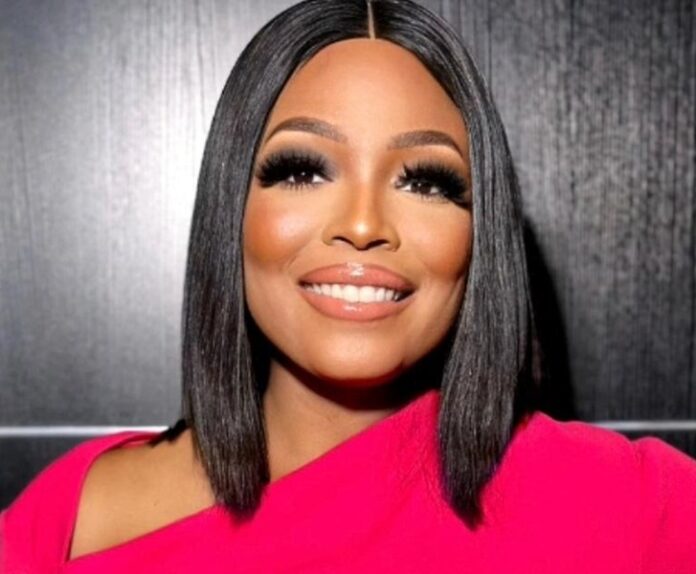
***Written by Aramide Abe.
Aramide Abe is a networking expert and a professional in international development. She is the convener of an African business leader network – Naija Startups. Follow @arams on Twitter. Website – www.aramide.ng